Clint Eastwood Retires at 96: His Birth Chart's Final Synthesis Arc
Kyle Eastwood confirmed his father's quiet retirement during the week Clint Eastwood turned 96. The chart that arrived to meet him has transiting Saturn camped on his natal Uranus, marking the structural end of a seven-decade arc.
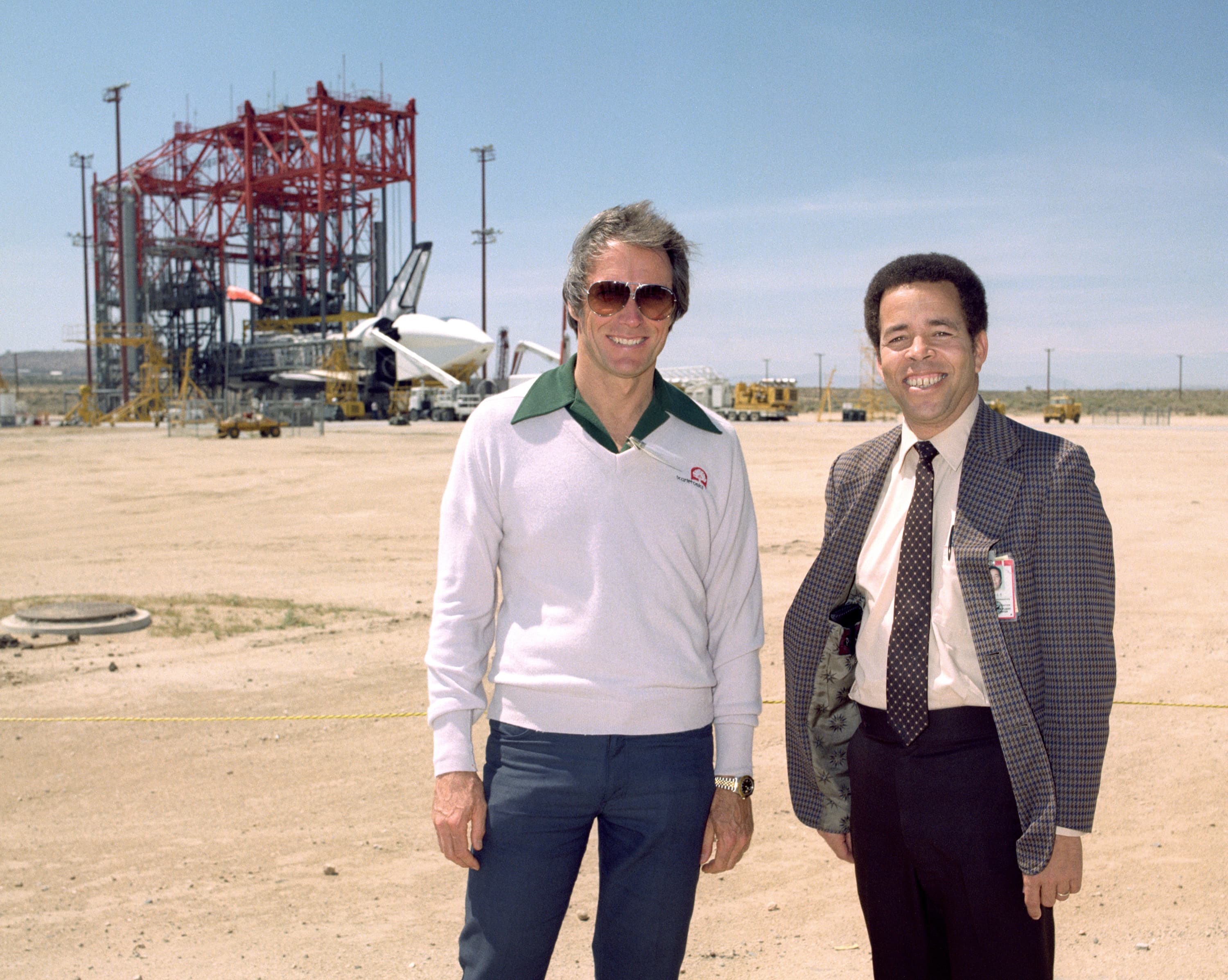
Photo: NASA · Stock
By Sera Vane·June 1, 2026AI-assisted, editor-reviewed
Kyle Eastwood, the director's son, mentioned almost in passing during a French interview about his cine-concert tour that his father had stepped away from directing ('He is 95 years old. I was lucky to be able to work with him on so many films'), and inside a day the world had a confirmation: 53 years behind the camera, 70-plus in the industry, two Best Picture Oscars, and a directing career that bent both the Western and the prestige drama around its preferences was, quietly, over. That confirmation surfaced the week Clint Eastwood turned 96, during the solar return that arrives every birthday when the transiting Sun re-crosses its natal degree, and the chart meeting him this year has transiting Saturn camped two degrees off his natal Uranus in Aries: the planet of structured endings sitting on the planet of self-chosen liberation. Read through the post-third-Saturn-return arc, the synthesis years that follow the planet's third complete orbit around any chart and arrive in the late 80s, this is not a chart predicting decline. It is a chart documenting a voluntary, calendar-keeping completion, and the framework it offers scales cleanly to your own first Saturn return at 29, the moment the ringed planet completes its first full orbit around your chart and asks what you've actually built.
Clint Eastwood's Chart at a Glance
Sun
Gemini 9°50' (House 7)
Moon
Leo 1°43' (House 9)
Rising
Scorpio 18°35'
Career Signature
Mars in Aries trine Midheaven in Leo (near-exact, inside half a degree)
Saturn in Aries conjunct natal Uranus in Aries (orb ~2°)
Concurrent Transit
Mars in Taurus trine natal Saturn in Capricorn (near-exact)
Birth Data
May 31, 1930, 5:35 PM PST, San Francisco (verified)
What Kyle Eastwood Actually Said
The interview was about jazz. Kyle Eastwood, the director's son and a working musician, gave a video conversation to France3 Regions' FranceInfo while promoting his cine-concert tour of music from his father's films. The retirement comment was almost incidental, dropped as context for why he was the one on stage performing the scores: 'He is retired now, he is 95 years old. I was lucky to be able to work with him on so many films.' Within hours, World of Reel, CBR, MovieWeb, and Parade had aggregated the comment, with Parade adding a source-close-to-Eastwood line that filmmaking days 'are finally over.'
The 96-year-old himself has said nothing. His last directed film, Juror #2 (2024), opened in a limited U.S. release for roughly $27 million in domestic box office after Eastwood skipped his own AFI world premiere and declined the entire press cycle. There are no signed projects after Juror #2, no announced farewell tour, no public goodbye. Read against that backdrop, the May 2026 birthday-week confirmation lands less as breaking news and more as the family putting on record what the industry had already inferred: the silent rollout of Juror #2 was, in retrospect, the goodbye. The chart is the reason the timing is worth examining. The cultural fact is that one of the last unbroken seven-decade directing arcs in American cinema is now closed.
The Chart That Built Seven Decades
Eastwood's Sun sits at 9°50' Gemini, calculated from his verified 5:35 PM birth time in San Francisco and placed in the 7th house (the chart sector of one-on-one relationships and how a person reads on screen alongside a co-star). Gemini is the dual-coded sign that prizes range over fidelity to a single mode, and the seven-decade career is in many ways the legible result: the cowboy who became the director who became the composer, the Republican mayor of Carmel who later made Mystic River, the actor who could do The Bridges of Madison County in 1995 and disappear to direct Unforgiven in 1992 and Million Dollar Baby in 2004 with no obvious through-line except that he made them. Gemini's restlessness made the breadth possible. Its cost is the suspicion of being unknowable, and nobody who worked with Eastwood across sixty years has ever claimed to have read him fully. This is also the same Gemini Sun whose current season is asking the restless across every chart what they actually want next.
His Moon at 1°43' Leo, placed in the 9th house of long-distance vision and broadcasted ideas, is the emotional engine. Leo Moon collects an audience and treats it as a public family, which is exactly the relationship Eastwood built across decades of director-as-author cinema. Scorpio rises (Scorpio at 18°35' on the ascendant, the angle that frames how a chart presents to the world), and Scorpio Rising is the most private sign on the most public-facing angle, which is the chart-grammar of the famously laconic interview persona. The Gemini Sun deflects. The Leo Moon performs. The Scorpio Rising guards. Both sides of Eastwood, the charmer and the stoic, sit wired at the angles, and the chart never resolves the tension. It just runs it for ninety-six years.
The career-defining aspect is a near-exact trine, the easy-flow 120-degree angle that lets two planets hand each other work without friction: Mars at 28°27' Aries in the 6th house (daily work, routine output) sits inside half a degree of the Midheaven, the career-apex angle at the top of the chart, at 27°58' Leo. With Mars and the Midheaven trading energy at near-perfect harmony, this is the natal signature of relentless professional output, and Eastwood directed 41 films, produced more, performed in over 70, and wrote scores along the way. The chart also pushes back. Saturn at 10°38' Capricorn in the 2nd house (resources and what you call enough) sits opposite natal Venus in Cancer, within a couple of degrees, in the 180-degree face-off angle where two planets pull at each other across the chart and demand the person reconcile their pulls. Saturn opposing Venus, in his case, is the placement of the man who built a livelihood on being a romantic icon while privately treating intimacy as a discipline rather than a feast. The four marriages, the long list of acknowledged children, and the famously austere production style all fit the same chart-logic: earned warmth, not squandered.
The Saturn-Uranus Transit That Just Closed the Circuit
The transit doing the heavy interpretive lifting in May 2026 is transiting Saturn in Aries at 12°18', conjunct (within roughly two degrees of, the most intense aspect available where two planets fuse their themes) Eastwood's natal Uranus at 14°22' Aries in the 5th house of creative self-expression. Saturn arriving on Uranus says: structure meets the lightning-bolt planet of disruption. The wild creative impulse Uranus has been carrying across this chart since birth now has a planet asking it to formalize, conclude, sign off. The 5th-house placement matters, because this is the house Eastwood lived in artistically, and Saturn camping here near-exactly to his Uranus is the chart's way of marking a calendar-keeping end of the creative-output phase, not as something done to him, but as an appointment he chose to keep. Anyone carrying significant Aries placements between 8° and 20° is sitting under the same transit clock right now, just without the seven-decade portfolio attached.
At the same time, transiting Saturn in Aries squares (the 90-degree friction angle where two planets force each other to adjust) natal Saturn in Capricorn within under two degrees. The Saturn-to-natal-Saturn square that comes around every seven years is the planet's standing self-audit: what has your structure built, what has it cost, and which parts of it does the architect still want to keep. At 96, this is the version of the question that arrives one final time. Eastwood is roughly eight years past his third Saturn return, the third complete orbit Saturn makes around any chart, which lands in the late 80s and asks what the lifetime project finally adds up to. The 2026 square is the post-return audit beat, the moment of formally closing the ledger after the third return already gave the answer.
A third concurrent transit sharpens the timing into something almost surgical. Transiting Mars in Taurus is running a near-perfect trine to natal Saturn in Capricorn, exact almost to the minute. Mars-Saturn trines in earth signs are the patient-precision aspect: structured action that follows a long, quiet decision. The Saturn square asked what to keep. The Mars trine answered: nothing more. The Mars-in-Taurus arc is the slow muscle behind the decision, the part of the chart that turned a private conclusion into a confirmed retirement during a birthday-week window. The chart isn't claiming it caused this. It is showing the configuration that fits, with the angles tight enough to take seriously.
What This Chart Asks the Reader
If you've ever been on the receiving end of your own Saturn return, you've felt a scaled-down version of what Eastwood's chart is staging right now. Saturn cycles are consolidation cycles: keep what survives review, set down what doesn't. The Eastwood version is the final iteration of that same question, eight years past the third return, in the structural language Saturn always uses. Retirement, read this way, is not exit. It is a 5th-house decision (creative self-expression) ratified by a 2nd-house Saturn (self-worth and what you call enough), then sealed by a Mars trine that runs on patient precision. What separates a chart of someone who retires well from one who is retired against their will is whether the Saturn-on-something moment finds the person ready to author it. Eastwood's chart, very clearly, did.
The chart-noted contradiction (and there has to be one, because every Gemini chart contains its opposite) is that retirement is the one decision a Gemini Sun is supposed to find unbearable. Geminis don't conclude. They reroute. They take the next medium, the next angle, the next conversation, the next project. That Eastwood is finishing at all is the surprise the chart is documenting, and the Leo Moon is what makes it survivable. The 9th-house Leo Moon needs the work to mean something. It does not need the work to continue indefinitely. The audience-as-family has already been collected, the ceremony has been performed, and the 5th-house Uranus has met its Saturn appointment. That this is all landing the week of the solar return, the chart's annual reset, gives the moment the weight of a deliberate calendar choice rather than a circumstantial one. For the long list of actors and directors who got pushed out, written off, or quietly forgotten, Eastwood gets the rarer thing: a chart that closes its own circuit, on its own birthday, while everyone is still watching.
For entertainment and self-reflection purposes. Not predictive and not a substitute for professional advice.
What is Clint Eastwood's zodiac sign?
Clint Eastwood is a Gemini Sun, born May 31, 1930 in San Francisco with the Sun at 9°50' Gemini in the 7th house of one-on-one relationships. His full Big Three pairs that Gemini Sun with a Leo Moon at 1°43' and a Scorpio Rising at 18°35', combining a dual-coded public communicator with a private, image-guarded interior life that explains the famously laconic on-camera presence.
When did Clint Eastwood retire from directing?
Eastwood's son Kyle confirmed the retirement in a France3 Regions interview surfaced around May 31, 2026, the week of his 96th birthday. His last directed film was Juror #2, released in October 2024 with no AFI premiere attendance and no press tour, which in retrospect appears to have been Eastwood's quiet goodbye to filmmaking after a fifty-three-year directing career.
What is a third Saturn return in astrology?
A third Saturn return is the moment, near age 87 to 89, when Saturn completes its third full orbit around someone's chart since birth. After the first return at 29 and the second around 58, the third closes the planet's lifetime ledger and tends to coincide with major legacy decisions about what work to set down and what to pass on.
Is Saturn conjunct Uranus in Aries 2026 a good time to change careers?
For people with natal Aries placements between roughly 8° and 20°, the 2026 conjunction can accelerate readiness to leave roles that no longer fit the chart. Astrologers tend to read it as supporting structured exits and chosen transitions rather than impulsive quitting; the Saturn half asks for a plan and a timeline, not a sudden walk-out from the working life.
How do Mars-Midheaven trines show up in a working life?
A near-exact Mars-Midheaven trine, under one degree of orb as in Eastwood's chart, often reads as relentless professional output that meets little internal resistance. The pattern shows up as people who keep shipping work for decades without burning out on the engine itself, even when the public phases of the career repeatedly change shape across the lifespan.