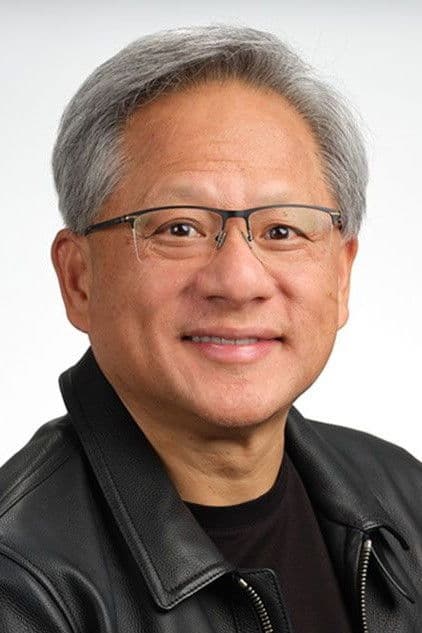
Six days before Jensen Huang stepped before investors on February 26, 2026, the sky arranged itself into a configuration not witnessed in over three centuries. Saturn and Neptune conjoined at approximately one degree of Aries, initiating a new 35-year cycle that will extend until 2061. This alignment, the first at this degree in Aries since 1702, occurred as the CEO of Nvidia prepared to deliver what may prove to be one of the most consequential declarations of his career: "The ChatGPT moment fo
The timing was not lost on those who track celestial patterns alongside corporate strategy. When Huang spoke those words during Nvidia's Q4 FY2026 earnings call, describing a threshold where machines begin to understand, reason, and act in the real world, he was operating under a sky that had just marked a fundamental shift in collective experience. The Saturn-Neptune conjunction represents the intersection of structure and vision, discipline and dreams, material reality and dissolution of boundaries. That it occurred in Aries—the sign of pioneering initiative, competitive drive, and bold new beginnings—suggests themes that would resonate through the tech sector for decades to come.
To understand why Huang positioned himself at this particular threshold requires examining the natal chart of a man whose journey from immigrant child to semiconductor pioneer traces a path that seems almost scripted by the heavens themselves.
The Aquarian Signature
Jensen Huang was born on February 17, 1963, with the Sun positioned at 27.6 degrees in Aquarius. In astrological tradition, Aquarius is associated with innovation, technological advancement, and unconventional thinking—the sign of the visionary who perceives possibilities invisible to others. But Huang's chart contains more than a single luminary in this sign. Saturn occupies Aquarius at 15.44 degrees, and Mercury sits at 1.76 degrees in the same sign, creating a planetary cluster that speaks to a particular kind of intelligence: forward-looking, systems-oriented, and willing to operate outside conventional parameters.
The Sun-Saturn conjunction in Aquarius suggests disciplined ambition channeled through futuristic vision. Saturn, the planet of structure, limitation, and long-term achievement, joined with the Sun in the sign of innovation creates a signature of someone who builds lasting institutions from revolutionary ideas. Mercury's presence in this configuration indicates a mind naturally attuned to technological problem-solving and systems thinking.
This Aquarian emphasis provides a foundational framework for understanding Huang's approach to corporate strategy. The sign is associated with collective networks, technological disruption, and the kind of thinking that perceives connections others miss. When Huang declared that physical AI had reached its ChatGPT moment, he was articulating a vision that extends far beyond quarterly earnings—precisely the kind of long-term, systems-level perspective his chart suggests. For a deeper look at how Aquarius shapes creative and corporate visionaries alike, see our analysis of Harry Styles' Aquarius birth chart.
The Mars Activation
On the day of the earnings call, Mars transited at 26.71 degrees in Aquarius, forming a near-exact conjunction with Huang's natal Sun. In astrological practice, Mars transits to the Sun typically manifest as periods of heightened assertiveness, strategic initiative, and competitive drive. The planet named for the god of war was activating Huang's core identity, infusing his public presentation with martial energy precisely when he needed to prepare investors for intensified competition.
This transit context adds dimension to Huang's positioning. Mars in Aquarius suggests strategic action channeled through technological and collective frameworks—fighting battles not through direct confrontation but through systems advantage and innovation. The conjunction to his natal Sun indicates that this competitive energy was activating his core sense of purpose and identity, suggesting that the battle he was preparing investors to navigate is not merely corporate strategy but something closer to a personal mission.
The competitive landscape Huang addressed provides the material context for this celestial timing. Nvidia maintains gross margins of 85 to 88 percent, significantly exceeding AMD's 65 to 68 percent and Intel's 58 percent. This margin advantage creates what financial analysts describe as a moat—providing superior R&D funding capacity, securing TSMC allocation, and enabling pricing flexibility that competitors operating under margin constraints cannot easily match. Yet despite these advantages, Intel and AMD continue aggressive investment in AI accelerator technology, creating the competitive landscape Huang was preparing investors to navigate.
The Irony of Rivalry
There is a biographical irony embedded in Huang's competitive stance against AMD. Before co-founding Nvidia on his 30th birthday in 1993, Huang held early engineering positions at Advanced Micro Devices, the very company he now positions against. His journey from immigrant child facing language barriers in Kentucky to Oregon State University electrical engineering graduate to AMD engineer to Nvidia founder traces a path of systematic advancement that reflects the disciplined ambition of his Saturn-influenced chart.
"I didn't speak much English at first, but I caught up, worked hard and learned that sometimes, you have to keep your eyes open and be willing to do more than act tough," Huang reflected on his early experience, according to Oregon State University College of Engineering. This statement reveals something of the Aquarian approach to adversity—not emotional reaction but systematic response, not toughness but strategic awareness.
The current transit of Mars through his natal Sun sign, activating his competitive drive against his former employer, adds a layer of astrological narrative to this corporate rivalry. The planet of conflict and assertion was moving through the same sign that holds his Sun, Saturn, and Mercury, suggesting that this moment represents an activation of his entire Aquarian configuration. The battle with AMD is not merely business competition but something woven into his personal narrative and identity.
Pluto's Generational Transit
Beyond the immediate transit patterns, a broader astrological context extends the significance of this moment. Pluto, the planet of transformation and power, entered Aquarius in 2024, beginning a 20-year transit through the sign that governs technology, innovation, and collective networks. On the day of Huang's earnings declaration, Pluto moved through early Aquarius at 4.46 degrees, beginning a journey that will continue through 2044.
Pluto's presence in Aquarius signals a generational shift in how technology and power intersect. The planet associated with transformation, hidden forces, and the redistribution of power moving through the sign of technological innovation suggests that the coming decades will witness fundamental changes in how technological capability translates into societal influence. For Huang, whose natal Sun, Mercury, and Saturn all occupy Aquarius, Pluto's transit will eventually contact each of these points, suggesting a multi-year period of profound transformation in how he communicates vision and structures his enterprise. For context on how this generational transit is reshaping all sectors, read our Spring Equinox 2026 transit guide.
The outer planet transits to natal positions often mark periods of irrevocable change. When Pluto eventually conjuncts Huang's Mercury at 1.76 degrees Aquarius, it will likely coincide with fundamental shifts in how he articulates vision and processes information. When it reaches his Saturn at 15.44 degrees, the very structures he has built may undergo transformation. And when it reaches his Sun at 27.6 degrees, his core identity and purpose may evolve in ways difficult to anticipate from the present moment.
This generational transit context suggests that Huang's declaration about physical AI represents not merely a product announcement or strategic positioning but the beginning of a decades-long process of transformation—both for his company and for himself personally.
The Saturn-Neptune Threshold
The Saturn-Neptune conjunction that occurred on February 20, 2026, represents one of the most significant astrological events of the decade. Saturn, associated with structure, discipline, and long-term planning, joined Neptune, the planet of dreams, vision, and dissolution of boundaries. This conjunction initiates a new 35-year cycle of collective experience, and its occurrence in Aries suggests themes of bold new beginnings in areas where vision meets material structure. We covered the full implications of this rare alignment in our article on the Sun conjunct Neptune in Aries 2026 transit.
For Huang, whose natal Saturn in Aquarius forms a supportive aspect to this conjunction, the timing aligns with his declaration of a new era in physical AI. The Saturn-Neptune cycle historically correlates with periods when visionary possibilities become materially manifest—when dreams acquire structure and structure opens to possibility. That this conjunction occurred in Aries, the sign of pioneering initiative, just days before Huang's pivotal earnings declaration, suggests that the vision he articulated represents not merely corporate messaging but a structural shift in how computing and physical reality will intersect.
The previous Saturn-Neptune conjunction occurred in 1989, coinciding with the fall of the Berlin Wall and the dissolution of Soviet structures—a period when boundaries both literal and metaphorical were dissolving. The conjunction before that occurred in the mid-1960s, during a period of cultural transformation and the early development of the computing industry. Each Saturn-Neptune conjunction marks a threshold where collective dreams and material structures realign.
That Huang positioned himself at this particular threshold, declaring the arrival of physical AI's ChatGPT moment, suggests strategic timing that operates on multiple levels. He was not merely making a product announcement; he was articulating a vision at a moment when the celestial patterns support the manifestation of new structural possibilities.
Unconventional Disclosure
Nvidia's approach to investor communication reflects an unconventional strategy that mirrors Huang's Aquarian chart signature. The company advises investors to monitor social media accounts, blogs, press releases, SEC filings, and public conference calls for material information, acknowledging that traditional disclosure channels no longer capture the full picture of corporate communication in the modern era.
This approach, documented by the U.S. Securities and Exchange Commission, while practical from a regulatory compliance standpoint, also reflects the Aquarian tendency to operate outside established norms and embrace technological disruption in all its forms. The sign associated with innovation and unconventional thinking would naturally favor communication strategies that leverage emerging platforms and challenge traditional gatekeepers.
For investors attempting to track Nvidia's trajectory, this unconventional disclosure approach adds complexity to an already dynamic situation. The company's preferred communication channels—social media, blogs, public appearances—require constant attention and real-time analysis. This too reflects Aquarian themes: the democratization of information, the bypassing of traditional authorities, the embrace of networked communication over hierarchical structures.
The Financial Moat
The material advantages Huang commands provide context for his confident positioning. Nvidia's gross margins of 85 to 88 percent create a financial moat that competitors operating at 58 to 68 percent cannot easily cross. This margin advantage translates into superior R&D funding capacity, priority access to TSMC manufacturing allocation, and pricing flexibility that allows strategic pricing without sacrificing profitability.
According to analysis from Silicon Analysts, these margin advantages create structural barriers that constrain competitor responses. Intel and AMD may continue aggressive investment in AI accelerator technology, but they operate under margin constraints that limit competitive pricing flexibility. The battle Huang is preparing investors to navigate is not fought on equal terrain; his company holds the high ground.
Yet the astrological patterns suggest that this battle extends beyond the immediate competitive landscape. The Saturn-Neptune conjunction initiating a 35-year cycle, Pluto's 20-year transit through Aquarius, and the activation of Huang's natal Aquarian cluster all point toward a longer timeline than quarterly earnings typically address. The vision articulated on February 26, 2026, was not merely about the coming fiscal year but about a transformation that will unfold across decades.
The Personal in the Planetary
Huang's statement about his Oregon State University experience—"Everything I have learned over the past decades is built on the strong foundation I gained here. I loved going to school there and it's where I first learned about America"—reveals something of the personal dimension underlying his corporate trajectory. The immigrant experience, the struggle with language barriers, the systematic advancement through education and opportunity—these biographical details trace a path that resonates with his natal chart's emphasis on disciplined ambition and forward-looking vision.
The Aquarian signature in his chart suggests someone who perceives himself as part of larger collective processes, who identifies with innovation and progress rather than tradition and hierarchy. His journey from outsider to industry leader, from engineer to CEO, from immigrant to one of the most influential figures in technology—this trajectory reflects Aquarian themes of breaking barriers, operating outside established structures, and leveraging technological capability to achieve positions that traditional paths might not have provided.
The current transit patterns—Mars activating his natal Sun, Pluto beginning its long transit through his sign, the Saturn-Neptune conjunction occurring just days before his pivotal declaration—suggest that this moment represents a culmination of long-developing patterns. The personal and planetary align in ways that suggest Huang is operating not merely from strategic calculation but from a deeper sense of timing and purpose.
The Longer Arc
For investors tracking the chip wars through an astrological lens, the current configuration suggests that Huang's strategic positioning reflects both personal natal signatures and broader collective cycles. The Aquarian emphasis in his chart, activated by current transits, indicates a leader operating in alignment with larger technological shifts. The Saturn-Neptune conjunction in Aries, occurring just days before his pivotal earnings declaration, suggests that the vision he articulated for physical AI represents not merely corporate messaging but a structural shift in how computing and physical reality will intersect over the coming decades.
The 35-year cycle initiated by the Saturn-Neptune conjunction will extend to 2061. The Pluto transit through Aquarius will continue to 2044. These timelines extend far beyond typical corporate planning horizons, suggesting that the battle Huang is preparing investors to navigate is not a single competitive encounter but a generational transformation in how intelligence—artificial and otherwise—interacts with physical reality.
Those seeking to understand the deeper patterns at play in this corporate battle can explore their own chart configurations to see how these transits interact with their personal financial decision-making patterns. The same celestial patterns that illuminate Huang's strategic positioning may reveal timing dynamics relevant to individual investment decisions, risk tolerance, and opportunity recognition.
The ChatGPT moment for physical AI that Huang declared on February 26, 2026, may prove to be remembered as a threshold comparable to other moments when technological possibility and material structure aligned—the launch of the first iPhone, the Netscape IPO, the introduction of the personal computer. These threshold moments often coincide with significant astrological patterns, suggesting that innovation is not merely a matter of individual genius but of collective timing, when the readiness of civilization meets the capability of technology.
Jensen Huang, with his Aquarian Sun activated by Mars, his natal Saturn resonating with the Saturn-Neptune conjunction, and his entire chart preparing for Pluto's transformative transit, positioned himself at precisely such a threshold. The chip wars he is preparing investors to navigate will unfold across decades, but the moment of declaration occurred under skies that rarely arrange themselves with such precision.
The stars do not determine outcomes, but they illuminate patterns. In Huang's chart and in the current sky, those patterns suggest a leader whose personal timing aligns with collective transformation, whose strategic vision extends beyond quarterly cycles, and whose competitive positioning reflects not merely business calculation but something closer to destiny. The battle ahead will be long, but the astrological advantage, at this moment, appears to be his.
What is Jensen Huang's zodiac sign?
Jensen Huang, born February 17, 1963, is an Aquarius Sun. Aquarius is associated with innovation, technology, and visionary thinking. His chart reflects the fixed air sign qualities of intellectual persistence and future-oriented strategy that drove NVIDIA from a graphics card company to the dominant force in artificial intelligence computing hardware.
What does Jensen Huang's birth chart reveal about his leadership?
Huang's Aquarius Sun suggests a leadership style built on technological vision and unconventional strategy. Key planetary aspects in his chart indicate strong Saturn discipline combined with Uranian innovation, a rare combination that manifests as the patient, decades-long bet on GPU computing that positioned NVIDIA at the center of the AI revolution.
How do planetary transits affect the technology industry?
Pluto in Aquarius directly activates technology sector themes through 2044, correlating with AI disruption, power shifts among tech giants, and systemic industry transformation. Uranus transits trigger sudden innovation breakthroughs, while Saturn transits impose regulatory structures. The current planetary landscape suggests continued upheaval in semiconductor supply chains and AI governance frameworks.