Marlene Dietrich's Birth Chart Already Wrote Berlinweh
Agnieszka Holland announced she'll direct a Marlene Dietrich biopic structured as four turning days across five decades. The Capricorn stellium in her birth chart wrote that screenplay long before Ingo Rasper did.
Marlene Dietrich's Birth Chart Already Wrote Berlinweh
Agnieszka Holland announced she'll direct a Marlene Dietrich biopic structured as four turning days across five decades. The Capricorn stellium in her birth chart wrote that screenplay long before Ingo Rasper did.
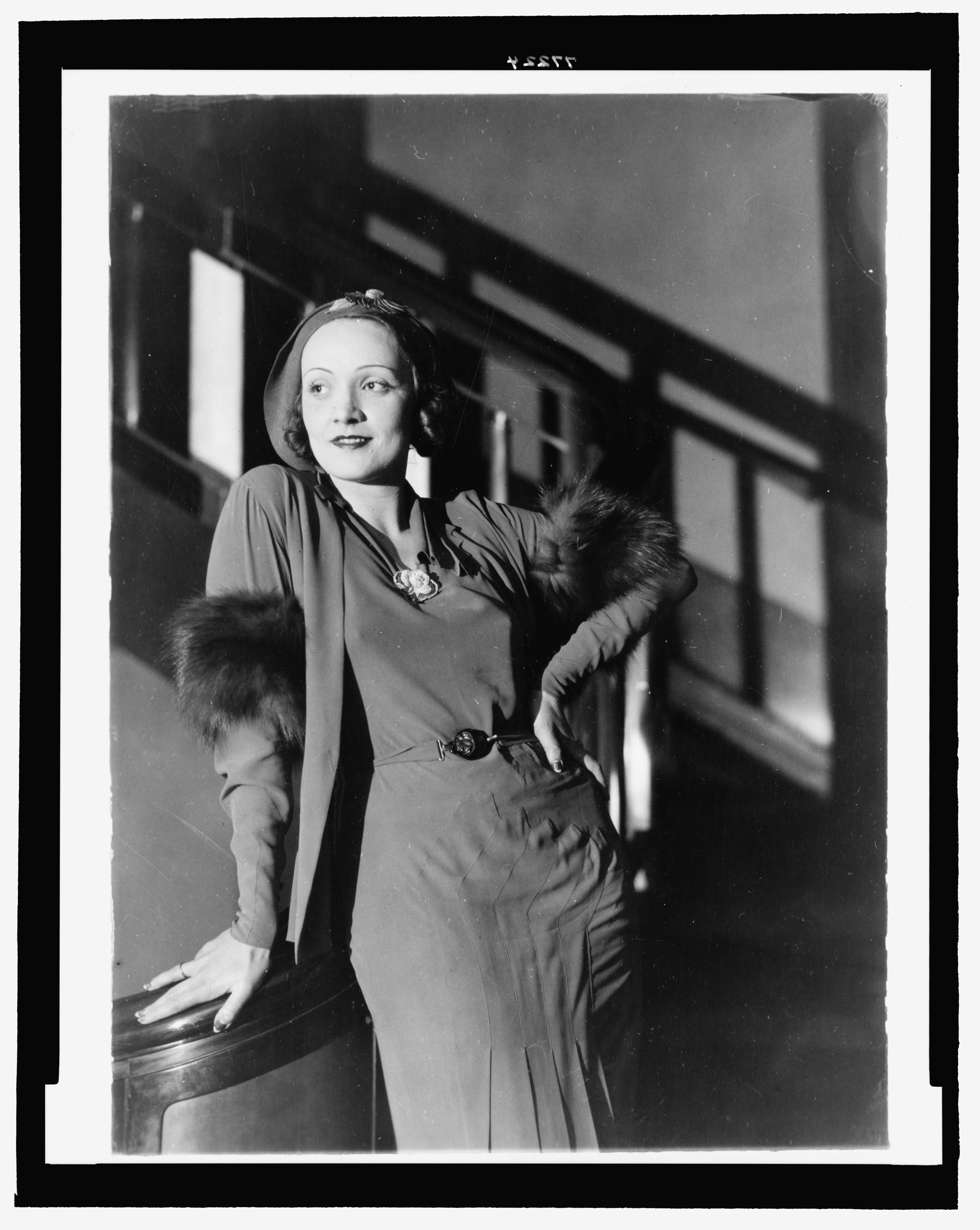
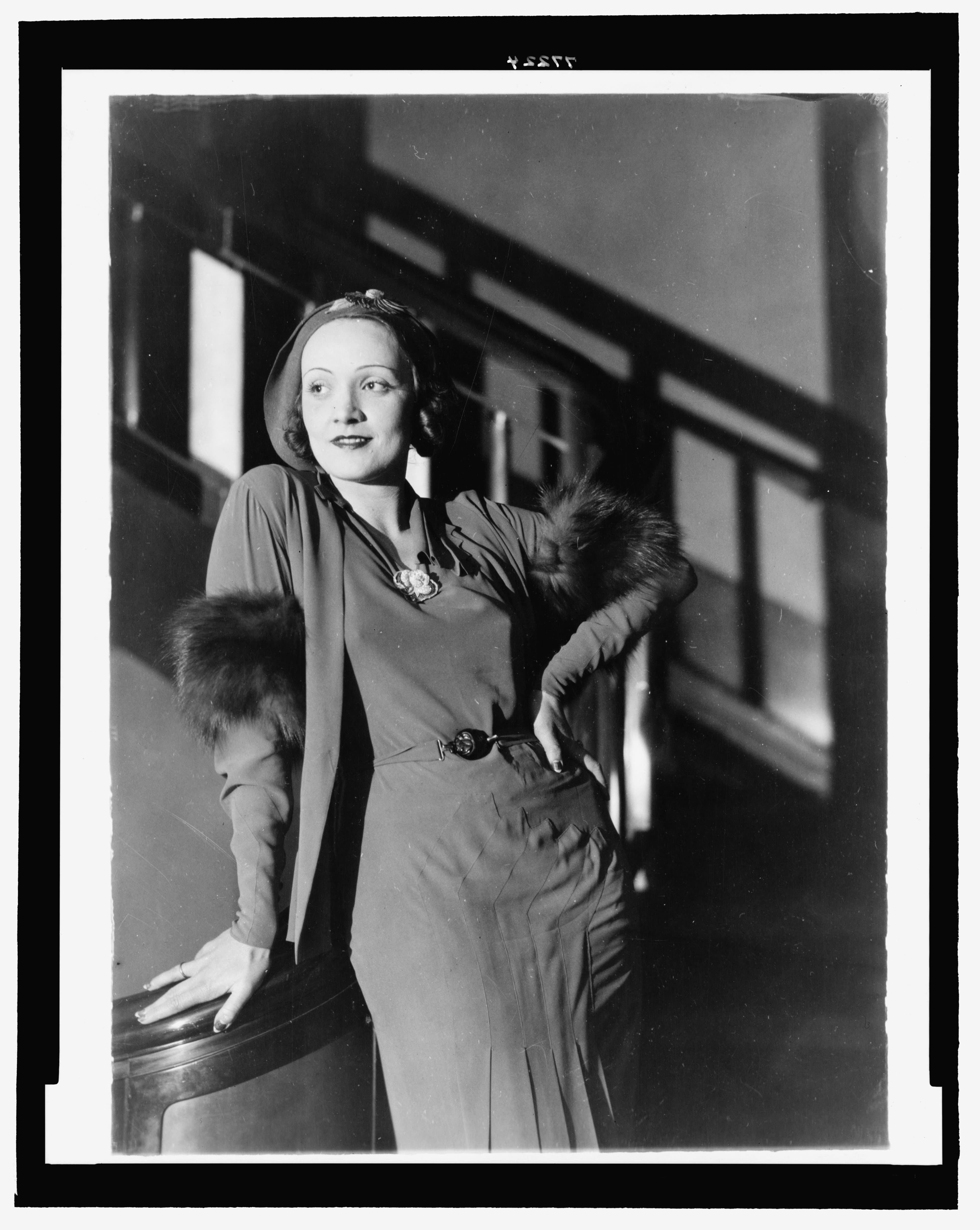
Photo: George Grantham Bain Collection (Library of Congress) · Stock
By Sera Vane·June 25, 2026AI-assisted, editor-reviewed
Agnieszka Holland, the three-time Oscar-nominated director who has spent her career interrogating moral architecture in the wreckage of twentieth-century Europe, is making a film about Marlene Dietrich: the persona-as-armor icon, the chosen exile, the woman who invented herself in public and refused to step out of the invention for the next sixty years. Not a biopic in the conventional sense. Holland announced on June 24 that
will refuse linear narrative, structuring Dietrich's life around four decisive days across five decades: Paris 1937, Bergen-Belsen 1945, Tel Aviv 1960, Paris 1983. The structural choice fits the subject. Dietrich's life never moved in a straight line, and her birth chart never asked it to. The
Berlinweh
screenplay didn't originate with screenwriter Ingo Rasper. It has been sitting in a chart since December 27, 1901, at 9:15 in the evening in Schöneberg, where five planets cluster in Capricorn (a stellium, the concentration of mass that anchors a chart in one sign's gravity) and four of them lodge in the fifth house, traditionally the house of performance, romance, and what a person assembles for the world to see.
Marlene Dietrich at a Glance
Sun
Capricorn 5°25' (5th house)
Moon
Leo 7°06' (11th house)
Rising
Virgo 4°06'
Capricorn stellium
Sun, Mercury, Mars, Jupiter, Saturn (four in 5th house)
Sun–Chiron conjunction
orb 1.64° (applying)
Mercury–Neptune opposition
orb 2.35°
Key transit (June 24, 2026)
Neptune in Aries square natal Sun, orb 1.04°
Birth
December 27, 1901, 9:15 PM, Schöneberg, Berlin
Birth time source
Birth certificate (verified)
Holland Lights the Match on June 24
Holland confirmed the project to Variety on June 24, 2026, with same-day coverage from Deadline and Screen Daily. The screenplay is by Ingo Rasper. Berlinweh is a German-Czech-British-Irish co-production: X Filme Creative Pool in Berlin, Marlene Film Production in the Czech Republic, and Mike Downey on the British-Irish side. Principal photography begins in the second half of 2027. The actress to play Dietrich has not been announced. Holland described her subject to Variety as "a tangle of contradictions: a glamour star, yet an outstanding actress, singer and soldier."
The structure she chose makes the contradiction explicit. Holland said in the same announcement: "We do not tell her life in a continuous, linear narrative. We look for those few turning moments in which what was most important and most universal... is reflected." Four days. Five decades between bookends. Paris 1937, the year Dietrich rejected Joseph Goebbels' offer to return to the Reich as the highest-paid actress in Germany and became, by choice, an American citizen. Bergen-Belsen 1945, performing for liberated Allied troops in front of the just-emptied camps. Tel Aviv 1960, the contested concert series before survivors who had not forgiven her countrymen. Paris 1983, the recluse who would not be photographed for the final nine years of her life. The gaps between those four days carry meaning a continuous narrative would have to flatten.
The Capricorn Stellium Holland Will Be Filming
Five planets in Capricorn. Sun at 5°25', Mercury at 2°17', Mars at 25°57', Jupiter at 20°25', Saturn at 17°12'. Four of them (Sun, Mars, Jupiter, Saturn) land in the fifth house, traditionally the house of performance, romance, and the spotlight, the part of the self assembled for the world to watch. Capricorn rules structure, ambition, the construction of a self that survives. A fifth house in Capricorn is performance as engineering project, not Leo play. The stage is not where she came alive. The stage is where she built a person who could be photographed.
The Sun sits in conjunction (the same-degree alignment that fuses two planets into a single inflected drive) with Chiron, applying tight. Chiron is the wound the chart cannot stop circling. Whatever the public Dietrich was selling, the private architecture had a hairline crack at the identity core, and the persona was the splint. Nicholas Galitzine's chart in our read of his Hoyt Richards biopic showed a different version of the same problem: a public-image profession with a private cost the placements made impossible to ignore. Dietrich's chart solves it the Capricorn way. The surface gets engineered so the wound never shows on camera. The cost is that the surface eventually becomes the only place she lives.
Virgo Ascendant, Leo Moon: The Mask and the Audience
The Ascendant is the face the chart presents to the world: rising signs frame how a person enters a room before they say a word. Dietrich's Ascendant is Virgo at 4°06', and the Sun forms a trine (the 120-degree flow angle, the aspect that makes a quality feel native rather than effortful) to it, applying tight. So the precision is genuine, not performed. The famous Dietrich look (the contour, the exact tilt of the cigarette, the millimeter-precise eyebrow) is the natural output of an earth Ascendant in flow with the Sun's Capricorn discipline. The mask was never improvised. It was specified.
The Moon at 7°06' Leo lives in the eleventh house, traditionally the house of the collective, the crowd, the cause. Leo asks for warmth and recognition; the eleventh house aims that warmth outward toward the group rather than toward the partner. This is the chart of someone whose emotional life pours into the audience as an organism rather than into the people closest to her. Dietrich's letters to lovers were famously cool. Her stage warmth, by contrast, was infinite. That isn't a contradiction in the chart. That's an eleventh-house Moon doing exactly what an eleventh-house Moon does: building heat for the multitude, not the individual.
The Public Image as a Hall of Mirrors
Both Neptune (29°56' Gemini, retrograde) and Pluto (17°21' Gemini, retrograde) sit in the tenth house, the house of public role and career identity. Neptune dissolves the image; Pluto compulsively rebuilds it. Both planets retrograde means the work of dissolving and reconstructing the public persona happens internally, in private, as a permanent process the public never sees finished. A career as a hall of mirrors. An image always doubling back on itself, never solidifying into one shape. This is why no Dietrich biographer has ever produced a definitive read. The chart was designed to refuse one.
Mercury in Capricorn opposes (the 180-degree facing-off angle that creates the strongest internal tension) that retrograde Neptune. The narrative mind is in structural conflict with the myth it generates. Dietrich the speaker was famously sharp, exact, controlled. Dietrich the image was diffuse, sexual, ambiguous. Both placements are doing their jobs. The chart never asked them to agree. Compare it to the Leo-Aquarius axis at work in our read of Dua Lipa and Callum Turner, where the same polarity sits in active partnership rather than internal opposition, and the Dietrich tension stands out as the deliberate signature it is. Holland's four-day structure is the only film grammar that respects it.
The Transit Reading the Chart Right Now
At the moment of Holland's announcement, transiting Neptune at 4°22' Aries was building a square (the 90-degree friction angle, the aspect that creates pressure until something rearranges) to Dietrich's natal Sun at 5°25' Capricorn. The closest outer-planet contact to a personal planet in her chart right now. Neptune-square-Sun dissolves the structure of identity the Sun was sustaining. For a living person, that registers as a crisis of self-image. For the chart of someone who died in 1992, it registers as something stranger: the cultural Dietrich, the icon she manufactured, is being reread in public. The architecture she spent a lifetime engineering is becoming porous again.
Holland did not need to know the transit was active. The chart pulled the work toward itself. That is how these timings tend to land: a director with the right moral imagination walks into a room and finds the project already half-written, then assumes the half-writing was hers. The trade-off is that the chart was never finished waiting. It will keep generating Dietrich readings until it stops being read as one, and Holland's version is the one that arrived in this transit window.
Why Holland Is the Right Director
Holland's directorial fingerprint is the moral architecture of survival under conditions that should make survival impossible. Europa Europa, In Darkness, Angry Harvest: every Oscar-nominated film of hers has interrogated the same question. What selves does a person assemble in order to live through history? Dietrich's chart is the inside view of that question. The Capricorn stellium says: I will build the self I need to survive. The Virgo Ascendant says: I will make it look effortless. The eleventh-house Leo Moon says: I will give it to the crowd, not to anyone in particular. The tenth-house Neptune and Pluto retrograde say: I will keep revising it until I die. The four days Holland chose are the four moments those four placements forced a choice.
For entertainment and self-reflection purposes. Not predictive and not a substitute for professional advice.
What is Marlene Dietrich's zodiac sign?
Marlene Dietrich was a Capricorn Sun, born December 27, 1901, in Schöneberg, Berlin. Her chart contains an unusually concentrated five-planet Capricorn stellium across Sun, Mercury, Mars, Jupiter, and Saturn. Four of those five planets sit in her fifth house of performance, making her one of the most Capricorn-saturated signatures in twentieth-century stardom.
Who is directing the Marlene Dietrich biopic Berlinweh?
Three-time Oscar-nominated Polish director Agnieszka Holland will direct Berlinweh – Yearning for a Home from a screenplay by Ingo Rasper. The film was announced on June 24, 2026, with production from X Filme Creative Pool in Berlin, Marlene Film Production in the Czech Republic, and Mike Downey on the British-Irish side. Filming begins in the second half of 2027.
Why did Agnieszka Holland structure Berlinweh around four days instead of a full biography?
Holland told Variety she wanted the film to focus on turning moments that resonate today rather than trace Dietrich's life as a continuous narrative. The four chosen days span her voluntary exile (Paris 1937), her performances for liberated Allied troops at Bergen-Belsen (1945), her contested concerts before survivors (Tel Aviv 1960), and her final reclusive years (Paris 1983).
What does it mean to have a stellium in the fifth house?
A stellium is three or more planets concentrated in a single sign or house, anchoring a chart's gravity in that one zone of life. A fifth-house stellium loads the chart toward creative output, performance, romance, and what a person designs for public view. In Dietrich's case the Capricorn flavor turned the stage into engineered survival rather than play.