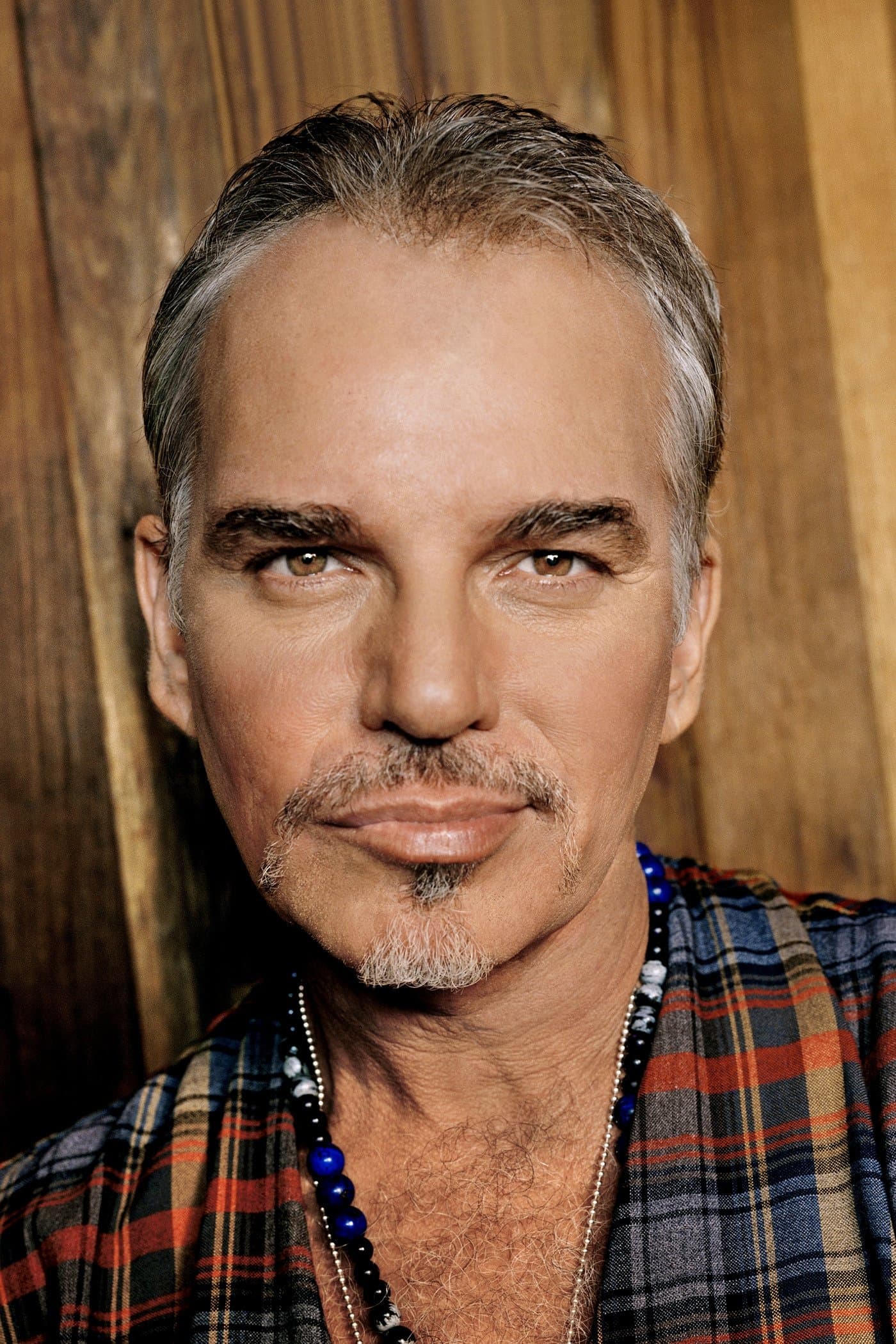
The Kid From Alpine Who Kept Writing
Long before the Academy handed him a statuette for a movie he had written, directed, and starred in, Billy Bob Thornton was a skinny kid from the Ouachita mountains of western Arkansas, sleeping in a house with no indoor plumbing. He has told versions of that story for thirty years now — the childhood in Alpine, a small community in Clark County, Arkansas, the failed minor-league baseball tryout, the decade of nothing work in Los Angeles before anyone knew his name. When Sling Blade arrived in 1996 and won him the Oscar for Best Adapted Screenplay, he was already forty-one. The overnight success had taken two decades.
That is the person whose chart we are opening. Not the tabloid husband of Angelina Jolie, not the drawling tough guy in Landman on Paramount+, but a working writer and character actor who waited out his own career and then built a second one on television in his sixties. The astrology has to account for both the wait and the work.
One caveat up front: Thornton's birth time is not on public record at a reliable Rodden rating. Astrologers mark this as Rodden X. That means Sun, Moon, the inner-planet signs, and the aspects between them are all solid — Swiss Ephemeris computes them from the date alone — but the Ascendant, Midheaven, and specific house placements cannot be trusted. This profile omits all of those rather than guess. What remains is still the spine of the chart, and in Thornton's case the spine is unusually loud.
The Leo Stellium (Replacing The Big Three)
Most people have one, maybe two planets in any given sign. Thornton has five in Leo: Sun, Mercury, Venus, Mars, and Jupiter, all clustered within roughly twelve degrees of the Leo wheel. A stellium is the term astrologers use for three or more planets in the same sign, and it means the sign stops being one voice among many and becomes the central engine. In Thornton's chart it is the whole engine room.
What this actually looks like, in behavior, is a person who cannot stop performing, writing, band-leading, talking to interviewers about his favorite B-movies, or inserting himself into his own projects as writer-director-actor. The Leo stellium is a five-planet argument for self-expression as a basic metabolic function. His Sun at 11° Leo sits within a third of a degree of Jupiter at 11° Leo — an almost exact Sun-Jupiter conjunction, the closest hard-aspect pairing in the entire chart. Sun-Jupiter tends toward largeness: large appetite, large luck, large self-estimation, large second chances. Mercury at 10° Leo, tucked between them, is why the self-estimation gets written down rather than merely felt. He writes his own scripts, names his own band, narrates his own legend.
That is the concrete behavior. The cost, and the demand, is that a Leo stellium requires an audience, and an audience is never a stable thing. Leo without witness is Leo in pain. It is not an accident that Thornton has kept working in performance for over forty years in three different media — film, television, a touring rock band — and gave an interview in his late sixties about how he still wants to play the smaller clubs. A stellium of this weight does not retire politely. It keeps broadcasting because the broadcasting is how it processes being alive.
And here is the complicating placement, the internal contradiction: Saturn in Scorpio, sitting in a hard 90-degree square to Mars and nearly so to the whole Leo cluster. Saturn in Scorpio is one of astrology's more solitary signatures — a taste for depth over width, the small private obsession over the public pageant, control through withholding. The Leo stellium wants to take the stage. The Saturn in Scorpio wants to disappear into a mountain cabin with a notebook. Thornton's public persona, which alternates between talk-show raconteur and reclusive weirdo who won't fly on airplanes, is this square in real time.
Sun in Leo — The Writer Who Plays Himself
The Sun represents the core identity, the role the person is here to inhabit. Thornton's Sun at 11° Leo, locked to Jupiter and flanked by Mercury, says: the role is the creative generalist who makes his own vehicles. He is not, strictly, a leading man. He is a writer-director who happens to be unusually good in front of a camera, and the Leo Sun is what gives him the nerve to stand in front of it. The Sling Blade Oscar in 1997 was not for acting — it was for the screenplay, which he had adapted from his own short film. That is the shape of a Leo Sun conjunct Mercury: the self-made vehicle.
The cost is the demand for reinvention. A Leo Sun this amplified cannot coast on one hit. It has to keep producing new centerpieces or it experiences the dry period as a kind of death. The decade between Sling Blade and his Fargo television reinvention was, by his own telling, not kind. The Leo engine needs fuel.
The complication, again, is Saturn in Scorpio just over 3° away from a square to this Sun. Saturn-Sun squares tend to produce a recurring voice of internal authority saying: you are not enough, or, not yet, or, earn it again. Where a pure Leo Sun would simply assume it deserved the stage, Thornton's Sun spent roughly fifteen years in Los Angeles doing minor roles before Sling Blade, and has publicly described long stretches of self-doubt. That is not a Leo thing. That is Saturn in Scorpio talking over the Leo Sun's shoulder.
Moon in Aquarius — The Emotional Outsider
Thornton's Moon sits in Aquarius, the fixed-air sign of the detached, the eccentric, and the loyal-from-a-distance. The Moon describes the emotional operating system, the default way a person processes feeling, and in Aquarius it processes feeling by abstracting it. Aquarius Moon people often report feeling like anthropologists in their own families — observing, categorizing, not quite inside the scene.
This is the placement that explains his much-discussed phobias, his reluctance to fly, his collection of unusual personal habits, and the fact that his interviews frequently drift into odd philosophical detours about UFOs, baseball statistics, and the ghosts of old recording studios. An Aquarius Moon does not need to be normal. It needs to be free. A note of caution: because the birth time is unverified, the Moon's exact degree is approximate — it may sit anywhere from about 16° to 28° Aquarius across a 24-hour range — but the sign itself does not change.
The cost: emotional coolness where a partner or a crew may want warmth. An Aquarius Moon tends to retreat into the cerebral when things get personally hot, which in the biography shows up as multiple short marriages prior to his 2014 marriage to Connie Angland. The complicating placement here is the Leo stellium itself: five planets that want warmth, applause, and relational heat, anchored to a Moon that processes those same experiences at a thirty-thousand-foot cruise. The Leo stellium wants the dinner party. The Aquarius Moon is already mentally in the parking lot.
Personal Planets — Mercury, Venus, Mars
Thornton's Mercury at 10° Leo is why he can talk. It is also why, historically, he talks a lot. Mercury in Leo tends toward the declamatory, the storyteller mode, the voice that enters a room with an opinion already formed. Pressed next to Jupiter, the planet of expansion, his Mercury-Jupiter conjunction (orb under 1°) is textbook for the person who turns a small anecdote into a fifteen-minute set piece. It is a screenwriter's placement. It is also the placement that, when poorly managed, overshoots into oversharing or tall tales.
Venus at 3° Leo is earlier in the sign, meaning it does not directly touch the tight Sun-Mercury-Jupiter knot, but it picks up the Leo relational style: generous, loyal, performative, prone to grand gestures and to confusing grand gestures with intimacy. Venus in Leo is famously devoted when it is devoted, and famously theatrical about its devotions. The high-profile marriage to Angelina Jolie from 2000 to 2003, complete with vials of blood worn on necklaces, is Venus in Leo operating at its full melodramatic register. The quieter, decade-plus partnership with Connie Angland is Venus in Leo having finally located a private Leo — the warmth turned inward.
Mars at 15° Leo is his drive: physical, creative, the engine of doing. Mars in Leo typically wants to fight for the spotlight, work in visible public arenas, and take on large identity-sized projects. But Mars here is pinned hard by Saturn in Scorpio, and that aspect is the single most defining mechanical feature of how his career has actually unfolded.
Where the Chart Pushes Back
This is the section where flattery has to stop and the chart's actual pressure points show up. Thornton's chart is not a soft one. Three genuine hard aspects shape how the Leo broadcast actually lands in his life.
Mars square Saturn (0.82° orb)
This is almost exact, and it is the most important single aspect in the chart. Mars square Saturn is the planetary signature for blocked drive — the experience of wanting to push forward and encountering delay, age, structure, or authority in the way. Astrologers associate it with late bloomers, persistence-through-resistance arcs, and people whose breakthrough comes only after fifteen years of grind. Thornton's biography is almost a textbook fit: he moved to Los Angeles in the early 1980s, spent the next decade or so in television bit parts and obscurity, and did not break through until Sling Blade at age forty-one. Mars square Saturn is the aspect that would not let him skip the dues.
The cost this aspect exacts is frustration, and frustration not as a passing mood but as a structural feature. People with tight Mars-Saturn squares tend to describe a recurring experience of their own ambition feeling weighed, constrained, or actively sabotaged — sometimes by circumstance, sometimes by their own perfectionism. The compensation, when this aspect is worked well, is endurance. The person who gets here also stays here, because they had to earn it the hard way and therefore knows how to hold it.
Sun / Mercury / Jupiter all square Saturn
Because the Leo stellium is so tight, Saturn in Scorpio does not just square Mars — it squares the Sun (orb 3.18°), Mercury (4.30°), and Jupiter (3.54°) too. That is an unusual amount of Saturnian pressure on the self-expressive core of the chart. The effect is that the Leo broadcast never travels unchecked. Every time the Sun-Jupiter wants to expand — more projects, bigger platform, grander claim — Saturn in Scorpio shows up with the bill: is this real, is this earned, what are you hiding, what is this actually for.
This is the aspect behind the eccentric interview record, the public self-deprecation, and the recurring theme in his screenplays of characters who are not what they appear — haunted, broken, or quietly dangerous. Saturn in Scorpio does not permit easy Leo shine. It darkens the light until the light is trustworthy. Compare this with Arnold Schwarzenegger, another Leo whose chart runs the broadcast much cleaner, and the difference is obvious: Schwarzenegger's Leo became a platform. Thornton's Leo became a character study.
Saturn in Scorpio vs. the Leo broadcast appetite
The third pressure point is structural, not aspectual. Saturn sits in Scorpio, a water sign of depth, privacy, obsession, and taboo — the opposite tonal register to Leo's sunlit performance. A person built this way has, essentially, two professions running inside one career: the public Leo who writes and performs and fronts a band, and the private Scorpio who needs a lot of time alone, gets uncomfortable in mass social settings, and is drawn to dark material. His screenplays, from Sling Blade to his role as the Satanic hitman Lorne Malvo in FX's Fargo, where he won a Golden Globe in 2015, consistently live in the Saturn-in-Scorpio register: violence held underneath politeness, the calm voice of someone who has seen things. The Leo stellium is not what writes those scripts. Saturn in Scorpio is. The Leo stellium is just what agrees to act in them.
Notable Aspects
A few additional patterns are worth naming briefly, because they either reinforce or complicate the Leo-Saturn war at the center of the chart.
- Sun conjunct Mars (4° orb): amplifies physical drive, combative instincts, and the willingness to put the body on the line — think the cowboy roles, the relentless Landman work schedule into his late sixties.
- Neptune sextile Pluto (0.30° orb, generational): a very tight generational aspect shared by most people born in the mid-1950s, but close enough in his chart to tie his creative imagination (Neptune in Libra) to generational themes of transformation in performance (Pluto in Leo). Useful context, not a personal signature.
- Moon trine Neptune (approximate): adds the sensitivity and musicality — the Boxmasters, the poetry of his screenplays, the softness under the rough persona. This trine complicates the cooler Aquarius Moon reading: emotionally detached on the surface, secretly porous underneath.
- Pluto in Leo (25°): a generational Pluto placement he shares with most boomers, but again, in his chart it falls within the Leo stellium's orbit and connects the personal to the era's larger appetite for the cult of personality. His entire cohort grew up inside this Pluto. He made a career out of noticing it.
Career & Public Life — The Chart vs. The CV
The Leo stellium promises an easy showbiz arc: early fame, steady output, broad appeal. Thornton's actual career is the opposite of that. The chart promised a movie star. What the chart delivered, because of the Saturn squares, is a writer-character-actor with a cult following and a late-career television renaissance. That gap — between what the Leo stellium wanted and what the Mars-square-Saturn structure allowed — is the most honest story the chart tells.
Consider the timing. He spent his twenties and early thirties in bit parts. He won his Oscar at forty-one. He then spent much of his fifties in a commercial middle zone — solid work, no iconic role on the level of Sling Blade or Bad Santa (2003) — before finding a second peak on television starting with Fargo in 2014, then the Amazon drama Goliath, which ran from 2016 to 2021 and won him a Golden Globe for Best Actor in a Drama Series in 2017, and now Landman into his late sixties. The chart arc, read through Mars-Saturn, is almost exactly what you would expect from that signature: slow start, midlife breakthrough, late-career accumulation. Saturn rewards the ones who kept showing up.
There is a tension here the chart makes explicit and the career has had to negotiate: his Leo wants the leading-man slot, but his Saturn will only hand him strange, off-center parts — the mentally impaired gardener with a dark past, the Satanic hitman, the drunken department-store Santa, the fixer of a Texas oil patch. His most commercially durable roles are weirdos. The chart does not let him be the clean hero. Sean Penn's chart and career rhyme with this one — another actor whose most respected work sits in the uncomfortable, morally ambiguous middle distance, not the hero slot.
Relationships — Venus in Leo with the Aquarius Moon
Venus in Leo wants warmth, devotion, a partner who can hold the spotlight with them. The Aquarius Moon wants freedom, space, and the right to disappear into a workshop for six weeks without being asked about it. That is, bluntly, the hardest relational setup to resolve in Thornton's chart. The three-year marriage to Angelina Jolie (2000 to 2003) was Venus-in-Leo maximized and Aquarius-Moon starved — enormous public heat, not enough private solitude. His current, much longer partnership with Connie Angland, whom he married in 2014, reads from the outside like the opposite configuration: the Venus in Leo allowed to be warm inside a small private house, the Aquarius Moon permitted its workshop.
The trade-off the chart sets up is clear. A person with this Venus-Moon pairing either finds a partner who understands that love and space are the same request, or bounces between the two needs in serial relationships. He did both. The chart did not, in other words, promise him easy love. It promised him intense love and then demanded he figure out the rest himself.
The Transit That Actually Matters
Thornton is currently in his third Saturn return territory — the decade (roughly age sixty-seven to seventy) when transiting Saturn comes back around to within a few degrees of his natal Saturn in Scorpio for the third time. A Saturn return is the roughly 29-year cycle in which the planet of structure, limitation, and earned authority returns to its birth position and asks: what are you still doing, and is it actually yours.
For most people the first one, around age twenty-nine, is the loud one. By the third, around age fifty-eight to fifty-nine, the reckoning is usually about legacy — what gets kept, what gets shed, what the work has actually been for. Thornton is just past his third Saturn return and into the long Saturn-square-natal-Sun phase of his late sixties. That square, repeating several times across a two-year window, has a consistent signature: the chart demands the person commit, visibly and publicly, to the role they actually want to play for the remainder. It asks for specificity. It revokes the license to float.
The concrete behavioral implication for Thornton, read from the chart and not from gossip, is that the Landman role on Paramount+, which he committed to through 2026 filming, is not just a television job. It is this transit taking a shape. A man with five planets in Leo and a Saturn in Scorpio, at this age, agreeing to anchor a Taylor Sheridan prestige drama about a hard, competent, middle-aged operator in a brutal industry — that is the chart picking its closing role. Saturn in Scorpio cast the part, the Leo stellium agreed to show up for work. The next couple of years of his career will almost certainly be read, in retrospect, as his third-act statement.
What This Chart Asks You to Reckon With
Here is the contrarian observation. Most coverage of Thornton treats him as a colorful eccentric — the guy with the phobias, the ex-husband, the drawler with the unusual interview habits. The chart disagrees. Thornton's chart is not primarily a Leo eccentric's chart. It is a Saturn-in-Scorpio chart that happened to arrive in a Leo body, and almost every interesting thing about his career comes from that conflict, not from the Leo by itself.
The five-planet Leo stellium is the part of him that wants a platform. It is also the part that many astrologers, looking at this chart, would over-emphasize, because five planets in one sign is genuinely uncommon and visually dramatic. The temptation is to read him as a simple Leo show-pony. But a Leo show-pony does not spend fifteen years in bit parts. A Leo show-pony does not write Sling Blade. A Leo show-pony does not, in his sixties, still prefer the smaller clubs with his band.
What the chart actually asks its owner to reckon with is this: the public gift — the five Leo planets, the Sun-Jupiter luck, the writer's Mercury — is only there to give the private Saturn in Scorpio something to do. The Leo is the vehicle. The Saturn is the driver. When they cooperate, which took him roughly until forty-one to figure out, the work is unusual and durable. When they do not, which was most of his twenties and thirties, it is a person who looks miscast in his own life.
The harder question the chart poses, the one no chart can answer, is what he does with the remaining decade. The Leo stellium will keep demanding broadcast. The Saturn in Scorpio will keep demanding depth. Whether he stays on television, returns to writing his own projects, or simply tours the smaller clubs with the band he started in 2007 is an open question. The chart does not pick for him. It just does not let him retire comfortably into any one of them. Compare this with Matt LeBlanc's much gentler Leo chart, which permitted a graceful fade from the sitcom era into semi-retirement — that is a chart at peace with itself. Thornton's is not at peace. It is at work. That, honestly, is probably the point.
Because the birth time is unverified at Rodden X, this profile intentionally omits any rising sign, Midheaven, or specific house analysis. What remains — the five-planet Leo stellium, the tight Sun-Jupiter conjunction, the near-exact Mars-Saturn square, and Saturn's lonely post in Scorpio — is the part of the chart that does not require a birth certificate to read clearly. It is more than enough.