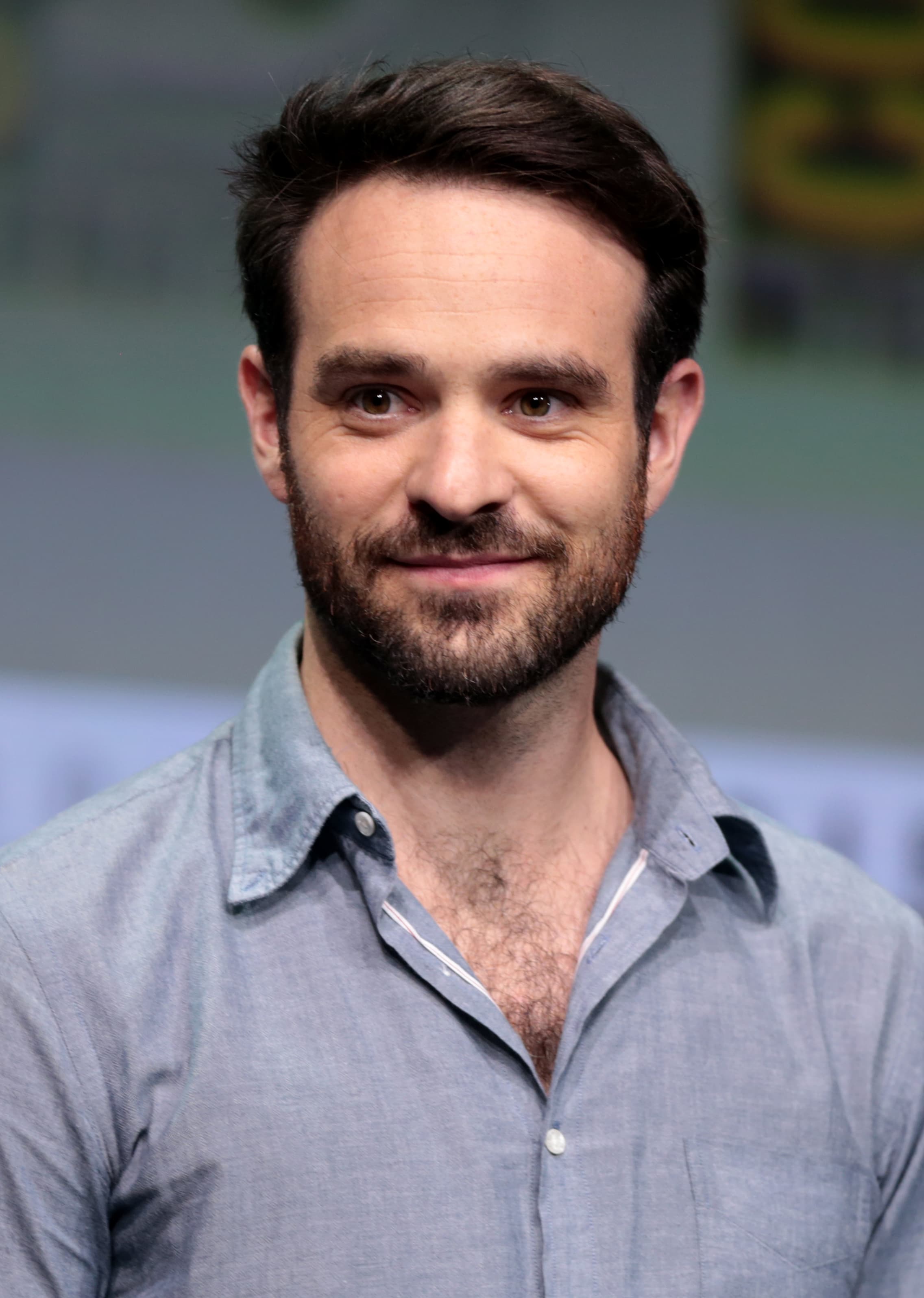
On the night of May 5, 2026, Matt Murdock did the one thing that nineteen years of comic book lore and a decade of Charlie Cox on screen had insisted he would never do: he stood up and told the world who he was. The Daredevil: Born Again Season 2 finale, titled The Southern Cross, ended with the unmasking — a story choice Cox himself said left him "shocked" because, as he put it, "you can't put that genie back in the box." It is the sort of swing that defines a career. It is also the sort of swing that, in the hands of most leading men, would have been played for spectacle. Cox played it for grief.
That instinct — to underplay the moment everyone else would amplify — is the thread that runs through almost everything he has done, from his breakout as Tristan Thorn in the 2007 fantasy Stardust to his Owen Sleater on HBO's Boardwalk Empire, to the original Netflix Daredevil run from 2015 to 2018 that earned him the kind of fan loyalty studios spend nine-figure marketing budgets trying to manufacture. And the chart, as it turns out, is built for exactly this kind of restraint.
A Note on the Chart and What We Will Not Pretend to Know
Charlie Cox's birth time is not in the public record. Every reputable astrological database lists him as Rodden Rating X, which means we have a confirmed date (December 15, 1982) and a confirmed birthplace (London) but no time of day. We have calculated his chart using a noon fallback, which gives us reliable sign positions for every planet — the Moon moves roughly thirteen degrees per day, but Cox was born with the Moon at 24° Sagittarius, deep into the sign with no danger of slipping into the next one regardless of the actual hour.
What we cannot tell you, with any honesty, is his rising sign. We also cannot tell you which house any of his planets occupy, where his Midheaven sits, or whether his Moon is in his second or his eleventh by Placidus. The house numbers our software returned are mathematical artifacts of choosing 12:00 PM, and using them in a public profile would be a small lie pretending to be analysis. So we won't.
Why We're Not Naming His Rising Sign
The rising sign is the most overworked placement in popular astrology, and it is also the most time-sensitive. A two-hour error in birth time can produce an entirely different rising sign and an entirely different set of house placements. For a Sagittarius Sun like Cox, born late in the sign, the possibilities range across at least eight or nine of the twelve signs depending on what hour he was actually born. Some publications would simply pick the most flattering option — "Charlie Cox Has Pisces Rising and That's Why He's So Soulful" — and run it. We don't.
If his birth time is ever published with a credible source, we will revise this profile and add the time-dependent layer. Until then, treat anyone who tells you with confidence what Cox's rising or houses are with skepticism. The honest version of his chart is the sign-by-sign one, and it is plenty rich on its own.
The Big Three (Minus One)
Sun in Sagittarius (23°11′)
A Sagittarius Sun at the late end of the sign is the part of the zodiac that has stopped seeking — it has already crossed the borders, already been told by an Ashdown House headmaster and a Sherborne School form tutor and a Bristol Old Vic Theatre School acting coach that the world is wider than the room — and is now trying to figure out what to do with all that knowing. You can hear it in Cox's interviews: he does not perform certainty. He volunteers, often unprompted, that something terrified him or surprised him or made him doubt the choice. The Sagittarian appetite for new terrain is there, but it is filtered through a sensibility that resists the swagger most people associate with the sign.
What it costs him: late-degree Sagittarius Suns tend to chase the next horizon at the expense of the one they are already standing on. Cox has admitted in promotional rounds that he wrestles with whether to keep playing Matt Murdock indefinitely — the chart suggests the discomfort is real and recurring. The Jupiter-ruled Sun wants the next role, the next genre, the next country, and being the face of a long-running franchise is precisely the kind of trap a Sagittarius Sun finds it hardest to honor with full attention.
What complicates it: his Capricorn stellium — Mercury at 7°, Venus at 3°, both in the most career-disciplined sign of the zodiac, the one that builds reputations brick by brick rather than chasing the next vista — pulls in the opposite direction. The Sagittarius Sun wants to leave; the Capricorn personal planets want to commit, deliver, and protect what has already been built. The decade-long stewardship of Daredevil, against the odds of cancellation and revival, is what that internal argument looks like in practice.
Moon in Sagittarius (24°24′), conjunct the Sun and Neptune
The Moon in Sagittarius — the emotional body wired for meaning rather than safety — is rare enough on its own. The Moon in Sagittarius pressed up against the Sun (a conjunction within 1.23° orb) and the Sun pressed up against Neptune (3.44° orb) is a different animal entirely. The technical name is a triple conjunction, and what it does emotionally is fuse identity, mood, and imagination into a single instrument. There is no clear seam in Cox between "who I am," "what I feel," and "what I am imagining" — which is, not incidentally, a textbook description of why he is so persuasive playing characters whose moral interior is the entire story.
You can watch this configuration light up on screen during the Stardust years, when Cox played a young man literally walking into a fairy tale and reading it as plausible. You can also watch it ache during the Daredevil scenes where Matt Murdock loses someone — Cox does not telegraph grief, he absorbs it, which is what a Sun-Moon-Neptune conjunction tends to do with feeling. It does not project; it metabolizes.
What it costs him: this configuration also blurs the boundary between Cox and the role. Sun-Moon-Neptune people can lose track of where their own preferences end and the character's begin, and they have to be vigilant about whether they are responding to the world as themselves or through the lens of whoever they have most recently inhabited. The fact that he has talked openly in interviews about not wanting to leave Murdock behind, and about the strange experience of being the only actor whose Marvel character survived the franchise reset, is the cost surfacing as language.
What complicates it: his Mars in Aquarius square Saturn in Scorpio (2.5° orb). The Sun-Moon-Neptune conjunction wants to dissolve into the role; the Mars-Saturn square wants to harden against it, to maintain control, to set boundaries. The two systems are at war, and the resolution he has found — the disciplined craft work in service of a soft, dreamy emotional engine — is the chart actually working for him rather than tearing him apart. It is not coincidental that other late-Sagittarius Suns who carry similar tension — see Brendan Fraser, whose 2022 comeback turned on the same kind of metabolized feeling — have built their second acts on exactly this trade.
Personal Planets: Mercury, Venus, Mars
Mercury in Capricorn (7°11′)
Mercury in Capricorn is the deliberate communicator — slow to answer, careful with phrasing, allergic to overclaim. In an actor, it shows up as the long pause before the line, the willingness to let a beat play silent rather than fill it with something clever. It is also why Cox tends to give interviews that read like considered essays rather than press junket banter. He does not wing it. He thinks about how the sentence will land, which is a Capricorn Mercury habit, and a useful one when you are the public face of a character whose internal life is the whole point.
Venus in Capricorn (3°19′), sextile Saturn, opposite the North Node
Venus in Capricorn loves what lasts. It chooses partners and projects on the basis of structural integrity rather than spark, and it is happiest when the relationship — romantic or professional — has rules, ritual, and a long horizon. Cox married producer Samantha Thomas in 2018, and the partnership has stayed almost entirely out of the celebrity press, which is a Capricorn Venus signature: love is private infrastructure, not content.
The sextile to Saturn (1.76° orb) reinforces this: Venus and Saturn in supportive angle is the placement of people who do not mind delayed gratification in love or work, and who measure relationships in years rather than seasons. The opposition to the North Node (0.88° orb) is the more interesting wrinkle. Oppositions to the nodes ask the chart's owner to surrender something Capricorn — control, structure, the comfort of the proven — in service of growing toward Cancer's softer, more familial register. In practice, this often shows up as a mid-life pivot toward home, family, and emotional vulnerability, and it tends to fire most strongly during nodal returns.
Mars in Aquarius (4°4′), square Saturn, sextile Uranus
Mars in Aquarius does not fight the way other Marses fight. It fights with detachment, with strategy, with a kind of cold, almost ironic refusal to be drawn into the opponent's emotional register. Watch any Daredevil fight scene — Cox's physical work is precise, almost mathematical, never raging. The Mars-Uranus sextile (1.91° orb) gives the body an unexpected snap, a willingness to do the surprising thing, and is part of why his stunt work reads as both rehearsed and genuinely improvisatory.
The Mars-Saturn square (2.5° orb) is the harder edge of this picture. Mars-Saturn aspects in any form ask the chart's owner to do hard physical and emotional labor while feeling chronically restrained — like trying to sprint with a weighted vest. It produces actors who can carry long, demanding shoots without burning out, but it also produces a lifelong sense that effort is never quite enough, that the next role has to prove something the last one didn't. We will return to this square in the next section, because it is, more than any other single feature of his chart, the engine of his career.
Where the Chart Pushes Back
The Mars-Saturn Square: The Cost of Being the Reliable One
Mars in Aquarius square Saturn in Scorpio is one of the hardest aspects to live with quietly. It does not produce drama; it produces grind. The Aquarian Mars wants to act on principle, in detached pursuit of a vision, while the Scorpio Saturn imposes an almost compulsive discipline around what cannot be controlled — death, intimacy, power, the parts of life where you have to surrender. The square between them creates a chronic experience of pushing against a wall that does not move and does not explain itself.
In Cox's career, this looks like the willingness to keep showing up for Daredevil through a Netflix run, a multi-year cancellation, a quasi-cameo in She-Hulk, the Spider-Man: No Way Home appearance, and finally the full Born Again revival in 2025. Most actors would have moved on. The Mars-Saturn square doesn't let him; it makes the quiet, recurring labor feel like the point. The cost is that he has talked openly about not wanting to be type-cast, while continuing to do the work that type-casts him. That is not a contradiction — it is a Mars-Saturn square, doing what Mars-Saturn squares do.
The Jupiter-Chiron Opposition: The Wound of the Wider Vision
Jupiter in Scorpio at 27° opposite Chiron (4.01° orb) is the configuration of someone whose largest gifts — generosity of spirit, faith in the bigger picture, the appetite for transformation — sit directly across from a tender wound around being too much, too intense, or too willing to go to dark emotional places. It is a profile that fits actors who specialize in moral interiority. The opposition does not heal; it asks to be metabolized into work, which Cox has done. The Murdock character — Catholic, lawyer, vigilante, perpetually at war with his own appetites — is essentially the script of a Jupiter-Chiron opposition externalized.
The Saturn-Pluto Conjunction: The Generational Weight
Saturn at 1° Scorpio conjunct Pluto at 28° Libra (2.72° orb, with Saturn just having ingressed into Scorpio) is a generational signature — most people born in late 1982 carry some version of it — but it lands in Cox's chart with particular force because both planets sextile his Sun and his Moon. What is generational background noise for most members of his cohort is structural foreground for him. It produces a constitutional comfort with darkness, decay, and slow institutional power that you can see threaded through his role choices: the Irish gangland of Kin, the espionage paranoia of Treason, the corrupt-city moral architecture of Hell's Kitchen. The neighbouring chart of <a href="/blog/tilda-swinton-birth-chart-scorpio-neptune-astrology-2026">Tilda Swinton</a> — built on the same Scorpio-Neptune contact — shows how the late-1982 cohort's gravitational pull toward moral interiority can land on either side of the lawyer-vigilante line.
Notable Aspects
- Sun conjunct Moon (1.23°) — A New Moon native; identity and mood are one system. Produces emotional consistency on screen, but also a chart that carries no internal opposition between heart and ego, which can make external opposition harder to absorb.
- Sun conjunct Neptune (3.44°) — The mythopoetic imagination woven into selfhood. Drains poorly: substance vulnerability, fatigue, susceptibility to projection from fans.
- Moon conjunct Neptune (2.21°) — Dream-soaked emotional life. Strong intuition for the unspoken; weak boundary against absorbing other people's moods.
- Mercury conjunct Venus in Capricorn (3.86°) — Disciplined charm, written-rather-than-improvised wit. Mercury-Venus people are persuasive in interviews; the Capricorn flavor makes them dryly so.
- Mars sextile Uranus (1.91°) — Quick, surprising physical instincts. The aspect of stunt-friendly actors and athletes who move unpredictably.
- Jupiter conjunct Uranus (8.17°) — Wide orb, but it sits in Sagittarius's ruler joining the chart's electrifier, and produces a hunger for sudden expansion. He has had two of these in his career: the 2007 Stardust break and the 2015 Daredevil cast.
Career and Public Life
The astrological promise of a Sagittarius Sun-Moon-Neptune stack is the wandering mythologist — the actor who plays travelers, dreamers, romantics, men in search of larger meaning. The career has obliged: Tristan Thorn in Stardust, Owen Sleater in Boardwalk Empire, Matt Murdock through eleven years and counting, the spy in Treason, the brother in Kin. There is no Cox movie in which the character is not, at some level, looking for something he cannot fully name. That is the chart, externalized. <a href="/blog/ridley-scott-birth-chart-sagittarius-the-dog-stars-2026">Ridley Scott</a>, still working in his late eighties, is the same Sagittarius-Sun temperament channeled into directorial endurance rather than acting tenure — proof that the late-Sagittarian appetite for restless reinvention can hold a single craft for half a century if the rest of the chart agrees.
What the chart does not promise is the patience required to make this kind of career commercially viable. Sagittarius Suns famously chase variety; they are not built for franchise stewardship. The fact that Cox has become, against the run of the chart, the most franchise-loyal of the post-Defenders Marvel actors — the only one whose character survived the studio's reset — is the Capricorn Venus and Mercury, the Mars-Saturn square, and the Jupiter-Chiron opposition all doing structural work that the Sagittarius layer would not, on its own, sustain. It is also why the role has cost him something. He has said as much, repeatedly, in his quieter publicity moments. The cost is real. The chart can hold it, but it does not deny it. Compare Jake Gyllenhaal, another late-Sagittarius Sun whose career has mostly avoided franchise commitment in favor of the next horizon — Cox's path is the road less traveled by Sagittarian leading men.
Relationships
Cox married American producer Samantha Thomas in 2018. The marriage has produced two children and almost no celebrity coverage, which — for a Capricorn Venus opposite the nodes — is the configuration working as designed. Capricorn Venus marries for infrastructure: shared work, shared logistics, shared long horizons. The opposition to the nodes asks him to soften that infrastructure with Cancer's domestic intimacy as he ages, and the move toward family, away from London nightlife or Hollywood circuits, fits the trajectory the chart sets up.
The trade-off the chart sets up around partnership is the Sagittarius Sun-Moon's appetite for movement against the Capricorn Venus's appetite for staying. The resolution he has found — a partnership grounded in privacy and a working life that takes him constantly across the Atlantic — is the chart's two systems negotiating. Saturn sextile Venus (1.76°) is the steadying voice in this negotiation: it favors the long bet over the next adventure.
The Transit That Actually Matters
Cox is in the late innings of a Pluto-square-Pluto transit that begins around age 38–40 for everyone of his cohort and tapers through the mid-forties. For him, with Pluto having just ingressed into Aquarius, the transit is now activating the early degrees of his Mars-in-Aquarius — and his natal Mars is square his natal Saturn. What that means in plain English: from now through 2027–2028, transiting Pluto will repeatedly press on the exact pressure point that his chart has spent forty-three years working around. The Mars-Saturn grind he has metabolized into discipline is going to be tested at its hardest seam.
In career terms, this is the transit that decides whether the Daredevil revival becomes a multi-decade stewardship or whether he chooses, finally, to take the off-ramp the Sagittarius Sun has been quietly mapping all along. Pluto on natal Mars is rarely the moment people quit their hardest work; it is the moment they double down or burn out, and the chart's other support — particularly the Saturn-Pluto sextile to Sun and Moon — argues strongly for the former. Expect Cox to take on, in the 2026–2028 window, a role or set of roles that genuinely scare him, that risk the brand he has built, and that he commits to with the Capricorn discipline he has spent a career cultivating. The Born Again unmasking, in retrospect, will look like the opening chord of this movement, not the climax.
What This Chart Asks You to Reckon With
Charlie Cox's chart is a study in what it costs to be the dependable one. The Sagittarius Sun-Moon-Neptune conjunction is, by every conventional reading, the chart of a wanderer — someone whose deepest instinct is to keep moving, to refuse the second act in the same costume, to chase meaning at the expense of accumulated stability. And Cox has spent twenty years doing the precise opposite: building a career around a single character, returning to him through cancellations and reboots, accepting the type-casting in exchange for a quality of stewardship most of his cohort has refused.
The chart's honesty is in the cost it shows. The Mars-Saturn square does not let him pretend the work is easy. The Jupiter-Chiron opposition does not let him pretend the role is not personally hooked into a tender place. The Sun-Neptune conjunction does not let him pretend he can keep this up indefinitely without it eroding the boundary between himself and the part. What the chart asks you to reckon with — and what Cox himself seems to be reckoning with publicly, in interview after interview about the Born Again revival — is whether the most important thing an actor can do is leave a role or stay with it long enough that staying becomes the art. Most Sagittarius Suns answer that question by leaving. Cox is one of the few who has answered it by staying, and the chart's tension is the price tag on that answer. Whether the next two years let him keep paying it, or force him to set it down, is the most interesting question his chart is currently asking.
Methodology and Sources
This profile uses the Swiss Ephemeris (via Kerykeion) to calculate planetary positions and aspects from Charlie Cox's confirmed birth date (December 15, 1982) and birthplace (London, UK). His birth time is unverified — Rodden Rating X — so we have used a 12:00 PM noon fallback, which produces accurate sign and aspect data but unreliable house and angle data. We have therefore omitted all rising-sign, Midheaven, and house-based claims from this profile. If a credible source for his birth time is published in the future, we will revise the chart and the analysis. All biographical claims are sourced through Wikipedia and named productions linked inline.