The Woman Before the Wig
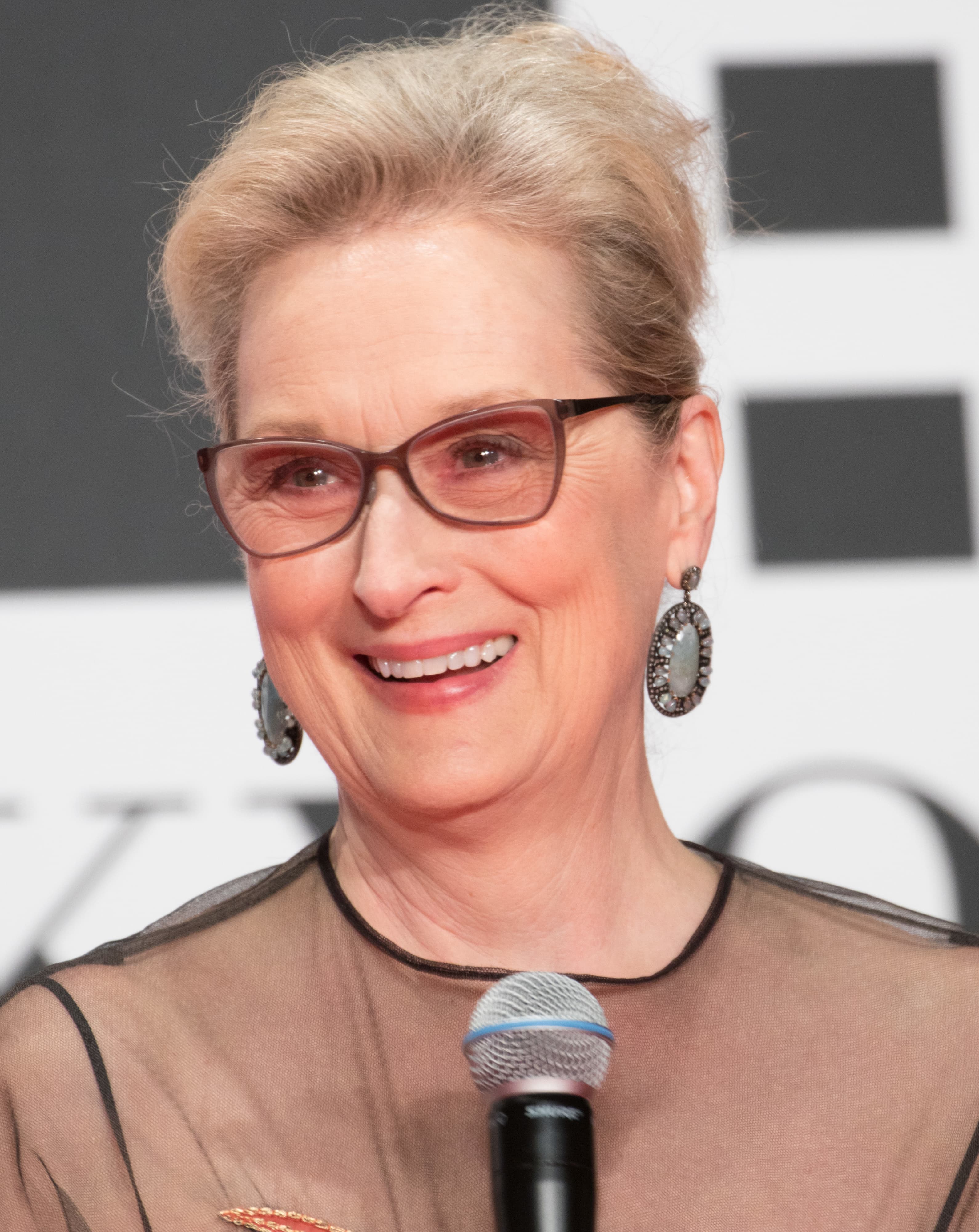
On May 1, 2026, The Devil Wears Prada 2 opened to $76.7 million — roughly three times the original's debut — and a 76-year-old <a href="https://en.wikipedia.org/wiki/Meryl_Streep">Meryl Streep</a> walked back onto a Manhattan soundstage as Miranda Priestly twenty years after she first invented her. There is no precedent for this. Most actors of her generation are doing prestige cameos and audiobook narration; she is opening the summer.
If you want to understand why she keeps getting away with it, the chart is a startlingly tidy answer. Streep was born June 22, 1949, at 8:05 a.m. in Summit, New Jersey — a birth time logged by <a href="https://www.astro.com/astro-databank/Streep,_Meryl">AstroDatabank</a> at the highest reliability rating (AA, sourced from the birth certificate). That accuracy matters here because so much of what makes her Streep lives in the angles and house placements only an exact time can reveal.
The Big Three: Sun, Moon, Rising
Sun in Cancer, 11th House — Conjunct Uranus to the Arc-Minute
Streep's Sun sits at 0°43' Cancer — the very first degree of the sign — and it is glued to Uranus at 0°44' Cancer with an orb of 0.02°. Conjunctions are when two planets share roughly the same spot in the sky, fusing their meanings; this one is closer than most astrologers ever see in a chart they aren't fudging. The reading is unambiguous: she carries a Cancer Sun (the family-attached, emotionally protective archetype) wired permanently to Uranus, the planet of disruption and the unrepeatable. She is a deeply private, family-rooted person who is also, structurally, not like other actors. The 1978 <a href="https://en.wikipedia.org/wiki/Holocaust_(miniseries)">Holocaust miniseries</a> early-Emmy run, the German-Polish accent in Sophie's Choice, the decision in her seventies to learn ukulele for Mamma Mia! Here We Go Again — none of these are typical career moves. Cancer-Uranus people protect their inner world fiercely and keep blowing up the form their work takes.
The cost: a Sun this fused with Uranus rarely feels safely settled. The same placement that made her career genre-proof has also kept her from doing what most movie stars eventually do — repeat themselves into a brand. And the Cancer Sun's preferred mode (privacy, family, retreat) is in constant low-grade tension with an 11th-house placement that keeps shoving her into public collective life — awards stages, political endorsements, ensemble casts. The complicating placement: her Taurus Moon in the 10th, which we'll get to, anchors that 11th-house exposure with something steadier than Uranus alone would supply.
Moon in Taurus, 10th House — The Public Face
The Moon in Taurus at 14°23' is the placement that explains the consistency of Streep's image. Taurus Moons need stability, sensory comfort, and slow-built routines; they are the opposite of erratic. Sitting in the 10th house — the slice of the chart governing public reputation and career — it suggests an emotional life that is most legible to the world through her vocation. Audiences feel they know her not because she has told them anything (she famously hasn't) but because the work has been steady, recognizable, and decades-long.
What it costs: a Taurus Moon in the 10th can become hostage to its own reputation. The chart wants her work to be a public anchor, which means walking away — really walking away — from the spotlight is harder than it would be for a more mutable Moon. And the Moon is in a tight square (a 90° tension aspect, orb 0.46°) to Pluto in Leo in the 1st house, which is the most psychologically loaded aspect in the whole chart. That square is the engine room of her acting: emotion (Moon) is constantly being pressurized by an identity-Pluto that demands transformation. It is also the placement that makes Streep famously private about her interior life — Pluto-Moon people don't perform their feelings on demand; they channel them through characters.
Leo Rising at 2°44' — With Pluto on the Ascendant
The rising sign, or Ascendant, is the body and persona you walk into a room with — and Streep walks in with Leo at 2°44' Ascendant, with Pluto at 14°51' Leo sitting in the 1st house behind her. This is not an actress. This is a presence. Leo Rising is the regal, performance-oriented mask; Pluto in the 1st is the placement that gives someone an almost compulsory gravitas — the room reorganizes around them whether they want it to or not.
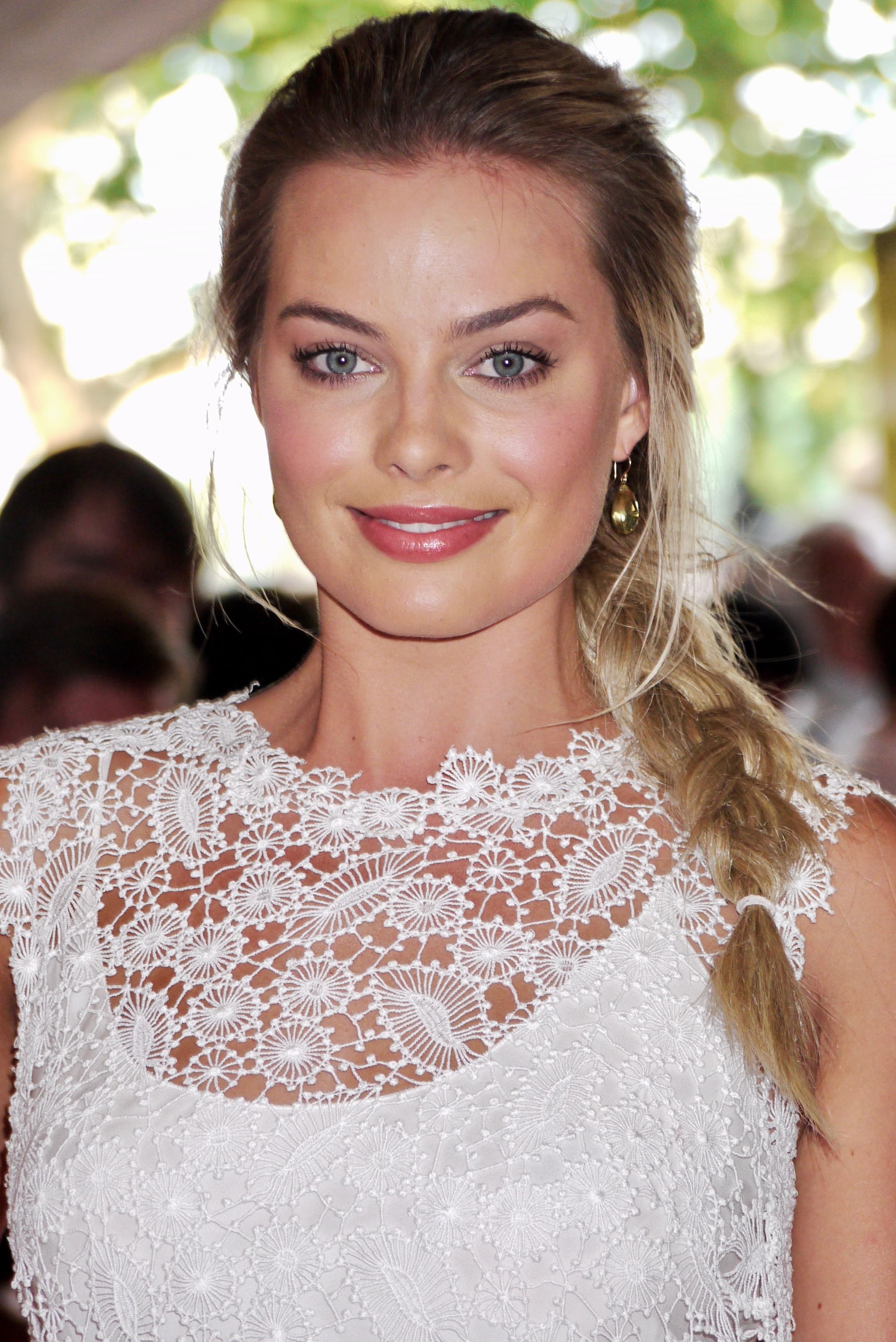
The trade-off, which she has been explicit about in interviews: this body has never been allowed to be ordinary. Pluto in the 1st people are typed early and re-typed often, and there is no anonymous version of them in public space. The Leo Ascendant complicates the Cancer Sun's preference for privacy — the chart pulls her toward both family-protective interiority and a body the camera reads as monumental. The fact that she has held both of those without snapping into either pure recluse or pure spectacle is, structurally, a Cancer-Sun-with-Leo-Rising achievement. (For the same Pluto-in-1st gravitational pull at a younger career stage, see <a href="/celebrities/margot-robbie">Margot Robbie's chart</a>, where a different sign treatment of the same archetype produces a totally different texture.)
Personal Planets: How She Works
Mercury in Gemini, Conjunct Mars — The Linguistic Engine
Streep's Mercury at 10°17' Gemini sits within 1.46° of Mars at 8°49' Gemini, both in the 11th house. Mercury rules language and mind; Mars rules drive and attack. In Gemini — the sign that natively loves verbal play, mimicry, and accent — and conjunct, you get the placement that genuinely explains the accents. Streep is famous for <a href="https://en.wikipedia.org/wiki/Meryl_Streep">voice and dialect work</a> so precise that linguists have studied it: Polish in Sophie's Choice (1982), Danish-inflected English in Out of Africa (1985), the Bronx in Doubt (2008), Margaret Thatcher's clipped received pronunciation in The Iron Lady (2011). A Mercury-Mars conjunction is a mind that attacks language; in Gemini, that attack is curious and shapeshifting rather than blunt.
This placement also forms a wide trine (orb 2.11°) to Neptune in Libra in the 3rd house — the dreamy, dissolving planet in the house of speech. Mercury-Neptune trines are the placements you find in actors who can disappear into a character's voice, because they don't experience their own as fixed. The cost: Mercury-Neptune can also be fog. The same placement that lets her dissolve into accents has made her notably evasive when interviewed about herself. She talks; she rarely tells you anything.
Venus in Cancer, 12th House — Privacy as a Love Language
Venus at 18°25' Cancer in the 12th house is the relationship signature, and it is one of the most introverted Venus placements in the zodiac. The 12th house is the house of seclusion, the chart's hidden interior; Venus there is someone whose love life is genuinely none of the public's business and is structured that way deliberately. Streep married sculptor <a href="https://en.wikipedia.org/wiki/Don_Gummer">Don Gummer</a> in 1978, six months after the death of her partner <a href="https://en.wikipedia.org/wiki/John_Cazale">John Cazale</a>; they have four children and remained married until their separation was disclosed in 2023. Even that — a roughly 45-year marriage in a profession that does not produce them — is a Venus-in-12th outcome. The relationship was real, lived offstage, and not for sale.
The placement also forms a tight square to the Midheaven (orb 0.25°), suggesting that her private life and her public role are in genuine, unavoidable tension. The chart wants love to live behind closed doors; the career insists on cameras. Streep has spent fifty years negotiating that square, and the negotiation has cost her — the public disclosure of the long separation from Gummer was one of the few moments in her life when the 12th-house Venus had to come outside.
Mars in Gemini, 11th House — Energy as Versatility
Mars in Gemini at 8°49' is the energy of someone who works by switching, not grinding. Mars-in-Gemini people exhaust themselves through repetition; they are powered by variety. In the 11th house — friends, collectives, public groups — that variety expresses through ensemble work. Look at the casts she returns to: she has worked repeatedly with <a href="https://en.wikipedia.org/wiki/Mike_Nichols">Mike Nichols</a> and is now in her third theatrical pairing with Anne Hathaway. The 11th-house Mars wants colleagues, not solo vehicles, and her filmography reflects that more than reviewers usually notice.
Where the Chart Pushes Back
The Moon-Pluto Square: Emotional Surveillance
The Moon-Pluto square (orb 0.46°) is the chart's most uncomfortable aspect, and it is the placement that keeps Streep from being a sweetheart. Moon-Pluto squares produce people who feel everything but distrust expressing it — the Moon (need, vulnerability) is in a fight (square) with Pluto (control, transformation, what cannot be safely shown). They tend to scan emotional rooms compulsively, intuit power dynamics fast, and develop a guarded depth that can read as imperiousness from outside. There is a reason Miranda Priestly fits her. There is also a reason her line readings as Miranda in <a href="https://en.wikipedia.org/wiki/The_Devil_Wears_Prada_(film)">The Devil Wears Prada</a> read as faintly menacing in a way most other actresses couldn't have produced. The square doesn't just give her access to Miranda's chill — it is constitutive of how she experiences her own feelings. The cost: people with this aspect often describe themselves as exhausted by their own emotional acuity. The reward: it is precisely what makes a fifty-year career possible. You cannot fake what she does without it.
The Venus-MC Square: A Private Life on a Public Stage
The Venus-MC square at 0.25° is one of the tightest aspects in the whole chart, and it is structural: every romantic, aesthetic, or values-based choice she makes is in unavoidable tension with her career standing. Most movie stars resolve this square by either over-sharing the personal life as content (it becomes part of the brand) or by becoming famously reclusive. Streep has refused both routes — she stayed visible while keeping the marriage offstage — and the chart suggests this required constant active maintenance. The recent disclosure that she and <a href="https://en.wikipedia.org/wiki/Don_Gummer">Don Gummer</a> have been separated for years is the Venus-MC square's late bill arriving: a private life that managed to stay private for forty-five years eventually cannot stay that way.
The Saturn-in-2nd Discipline
Saturn at 1°34' Virgo in the 2nd house is the placement most astrology readers underrate. Saturn is the planet of structure, restriction, and earned mastery; Virgo is its working-craftsman expression; the 2nd house governs values, money, and what one builds materially. People with this placement do not get praise for their work for a long time and then suddenly become impossible to argue with. Streep's <a href="https://en.wikipedia.org/wiki/List_of_awards_and_nominations_received_by_Meryl_Streep">Academy Award record</a> — 21 nominations and 3 wins — exceeds any other performer's in the Academy's history. Saturn-in-Virgo-in-2nd doesn't promise prizes; it promises that the craft will be the thing that holds. The cost: this placement also produces a chronic sense that the work is never quite enough, which is why she famously rewatches her own films with a critic's eye. Saturn in the 2nd is rarely satisfied.
Notable Aspects: The Chart's Repeating Patterns
- The Cancer-Gemini 11th-house cluster: Sun, Mercury, Mars, and Uranus all sit in the 11th house, with Sun and Uranus in Cancer and Mercury and Mars in Gemini — a chart pointed almost entirely at public collective life.
- The Sun-Saturn sextile (orb 0.85°): a subtle 60° support aspect between identity and discipline. Sun-Saturn people age into themselves rather than away from themselves.
- The Saturn-Uranus sextile (orb 0.83°): discipline and disruption cooperating — the placement of someone who can build inside an unstable form.
- The Pluto-MC trine (orb 3.82°): power flowing easily to public role. Some actors fight for gravitas; she had it built in.
- Jupiter conjunct Descendant (orb 2.21°), Jupiter Aquarius retrograde in the 6th: relationships are often with collaborators; growth happens through the daily practice of the job.
Career & Public Life: What the Chart Promised vs. What It Cost
The chart promises an unusually durable public life — Pluto in the 1st, Sun-Uranus on the Ascendant's trine angle, Saturn-Sun support, Moon in the 10th. What it does not promise is happiness in that durability. The Cancer Sun's natural mode is private and family-rooted; the chart pushed her into public life anyway, and the Moon-Pluto square kept the experience emotionally costly even as it became professionally inevitable. She has said in interviews that she does not enjoy fame — that comment is not modesty, it is an accurate Cancer-12th-house Venus reading of what fame does to her chart. She does the work, and the fame is the side effect she manages.
What the chart did not promise is the late-career third act. Most actresses with a Saturn-in-2nd, Cancer-Sun chart would be fully in the elder-statesman-cameo phase by 76. Streep is opening The Devil Wears Prada 2 at the top of the box office, with Justin Theroux, Lucy Liu, and Kenneth Branagh joining returning co-stars Anne Hathaway, Emily Blunt, and Stanley Tucci. That trajectory is the Sun-Uranus conjunction at work — the placement that refuses to settle into expected patterns even when expectation would be easier.
Relationships: Venus in the 12th
Venus in the 12th house in Cancer is a relationship signature optimized for depth, not display. The placement suggests someone who falls in love privately, stays in love quietly, and treats the romantic interior as a sanctuary. Streep's first major relationship, with the actor <a href="https://en.wikipedia.org/wiki/John_Cazale">John Cazale</a>, ended with his death from lung cancer in 1978; she nursed him through his illness while shooting The Deer Hunter. Her marriage to sculptor <a href="https://en.wikipedia.org/wiki/Don_Gummer">Don Gummer</a> lasted from 1978 until their separation, which was disclosed publicly in 2023. They have four children: musician <a href="https://en.wikipedia.org/wiki/Henry_Wolfe_Gummer">Henry Wolfe Gummer</a>, actresses <a href="https://en.wikipedia.org/wiki/Mamie_Gummer">Mamie Gummer</a> and <a href="https://en.wikipedia.org/wiki/Grace_Gummer">Grace Gummer</a>, and model <a href="https://en.wikipedia.org/wiki/Louisa_Jacobson">Louisa Jacobson</a>.
The 12th-house Venus's trade-off is a particular kind of loneliness even inside long partnership — the love lives in a private chamber, but private chambers are also isolating. The Venus-MC square structurally guarantees that the relational interior and the public career will pull at each other, and the long separation reads, astrologically, as that square finally being honest. Compare this to a chart like <a href="/celebrities/selena-gomez">Selena Gomez's</a>, where Venus operates in a far more public, brand-blended way — the contrast is the difference a 12th-house placement makes.
The Transit That Actually Matters
Streep's most consequential current transit is Pluto's slow walk through the early degrees of Aquarius, where it is opposing her natal Sun-Uranus conjunction at 0° Cancer. Pluto entered Aquarius for its long-term residency in 2024 and will be making exact oppositions to her Sun and Uranus through 2026 and into 2027. Outer-planet oppositions to the Sun are once-in-a-lifetime transits — Pluto's orbit takes 248 years; she will not see this aspect again. They tend to coincide with periods of forced reckoning with identity, especially around what one has built versus what is genuinely still alive in oneself.
The symbolism here is almost too tidy: Pluto (transformation, power, the underworld) opposing her Sun (identity) and Uranus (the unrepeatable signature) at the moment she is publicly returning to the role — Miranda Priestly — that defined her late-career power phase. The chart suggests this will not be a graceful curtain call. Pluto oppositions are not closing rituals; they are confrontations, and they tend to produce work that says something the previous version of the person could not have said. Whatever The Devil Wears Prada 2 turns out to be artistically, the chart suggests Streep is at a transit moment where she has license — even an obligation — to push the role somewhere uncomfortable. The chart will not let her phone it in.
The transit is also activating her Moon-Pluto natal square, which is functioning right now like a circuit completing. Expect, over the next 18 months, the kind of late-career interview where she says something more honest than she has in twenty years.
What This Chart Asks You to Reckon With
The temptation with a chart this good — Cancer Sun-Uranus conjunction, Pluto in the 1st, Moon in the 10th, every angle clean — is to read it as destiny. It is not destiny. It is a set of demands.
The demand of a Sun-Uranus conjunction this exact is that you cannot repeat yourself; the moment you become a brand, the placement starts misfiring. The demand of Pluto in the 1st is that you cannot be small in public; the body itself is read as monumental whether you want it to be or not. The demand of a 12th-house Venus is that the love life will not be a public asset, and the cost of trying to make it one is severe. The demand of Saturn in the 2nd is that the work will not feel finished, ever, and the moment you decide it is, the placement withdraws.
What the chart cost Meryl Streep, you can read in what she does not have: the genre comfort of an actress who specializes, the brand legibility of a star who repeats, the anonymous private life of someone whose body did not photograph as inevitable. What the chart bought her is the only fifty-year leading-lady career in modern American film. It is not, as glossy profiles imply, a chart of pure gift. It is a chart of pure assignment — of a person who was handed a set of placements that gave her almost no permission to do anything other than what she did. The contrarian read: she is less the most gifted actress of her generation than the most rigorously employed by her own chart. That distinction matters. It is also why the work has held.
Methodology
Natal positions calculated with the Swiss Ephemeris (pyswisseph) via the Kerykeion library, using birth data from AstroDatabank rated AA (sourced from the birth certificate). Houses use the Placidus system; whole-sign references appear where noted. All planetary degrees, aspects, and house placements above are taken directly from the calculated chart — no positions have been estimated or rounded for narrative effect. Astrological interpretations draw on traditional and modern frameworks and are editorial in nature, not predictive.