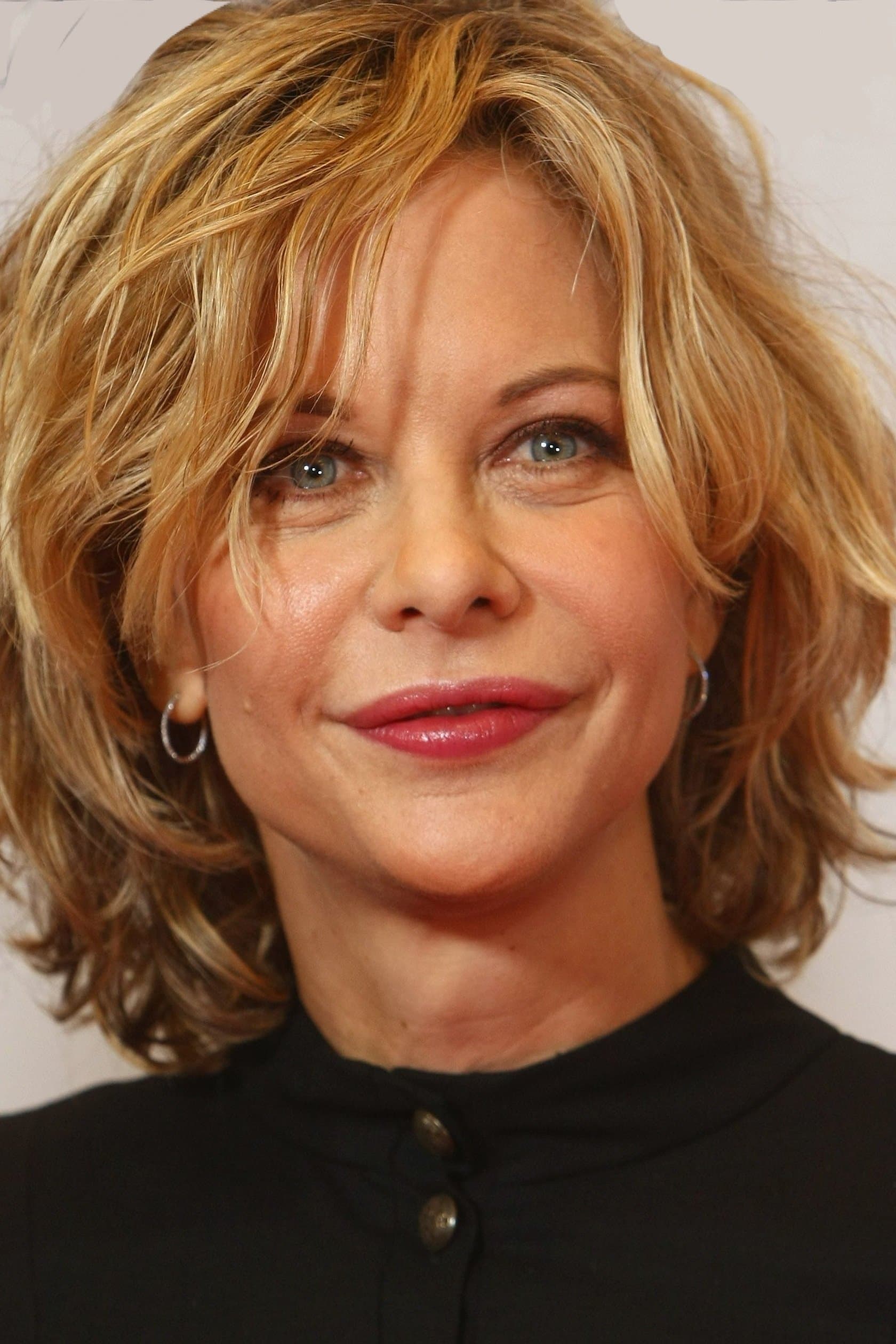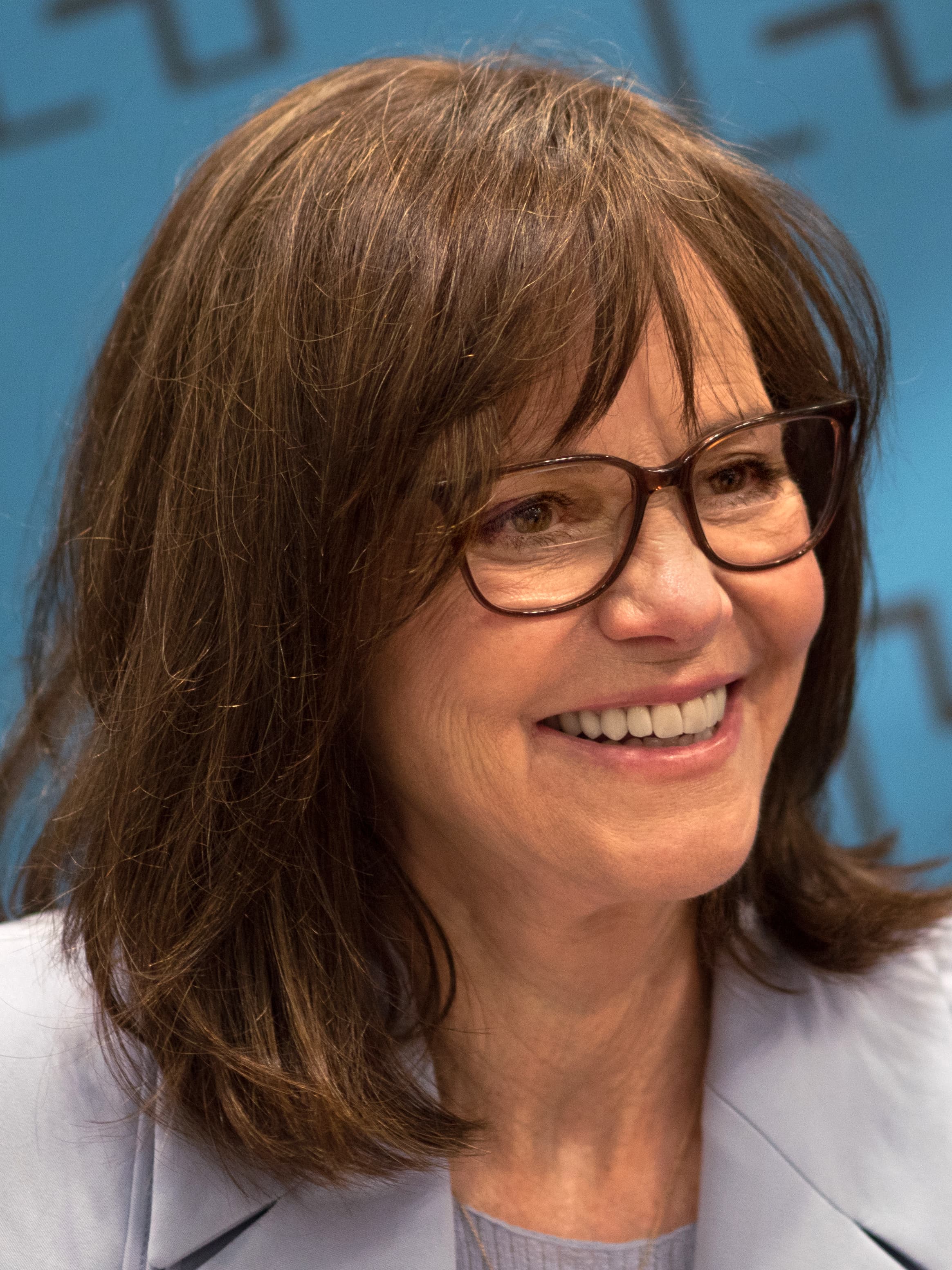
On a March night in 1985, a 38-year-old actress walked to the Dorothy Chandler Pavilion stage to accept her second Best Actress Oscar in five years and said five words that would follow her for the rest of her life: "You like me, right now, you like me." The line was misquoted almost immediately into the more saccharine "You really, really like me," and the misquote stuck because it suited the persona Hollywood had decided she was — small, eager, grateful. The actual quote, delivered by <a href="https://en.wikipedia.org/wiki/Sally_Field">Sally Field</a> for her work in <a href="https://en.wikipedia.org/wiki/Places_in_the_Heart">Places in the Heart</a>, was the opposite. It was a woman looking at a room full of people who had spent two decades calling her a flying nun and refusing to let her be taken seriously, and saying: I see you finally seeing me.
The chart underneath that moment is one of the most psychologically loaded charts in American film, and it is a chart organized almost entirely around a single razor-tight aspect: the Sun in Scorpio sitting 0.14 degrees from an exact square to Pluto. That is not a metaphor. The orb — the angular distance between an aspect's exact perfection and where it actually falls — is so close to zero that astrologers call it a degree-perfect aspect, the kind that operates as a constant background pressure on the personality rather than a passing weather system.
When you read Sally Field's career through this lens, the typecasting era, the breakdown into <a href="https://en.wikipedia.org/wiki/Sybil_(1976_film)">Sybil</a>, the <a href="https://en.wikipedia.org/wiki/Norma_Rae">Norma Rae</a> Oscar at thirty-three, the late-career renaissance with <a href="https://en.wikipedia.org/wiki/Brothers_%26_Sisters_(2006_TV_series)">Brothers & Sisters</a> and her 2018 memoir <a href="https://en.wikipedia.org/wiki/In_Pieces_(book)">In Pieces</a>, the architecture clicks into place. This is a chart that does not reward charm. It rewards excavation.
The Big Three
Sun in Scorpio (1st House) — The Excavator
A Scorpio Sun in the first house puts the most private sign in astrology in the most public position in the chart. The first house is the body, the immediate impression, what people see when you walk into a room — and Scorpio there reads, in life, as a person who walks in and is somehow already known too well, before she has spoken. You see this in Field's screen face: in <a href="https://en.wikipedia.org/wiki/Sybil_(1976_film)">Sybil</a> (1976), in the union-organizer rage of <a href="https://en.wikipedia.org/wiki/Norma_Rae">Norma Rae</a> (1979), in the silent grief of <a href="https://en.wikipedia.org/wiki/Steel_Magnolias">Steel Magnolias</a> (1989). She does not perform interiority — she leaks it. That is the first-house Scorpio doing its job.
What it costs is enormous. Scorpio is the sign that processes by going underneath, and a first-house Scorpio cannot keep the underground private — the whole chart broadcasts it. Field has spoken openly about how exposing the <a href="https://en.wikipedia.org/wiki/Gidget_(TV_series)">Gidget</a>-and-<a href="https://en.wikipedia.org/wiki/The_Flying_Nun">Flying Nun</a> years felt, how the bubbly ingenue persona was a kind of armor she could not get out of, and how serious dramatic work required her to dismantle the persona publicly, role by role. The first-house Scorpio could not hide; it could only convert. And complicating all of it: she has a Libra Ascendant, the sign of social pleasantness and graceful presentation. The chart gives her a Scorpion's interior and a Libran's surface, which is exactly the configuration that produces an actress people underestimate for fifteen years and then suddenly cannot stop watching.
Moon in Aries (6th House) — The Worker
The Moon describes inner life and emotional metabolism, and Aries is the sign of immediate, uncomplicated action. Aries Moons do not deliberate; they move. Placed in the 6th house — the house of daily work, routine, craft, and service — this Moon produces a person whose emotional regulation is, fundamentally, labor. She works. When something is wrong inside, she goes back to the set, the script, the next scene, the next role. The 2018 memoir <a href="https://en.wikipedia.org/wiki/In_Pieces_(book)">In Pieces</a> describes exactly this pattern: a childhood with a difficult relationship to her stepfather, the actor <a href="https://en.wikipedia.org/wiki/Jock_Mahoney">Jock Mahoney</a>, processed in part through the discipline of acting itself.
The cost of this Moon is that it does not rest well. Aries in the 6th house can become a workaholic structure — the feelings get metabolized through doing, and when there is nothing to do, the feelings do not go away, they amplify. This is why the late-career stretch is so striking: even at 76, she was on screen in <a href="https://en.wikipedia.org/wiki/80_for_Brady">80 for Brady</a> (2023). The complicating placement here is the Moon's opposition to Neptune in the 12th house — orb 3.85 degrees, applying — which is a softening, dissolving counter-current to all that Aries directness. The fast Aries Moon wants to act now; the Neptune opposition wants to retreat, dream, lose herself in the role. The tension between them is a great deal of what shows up on screen as emotional depth that never reads as showy.
Libra Ascendant — The Pleasing Surface
The Ascendant is the chart's front door — the sign that was rising in the east at the moment of birth, governing how a person comes across before anyone has examined them more carefully. Libra rising is the sign of social ease, diplomatic instinct, and a deeply trained capacity to be pleasing. With Neptune sitting in the 12th house close enough to her Ascendant (orb 9.47 degrees) to soften the edges of how she is perceived, the surface presentation reads as gentle, slightly indistinct, easy to project onto. This is the structural reason Hollywood spent the late 1960s and early 1970s casting her as small, sweet, and contained. The surface invited it.
What this Ascendant costs is precision of self-presentation. Libra rising people are often misread as agreeable when they are not, as small when they are not, as soft when they are not. The complicating placement — and this is the central paradox of the whole chart — is the Scorpio Sun in the first house, conjunct that same Ascendant from the inside. The exterior is Libran; the interior, just behind it, is Scorpionic. People meet the Libra and assume the chart ends there. It doesn't. Underneath the appeasing surface is a Sun square Pluto so tight it operates as a constant interrogation engine. She is, in chart terms, exactly the wrong person to underestimate.
Personal Planets — Mercury, Venus, Mars
Field's Mercury, Venus, and Mars are clustered in the 2nd house — the house of values, self-worth, and what one builds with one's own hands. Mercury in Sagittarius at 5°53' gives her the bluntness that surfaces in her interviews and especially in <a href="https://en.wikipedia.org/wiki/In_Pieces_(book)">In Pieces</a> — Sagittarius is the sign that says the inconvenient true thing. The Mercury-Moon trine (orb 0.13, applying — almost exact) is one of the most striking aspects in the chart: it links the way she thinks to the way she feels with almost no friction, which is part of why her on-screen emotional logic is so legible. Thought and feeling move together.
Venus in Sagittarius at 0°45' retrograde, just inside the 2nd house, is a more difficult placement than it looks. Venus retrograde indicates a relationship to love and beauty that is reworked, doubled-back, learned slowly. Sagittarius Venus is honest in love to a degree that can be genuinely uncomfortable. Combined with retrograde motion, this is a Venus that has had to renegotiate what she wants from partnership multiple times, often publicly. Her relationship with <a href="https://en.wikipedia.org/wiki/Burt_Reynolds">Burt Reynolds</a> from 1976 to 1980, which she has discussed at length as controlling and difficult, fits exactly the Venus-retrograde pattern of a defining love that taught its lessons by being something to recover from rather than something that worked.
Mars in Scorpio at 29°49' is at the very last degree of Scorpio, an anaretic degree — astrologically, a place of urgency, of a planet finishing its work. Mars is at home in Scorpio, and Scorpio Mars at the anaretic degree describes a fighter who has to get the fight done before time runs out. This is the Mars of a woman who, after winning two Oscars, founded her own production company, <a href="https://en.wikipedia.org/wiki/Fogwood_Films">Fogwood Films</a>, to develop the projects she wanted rather than wait for them to be offered. The Venus-Mars conjunction (orb 0.93 degrees, applying) at the Sagittarius-Scorpio cusp tightly fuses her relational style with her capacity to fight — desire and aggression are not separable instincts in this chart, which is why her characters so often read as women whose love is also an act of resistance.
Where the Chart Pushes Back
The Sun-Pluto Square (Orb 0.14, Exact)
This is the aspect the chart is built around. A square between two planets is a 90-degree friction angle — they are at cross-purposes and must work it out through tension. When the Sun, the core identity, squares Pluto, the planet of compulsion, depth, and forced transformation, the result is a personality that cannot do anything halfway. There is no casual mode. The 0.14-degree orb means this aspect is, for all practical purposes, exact — among the tightest aspects you will see in a public-figure chart.
What this looks like in life: a career arc that consists almost entirely of self-reinventions, each one deeper and harder than the last. Gidget to Flying Nun to Sybil is not a normal trajectory. Sybil to Norma Rae to Places in the Heart is not a normal trajectory either. The Sun-Pluto square does not let her stay in one configuration. The cost is that nothing is ever finished — every plateau is a setup for the next excavation. Field has described, in interviews around <a href="https://en.wikipedia.org/wiki/In_Pieces_(book)">In Pieces</a>, the experience of writing the memoir as another version of this same compulsion: the feeling that material must be confronted, even when confronting it is destabilizing. That is Sun-Pluto, and at this orb it is not a phase she will grow out of.
Sun Square Saturn (Orb 4.79) and Saturn-Pluto Conjunction in the 10th House
The Sun also squares Saturn at 4.79 degrees, and Saturn itself is conjunct Pluto in Leo in the 10th house — the house of career and public reputation. This is a stacked configuration. The 10th house Saturn-Pluto conjunction describes a public life that arrives slowly, costs everything to build, and once built, is structurally heavy and hard to walk away from. Many actors of her generation have lighter career karma. She does not. The Sun-Saturn square layered on top describes the internal experience: a constant sense that legitimacy must be earned and re-earned, that the work is never quite enough. Her famously ambivalent acceptance speech in 1985 reads, in this light, less as insecure than as accurate to the chart — a person whose chart literally refuses to let her enjoy the win without immediately doubting it.
The behavioral pattern is overdelivery. Field is known on sets as a punishing preparer; she has talked about the depths to which she went to research <a href="https://en.wikipedia.org/wiki/Norma_Rae">Norma Rae</a> and the textile-mill organizing on which the role was based. The cost is that the chart's reward structure is broken — no amount of preparation, no Oscar, no <a href="https://en.wikipedia.org/wiki/AFI_Life_Achievement_Award">AFI Life Achievement Award</a> (she received it in 2023), retires the demand. The Saturn-Pluto in the 10th does not retire.
Jupiter Square Saturn (Orb 0.32)
The last of the chart's hard aspects to flag is Jupiter in Scorpio (1st house) squaring Saturn in Leo (10th house) at a near-exact 0.32 degrees. Jupiter is expansion; Saturn is contraction. When they are this tightly squared, the person experiences ambition and self-doubt as simultaneous, equal forces. Every expansion triggers a contraction. Every Saturn discipline triggers a Jupiter restlessness for more. This is the aspect that explains, in chart terms, the constant career re-launches. She cannot let either side win.
Notable Aspects
The chart's softer side runs through the Moon, which forms trines — the easy 120-degree angle of natural flow — to Mercury (orb 0.13, applying), Venus, Mars, Saturn, and the lunar South Node. This is a Moon embedded in supportive aspects almost everywhere it looks. It is part of what makes her on-screen presence feel so emotionally intelligent — her feeling function is unobstructed in most directions.
But the Moon-Neptune opposition (orb 3.85, applying) sits across that easy network like a fault line. Neptune in the 12th house opposing the 6th-house Moon describes an emotional life that has to manage real undercurrents of dissolution, fantasy, and self-erasure. This complicates the heroic Aries-Moon-as-worker reading. The work is not just discipline; it is partly a defense against a Neptune pull toward losing herself. Compare this to a Scorpio chart like <a href="/blog/tilda-swinton-birth-chart-scorpio-neptune-astrology-2026">Tilda Swinton's</a>, where Neptune operates very differently in service of artistic abstraction — Field's Neptune is more interior, more entangled with the Moon, more about emotional permeability than aesthetic dissolution.
The Uranus trine to her Ascendant (orb 2.07, applying) provides the wild card — the unexpected angle, the willingness to subvert the Libran surface. This is the aspect that lets her surprise audiences with roles like the boundary-shattering older woman in <a href="https://en.wikipedia.org/wiki/Hello,_My_Name_Is_Doris">Hello, My Name Is Doris</a> (2015), where she played a 60-something assistant who falls for a much younger coworker. The Uranus-Ascendant trine is the structural permission for late-career strangeness.
Career and Public Life
The career chart points strongly to acclaim — Saturn-Pluto in the 10th house is a heavy-duty career signature, and Pluto in Leo in the house of public reputation is essentially a guarantee of a long, transformational public life. But the chart also makes clear what that career would cost. The 10th-house stacking is not a fun career signature. It is a serious one. It produces actors and public figures who become institutions, but it does not let them coast.
The tension between what the chart promised and what the early career delivered is one of the most documented stories in American film. The chart said: serious, transformational, eventually iconic. The early industry said: ingenue, sitcom, not a movie star. The seven-year gap between <a href="https://en.wikipedia.org/wiki/The_Flying_Nun">The Flying Nun</a> ending in 1970 and <a href="https://en.wikipedia.org/wiki/Sybil_(1976_film)">Sybil</a> airing in 1976 is the chart's Sun-Pluto square doing its work — the typecast persona had to be dismantled before the real chart could express. There is a useful comparison here to <a href="/celebrities/meg-ryan">Meg Ryan's chart</a>, another Scorpio Sun whose career was also organized around an industry-imposed persona that the chart had to fight to escape, though through a much lighter Venus configuration.
The activism layer — her work on women's rights, LGBTQ+ rights, and gun violence (particularly after her granddaughter survived a school shooting) — also tracks the chart. Mars conjunct Venus in the 2nd house at the Scorpio-Sagittarius cusp is the structural signature of values-driven fight; she fights for what she values, and the values are first-person, not abstract.
Relationships
Venus retrograde in the 2nd house is the dominant signature of her relational chart. Retrograde Venuses learn slowly and deeply, and 2nd-house Venus links the relational sphere to the question of self-worth — what one is willing to accept depends on what one believes one is worth. Her marriage to Steven Craig from 1968 to 1975 produced two of her three sons; her relationship with <a href="https://en.wikipedia.org/wiki/Burt_Reynolds">Burt Reynolds</a> from 1976 to 1980 has been described in her own words in <a href="https://en.wikipedia.org/wiki/In_Pieces_(book)">In Pieces</a> as the relationship that taught her what she was no longer willing to compromise.
The trade-off the chart sets up here is honest: a Venus that learns through difficulty, a Mars at the anaretic degree of Scorpio that does not let her stay in something that is not working, and a Libra Ascendant that wants peace and partnership above almost everything. The three placements pull against each other. The Libra rising will appease longer than the Scorpio Mars will tolerate, and the Venus retrograde will not let either of them off the hook for the lesson. It is a chart configuration that produces fewer relationships, but the ones it produces are formative. A useful contrast is <a href="/celebrities/sigourney-weaver">Sigourney Weaver's</a> Libra Sun chart, where Libra-driven partnership reads as steadier ground rather than a recurring renegotiation.
The Transit That Actually Matters
The most consequential active transit for Sally Field through 2026 and into 2027 is transiting Pluto in Aquarius transiting in opposition to her natal Saturn-Pluto conjunction in Leo in the 10th house. Transiting Pluto opposing natal Saturn is one of the heavier transits in the astrological vocabulary — it occurs roughly once per lifetime and reorganizes a person's relationship to authority, legacy, and the structures they have built. For Field, with the natal Saturn at 8 degrees Leo, this transit is in close range now and exact in late 2026.
What this looks like behaviorally for someone in their late seventies: a re-engagement with the question of legacy and what gets preserved. Pluto-to-Saturn is the transit of the audit. What was the work for? What survives? The honorary Oscar in 2023 and the AFI Life Achievement Award in 2023 are not coincidences in transit terms — they sit at the early edge of this transit and read as the institutional acknowledgments that the transit is asking her to integrate. The deeper internal work, the kind that does not show up on a stage, is the more private sorting of what the career meant. Expect, through 2026 and 2027, more interviews, possibly more memoir-adjacent writing, and a continued willingness to be honest in public about what the work cost. That is not a prediction; it is what the transit asks for from a person already disposed by Sun-Pluto to do this kind of accounting.
What This Chart Asks You to Reckon With
The contrarian observation about Sally Field's chart is that it is not, by conventional standards, a kind chart. It is a powerful one, a transformational one, and a chart that produces extraordinary art — but the cost structure built into it is real and unrelenting. The Sun-Pluto square at 0.14 degrees does not loosen with age. The Saturn-Pluto conjunction in the 10th house does not retire. The Jupiter-Saturn square does not let ambition and self-doubt resolve. This is a chart that exacts continuous work from its owner in exchange for the depth it produces.
It is also a chart that explains, in structural terms, the persistence of the misquote — "you really, really like me." Hollywood needed a Sally Field who was small and grateful, because the actual chart on offer was something else: a Scorpio Sun with a Pluto square so exact it could not be flattened into anything cute, a Libran surface that made the underestimation possible, and a 6th-house Aries Moon that would just keep working until the persona broke. The chart's honesty is that it does not promise its owner ease. It promises depth and demands she earn it. The reckoning the chart asks of any reader is whether they can imagine living inside that arrangement — being underestimated for years, working through the underestimation, and emerging not lighter but more concentrated. Field's career is what that arrangement looks like when it is allowed to run its course. There is no version of this chart that is also relaxed. There is only the version where the work was done.
Methodology
All planetary positions calculated using the Swiss Ephemeris via Kerykeion 5.x. Birth data sourced from Astro-Databank with Rodden Rating AA — birth time verified from a birth certificate. Houses calculated using the Placidus system. Aspects shown with their orb (angular distance from exact perfection); applying aspects are tightening over time and considered more active than separating ones.