On a Disney Channel soundstage in early 2001, a thirteen-year-old in baggy jeans and a chain wallet walked onto the set of Lizzie McGuire, hit his mark, and grinned at Hilary Duff like the camera had been built around him. He had already released two albums. He would release a third, Oh Aaron, that August. He had been recording professionally since he was nine. His housekeeper would find him in a bathtub in Lancaster, California, twenty-one years later, on the morning of November 5, 2022. He was thirty-four. The space between those two moments — the boy who walked onto the Lizzie McGuire set and the man who never quite walked off it — is the territory this profile tries to read honestly. Not as fate. As pattern.
The Sagittarius Stellium That Defined His Voice
A stellium is what astrologers call three or more planets clustered in the same sign — the kind of concentration that bends the rest of a chart around itself like a heavy object bending light. Aaron Carter had four. His Sun at 15 degrees Sagittarius, his Mercury at 6 degrees, his Saturn at 22 degrees, his Uranus at 26 degrees. Two personal planets, two generational ones, all sitting inside the same mutable fire sign. That's a lot of one note.
What Sagittarius does, broadly, is reach outward. It wants the wider room, the bigger stage, the next country, the unfiltered opinion delivered without diplomatic warm-up. When that energy is concentrated four planets deep, it stops being a personality trait and starts being a structural condition. The voice gets louder. The brakes get softer. Self-editing — the small skill that keeps most adults from saying the thing — becomes optional.
For Aaron, this read as exuberance from the start. Aaron's Party (Come Get It) is not a contemplative record. It is a twelve-year-old shouting at you about his bedroom. The hooks are big, the delivery is loud, the persona is uncomplicated. That worked perfectly at twelve. It cost him at twenty-five.
But a four-planet fire stellium also tells you what the chart isn't doing. There is no major Capricorn-Saturn restraint loop. The grounding work has to come from somewhere else — and as we'll see in his Moon, the place it tries to come from cannot bear that much weight.
Sun in Sagittarius
The Sun describes the core vitality, the thing a person is when they are most themselves. Aaron's Sun sits at 15 degrees Sagittarius, the middle of the sign, the part of the sign that most fully expresses what Sagittarius is for: animated speech, restless travel, a hunger for the next horizon, a temperamental allergy to being told to sit still. You can see it in the early career — the children's-album years where the whole product is just energy, packaged. The dance moves, the wide grin, the Disney crossovers, the cross-promotional appearances with brother Miley Cyrus's Disney-era cohort and the late-90s tween-pop machinery he helped power.
What it costs is internal anchoring. A Sagittarius Sun gets its sense of self from being seen reaching — for the next album, the next tour, the next provocation. The audience is not optional. When the audience contracts, as it inevitably did for a child pop star aging out of his demographic, the Sun has nothing to fall back on. There is no quiet Aaron in this chart.
And that's where the complicating placement enters. His Moon in Cancer pulls in the exact opposite direction — toward home, toward family, toward a small, private emotional life that needs walls around it. The Sun wants the room. The Moon wants to go upstairs. These two never get to compromise; they trade shifts. The result is the public oscillation that defined his adult years: the loud broadcasts, then the retreats, then the louder broadcasts.
Moon in Cancer
The Moon is the emotional body — the part of a chart that describes what soothes a person and what wounds them. Aaron's Moon at 12 degrees Cancer sits in the sign of its rulership, which means the Moon is undiluted here. Whatever Cancer does, this Moon does at full saturation. What Cancer does is attach. To family, to home, to the people who were there at the beginning. His twin sister Angel, his older brother Nick of the Backstreet Boys, his mother Jane, his late older sister Leslie. The family was the original audience and the original wound.
The cost of a Cancer Moon is porous boundaries. Other people's pain becomes indistinguishable from your own. Family dysfunction — and Aaron's was litigated publicly, repeatedly, in court documents and in interviews — registers in the nervous system as a personal injury that cannot be talked away. A Cancer Moon does not metabolize that quickly. It carries it.
The complicating placement is the Mars-Pluto conjunction in Scorpio. We'll get to it in detail in the personal-planets section, but the headline is this: a Cancer Moon is a sensitive instrument; a Mars-Pluto conjunction in Scorpio is a high-voltage current. Running that voltage through that instrument is the basic problem of this chart. The Moon wants to feel things slowly and safely. The Mars-Pluto wants to feel everything at once and at maximum amplitude. There is no version of that combination that produces a calm interior life.
The Birth Time We Don't Have
No major astrology database publishes a verified Rodden A or AA birth time for Aaron Carter. Astro-Databank lists his date and birthplace at Rodden B, meaning the data is biographer-reported but not verified from a registry record. Without a verified time, the angle of his chart that turns on the minute of birth — the part that locates planets in sectors of the sky relative to the eastern horizon — cannot be claimed with editorial honesty.
What we lose by not having it is the timing of public expression versus private interior, the day-job-versus-vocation axis, and the relational angle. What we keep is the entire planetary architecture: every sign, every aspect, every conjunction. The deepest things about a chart — Mars conjunct Pluto in Scorpio, a four-planet Sagittarius stellium, a Cancer Moon — do not depend on the minute of birth. They are written in the day. So this profile reads what we can read, and stays quiet on what we cannot.
Personal Planets: Mercury, Venus, Mars
The personal planets — Mercury, Venus, Mars — are the chart's working machinery. Mercury runs the voice and the mind. Venus runs love and value. Mars runs drive and aggression. Aaron's three are unusually concentrated, and unusually intense.
Mercury at 6 degrees Sagittarius sits inside the Sagittarius stellium, less than nine degrees from his Sun. A Mercury that close to its Sun gets cooked by it — the technical term is combust, and what it means in practice is that the mind doesn't operate at a distance from the ego. The voice is the self. There is no internal editor sitting outside the speaker, watching what gets said. Mercury in Sagittarius is already the most unfiltered placement in the zodiac; combust Mercury in Sagittarius is what made his last few years of Instagram lives so painful to watch. He said the things. All of them. About family, about industry, about people who used to love him. The signature was not malice. It was an inability to detach the thought from the speaker.
Venus at 11 degrees Capricorn tells a different story. Capricorn is cold, structural, ambitious. A Capricorn Venus wants love to look like a building — durable, contracted, with someone reliable at the top of it. What it has to learn is that the structures it builds are tested by time, not by feeling. The early Hilary Duff relationship, well-documented as on-again-off-again from roughly 2000 to 2003, fits the early-Venus-Capricorn pattern of treating romance as a public arrangement before the private one is built. Later relationships — the engagement to Melanie Martin, the birth of his son Prince in November 2021 — landed in the harder Capricorn register: real stakes, real custody fights, real money. Capricorn Venus does not get easy love. It gets consequential love.
Mars at 8 degrees Scorpio is the chart's loaded gun. Mars rules Scorpio, which means Mars is in domicile here — operating with full authority in its own sign. A Mars in Scorpio does not get tired. It endures, it researches, it waits, it strikes. It is also the placement most likely to turn that endurance inward when the outer world stops giving it a target. The pop comeback that never quite happens. The acting career that doesn't restart. The lawsuits. The relapses. A Mars this strong has to spend its current somewhere. When the career narrows, it spends it on the self.
Where the Chart Pushes Back
A praise-only reading of this chart would stop at the stellium and the Cancer Moon. The actual analysis lives in the hard parts.
Mars Conjunct Pluto in Scorpio
Mars at 8 Scorpio and Pluto at 11 Scorpio sit just over two degrees apart, in applying conjunction. A conjunction is the closest possible aspect — two planets standing on the same square of the sidewalk, fused. When that conjunction happens in Scorpio, with Mars in its own sign and Pluto in its own sign, the placement does not soften. It compounds. Mars-Pluto in Scorpio is the chart's intensity engine. It produces obsessive focus, an iron-stomach tolerance for emotional extremity, the kind of personal magnetism that can carry a stage. It also produces the rage-then-shutdown cycle, the compulsive returns to whatever is destroying you, and the conviction — sometimes correct, often not — that you can survive what would break other people. The pattern shows up across his adult life: the substance issues he discussed openly, the public conflicts with family, the recurring drift back to the same fights. Mars-Pluto in Scorpio does not produce careful people. It produces unkillable-feeling ones, until something kills them.
Saturn Conjunct Uranus in Sagittarius
Saturn and Uranus formed a rare conjunction at the end of Sagittarius in 1987 and 1988 — a generational signature that anyone born in that window carries. Saturn is structure, rules, the slow build. Uranus is disruption, sudden change, the lightning strike that takes down whatever Saturn built. Putting them in the same sign forces a person to live the contradiction. For Aaron, the contradiction had a literal shape. The structure was the family business — older brother Nick in the Backstreet Boys, a label apparatus built around him from age nine, parents acting as managers and trustees. The disruption was his very public legal action against his parents over earnings and management, and his long, painful estrangement from Nick. The fault line was the same line. The thing that built him was the thing he had to detonate to grow up, and he never fully completed either move. Saturn-Uranus conjunctions tend to swing between over-conforming and over-rebelling. Aaron lived both poles.
Venus Conjunct Neptune in Capricorn
Venus at 11 Capricorn meets Neptune at 6 Capricorn in a five-degree conjunction. Neptune is the dissolver — the planet of fog, dream, idealization, addiction. In Capricorn, Neptune dissolves Capricorn's structural defenses. A Venus-Neptune conjunction is famous for romantic idealization that does not survive contact with daily life. The pattern: meet someone, project the whole future onto them, watch the projection dissolve when the actual person walks in. It also famously correlates with substance use as an emotional regulator, because Neptune-on-Venus does not know where the longing ends and the chemical begins. Aaron's romantic record reads as the chart predicted: idealized starts, abrupt endings, recurring engagements, custody and paternity disputes that landed in tabloids precisely because the projection never matched the person. The cost of this aspect is not stupidity. It's a chronic mismatch between what was wanted and what was available, and a reflex of medicating that gap.
Notable Aspects
The strongest repeating patterns in his chart — beyond the three discussed above:
- Sun trine Jupiter (orb 4.8 degrees): a flowing aspect, the trine is a 120-degree relationship that smooths planetary expression. This is the placement that made him magnetic onstage at nine. Charm by default.
- Moon opposition Venus (orb 0.14 degrees, nearly exact): the emotional life and the romantic life pulling against each other. He wanted to be mothered by partners his Cancer Moon could never let in, because his Capricorn Venus required them to perform.
- Saturn opposition Chiron (orb 4.06 degrees): Chiron is the placement astrologers call the wound. Saturn opposing it means the wound shows up in the architecture — in fathers, structures, authority. The lawsuits, the management disputes, the estrangements. The opposition complicates the easy hero narrative the Sun-Jupiter trine sets up. The chart promises charm and pays for it in inherited damage.
- Moon trine Pluto (orb 0.84 degrees): a depth-of-feeling aspect that makes the emotional life unusually penetrating. Combined with the Cancer Moon, it gave him the empathic register that made his children's-music delivery actually warm, not cynical. It also gave him no insulation from his own intensity.
Career & Public Life
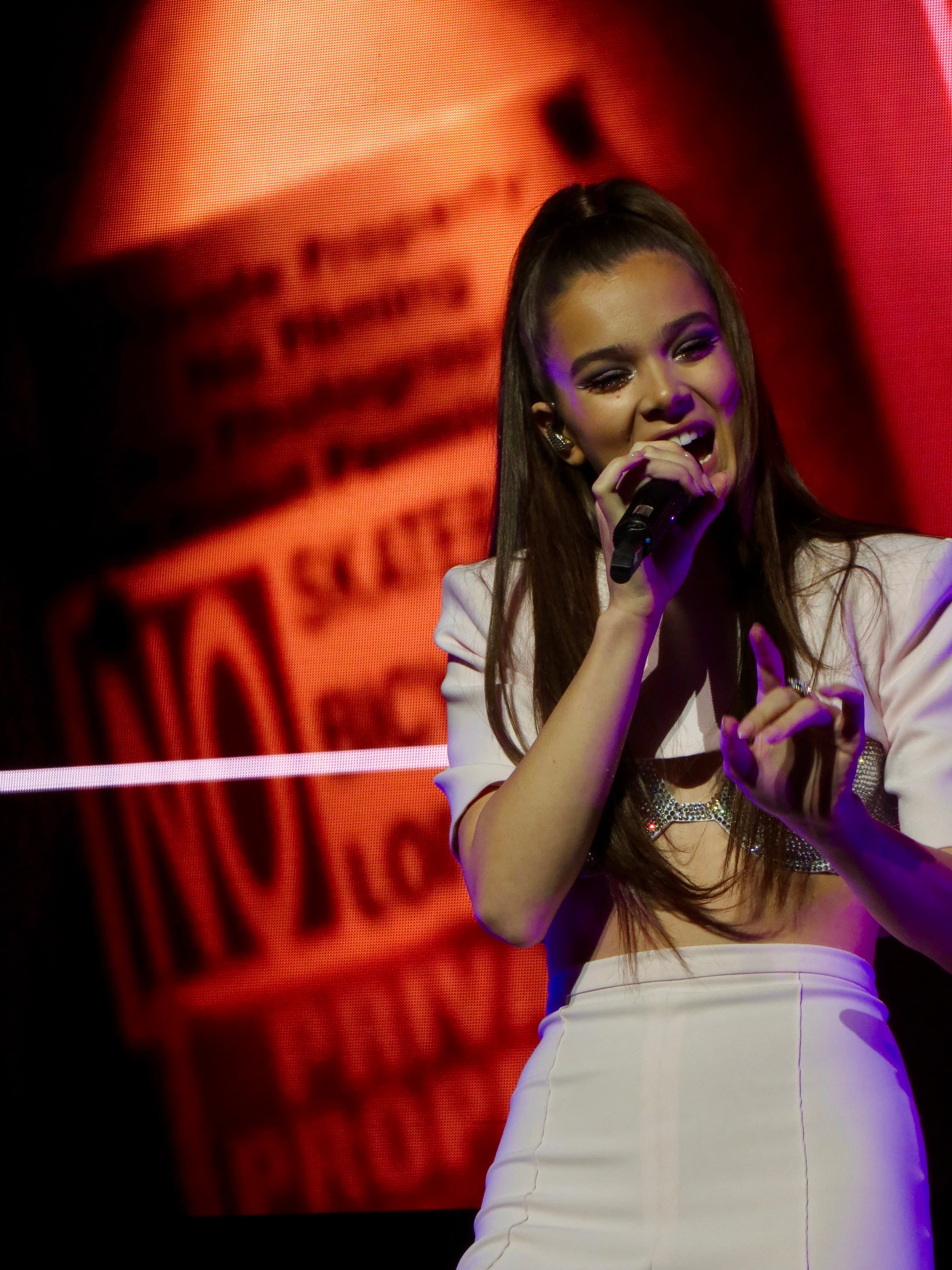
Astrologically, the chart promised exposure. A Sagittarius stellium with Sun and Mercury together is a broadcast configuration — it wants the wider room. Mars in Scorpio gave him the endurance to record albums at nine, to tour as a kid, to keep showing up. Hailee Steinfeld, another Sagittarius Sun who pivoted from child-acting to a pop career, shares the broadcast appetite without the Mars-Pluto edge — a useful comparison for what Aaron's chart wanted versus what it could handle.
The actual career arc tells the harder story. Aaron's Party (Come Get It) hit triple platinum in the U.S. when he was twelve. Oh Aaron followed in August 2001. He cameoed on Lizzie McGuire. He toured. He moved more than four million albums before his voice changed. Then the chart's contradictions arrived on schedule. The Sagittarius stellium kept wanting the stage. The Cancer Moon could not provide a home stable enough to retreat to between tours, because the home itself was the litigation. The Mars-Pluto in Scorpio kept finding intensities to channel and, as the music career thinned, channeled them inward.
The tension the chart sets up is brutal. Sagittarius wanted the audience. Cancer wanted the family. The family was the business that made the audience possible. There was no version of his adult life where one of those did not have to lose. Taylor Swift, also a Sagittarius Sun without a verified birth time, navigates a similar Sagittarius-vs-private-life tension with the structural protection of an outer-planet trine to Saturn she did not share with Aaron. Charts are not identical even when signs are.
Relationships
The Venus-Neptune conjunction in Capricorn is the entire weather system here. The early Hilary Duff relationship — well-documented as on-again-off-again roughly 2000 to 2003 — fits the Venus-Neptune signature of meeting young, projecting heavily, and being unable to translate teenage idealization into adult logistics. The pattern that followed across his twenties — public engagements, fast escalations, faster dissolutions — is what a Venus-Neptune conjunction tends to produce when no one is helping the native distinguish the projection from the partner.
The engagement to Melanie Martin and the birth of his son Prince in November 2021 landed in the colder Capricorn register the Venus placement always promised would arrive. Real stakes, custody questions, paternity public-facing, money in the room. Ariel Winter's child-star aftermath shows a related pattern in a different chart — the long shadow that early relational visibility casts on adult intimacy. Aaron did not live long enough to complete the work his Capricorn Venus was asking him to do, which was to stop building castles and start building rooms. The trade-off the chart set up was simple and cruel: the romantic intensity that read as proof of love was the same intensity that kept burning the structure down.
The Transit That Actually Matters
Pluto entered Aquarius for good in November 2024 and will remain there until 2044 — a twenty-year transit that is currently squaring Aaron's natal Pluto in Scorpio and crossing into trine territory with the late degrees of his Sagittarius stellium. A square is the ninety-degree aspect of friction and rupture; it forces change by making the existing structure untenable. Pluto squaring natal Pluto happens once in a lifetime, in the late thirties and early forties for his cohort, and it is the transit that ends the version of the self that survived young adulthood. He did not live to face it.
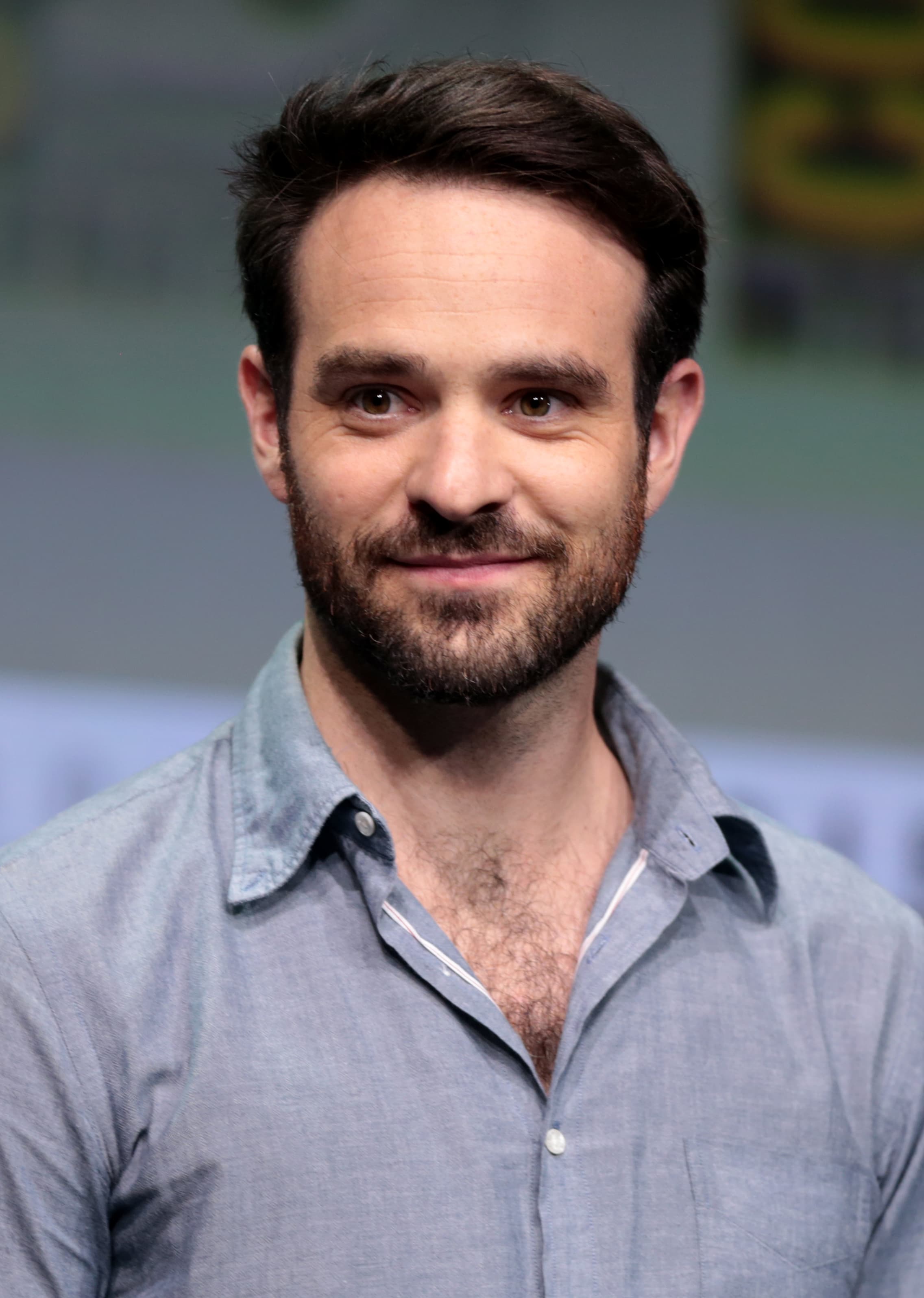
What it would have asked of him is exactly what the chart had been postponing: a renegotiation of the Mars-Pluto Scorpio intensity that ran his nervous system at full voltage from childhood. Pluto in Aquarius does that work by detaching — by forcing the native to step out of the personal-intensity loop and into a wider, more communal frame. For Aaron, that would have meant moving from the broadcast self (Sagittarius shouting into the void) toward the systemic self (Aquarius asking what role he served in a larger story). The transit hits cohort-wide. Charlie Cox, another late-1980s Sagittarius Sun, is currently inside the same Pluto-square-Pluto window and visibly reshaping his public output toward more reflective work. Kodak Black's recent legal arc shows what happens to people in this cohort when the transit hits without internal preparation. Aaron did not get the chance to take it. The chart was lining up the homework; the body did not arrive at the desk.
What This Chart Asks You to Reckon With
This chart predicted exposure. It predicted intensity. It predicted family wounds, structural disputes with authority, romantic idealization that would not survive daily life, and a Mars-Pluto current that runs at voltages most people would not sustain past thirty. It did not predict his death. Charts describe pattern, not fate. Pattern is what makes a child's pop career legible at nine and a thirty-four-year-old's last Instagram lives legible at thirty-four. Pattern is not destiny.
What this chart costs its owner is rest. The Sagittarius stellium wants the next room before the current one is finished. The Mars-Pluto in Scorpio wants the maximum register of feeling and treats medium volume as failure. The Cancer Moon wants a home a Sagittarius stellium will not stay in long enough to build. There is no internal place in this chart where the system is allowed to power down. That is the demand it makes.
What this chart is honest about is that talent and tenderness are not protection. Aaron Carter was warm. The Cancer Moon, the Moon-Pluto trine, the Sun-Jupiter trine — those are not the placements of a cold person. They are the placements of someone whose openness ran in the same circuits as his intensity, and who never got the structural support to wire them separately. Read it as warning, read it as elegy, read it as data. Just don't read it as fate.