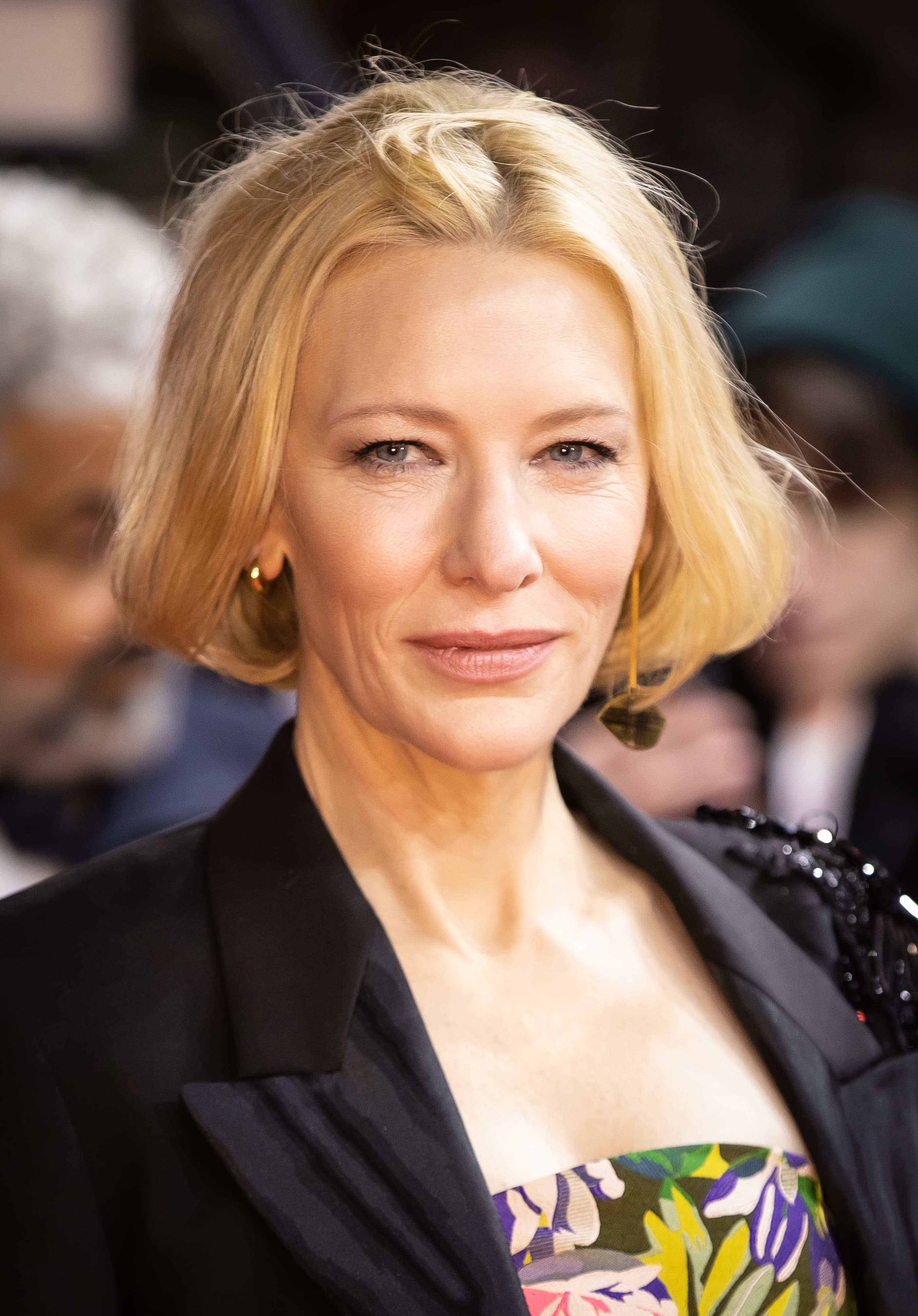
Cate Blanchett's Birth Chart: The Taurus Who Became Cinema's Shape-Shifter
On the surface, Taurus and shape-shifting seem like opposites. The Bull is fixed, earthy, rooted. Yet Cate Blanchett — born May 14, 1969, in Melbourne, Australia — has spent three decades dismantling that assumption. Two Academy Awards, roles ranging from Queen Elizabeth I to a gender-fluid rock icon to a vilified orchestra conductor, and a reputation as the most technically fearless actor of her generation. The chart explains why the Taurus archetype, when loaded with specific aspects, doesn't just endure — it transforms.
This profile is built from a noon reference chart calculated for Melbourne (37.814°S, 144.963°E) using the Swiss Ephemeris. Because Blanchett's birth time remains publicly unverified (Rodden Rating C), house placements and the rising sign are excluded. Planetary sign positions and interplanetary aspects hold regardless of birth hour, making the core analysis reliable within those limits.
Sun and Moon: The Core Drive
The Sun at 23°06' Taurus anchors Blanchett in the sign's highest expression: the craftsperson who refuses to release work until it is genuinely right. Taurus rules the second house of value and resources in traditional astrology, and mid-Taurus Sun people often develop an almost obsessive relationship with material excellence — not as vanity, but as integrity. The finished thing must hold. It must last.
The Moon in Aries at approximately 27°07' introduces the contradiction that makes this chart interesting. Where the Taurus Sun counsels patience and careful construction, an Aries Moon is impulsive, emotionally immediate, and hungers for new challenges. In practical terms, this pairing produces someone who builds with Taurean precision but chooses projects with Aries instinct — the emotional read comes first, the craft follows.
The Moon's approximate conjunction to natal Saturn (orb ~4.63°, noted as approximate without verified birth time) adds a layer of emotional discipline to that Aries fire. Moon-Saturn contacts typically indicate someone who learned early to manage emotional expression in high-stakes environments. For Blanchett, this likely manifests as the legendary composure under pressure that her directors consistently describe.
Mercury in Gemini: The Chameleon's Tongue
Mercury at 11°27' Gemini is in its home sign, which means the planet of communication operates with its full native toolkit. Gemini Mercury people are quick, curious, and syntactically flexible — they absorb language patterns and reproduce them with unusual fidelity. For an actor whose accent work is frequently cited as the best in the industry, this placement is load-bearing.
The filmography itself reads like a Mercury in Gemini portfolio: Bob Dylan in I'm Not There, the Queen in Elizabeth, a Wood Elf queen in Lord of the Rings, a female Jasmine in a stage adaptation, a transgender protagonist in short film work. Each required wholesale inhabitation of a different vocal and linguistic register. Mercury in Gemini doesn't just learn these — it finds them interesting.
Mercury also forms a sextile to Venus (orb 2.64°) and an opposition to retrograde Mars in Sagittarius (orb 3.58°). The Venus sextile softens Mercury's output — there's a warmth and aesthetic care in how Blanchett speaks, on screen and in interviews. The Mars opposition creates productive friction: Mercury wants to gather and reflect, Mars in Sagittarius wants to fire and commit. In creative work, this tension can produce the kind of choices that feel both considered and spontaneous.
Mars is retrograde in this chart, which in natal astrology typically internationalizes Martian energy — the drive turns inward, becoming a relentless inner standard rather than outward aggression. Sagittarius rules philosophy, foreign cultures, and broad vision. Retrograde Mars in Sagittarius opposing Gemini Mercury: the perpetual philosophical dialogue, with oneself, that fuels compulsive self-reinvention.
Venus in Aries and Mars in Sagittarius: Fire in the Aesthetic
Venus at 14°05' Aries is uncomfortable in traditional astrology terms — Venus is in detriment in Aries — but 'uncomfortable' often produces the most vivid placements. Aries Venus people don't soften their aesthetic instincts; they lead with them. They know immediately what they want and aren't particularly patient about it. On screen, this manifests as the kind of bold physical choices — the unflinching stillness in Carol, the deliberate weirdness in Manifesto — that signal someone who trusts their eye without requiring consensus.
The trine from Venus to retrograde Mars in Sagittarius (orb 0.94°) is extremely tight and extremely useful. Fire-to-fire trines move energy without resistance. Venus's aesthetic impulse flows directly into Mars's drive to act, and the Sagittarian filter means that action has philosophical intention behind it. The result: someone who doesn't just select beautiful roles — she selects roles that argue for something.
This Venus-Mars trine likely underpins her UNHCR work as well. Blanchett served as Goodwill Ambassador from 2016 to 2024, making multiple field visits to refugee communities. Aries Venus doesn't perform compassion — it acts on it. Sagittarius Mars doesn't agitate locally — it aims at the systemic and global.
Sun Trine Pluto: The Power Signature
At 0.59° orb, Sun trine Pluto is the tightest aspect in Blanchett's chart and arguably its defining signature. Pluto sits at 22°30' Virgo — her Sun at 23°06' Taurus creates a near-exact trine across the earth signs. Earth-to-earth energy doesn't scatter; it compresses. This aspect concentrates transformative power into a form that looks solid from the outside and operates at depth from the inside.
The trine aspect removes the struggle that Sun-Pluto squares and oppositions typically generate. People with hard Sun-Pluto contacts often battle power dynamics, deal with obsessive control patterns, or experience psychological upheaval around identity. The trine version absorbs Plutonian intensity as a natural part of selfhood rather than an external assault. Blanchett doesn't seem to be at war with her own power — she carries it as a matter of course.
On screen, this is the gravitational quality that directors reach for when they need someone who can command a frame without apparent effort. In Tár (2022), Blanchett plays a conductor whose authority is so total it becomes a moral trap. The Sun-Pluto trine provides exactly that quality: power that feels inherent rather than performed.
Pluto's position in Virgo (the generation born roughly 1957–1972) also carries a collective signature: this cohort was wired to transform systems through analytical precision, to find the flaw in the mechanism and redesign it. Blanchett's personal Sun trine amplifies this generational pattern into an individual characteristic.
Sun Trine Jupiter and the Grand Trine Potential
Jupiter at 26°14' Virgo trines Blanchett's Sun at 23°06' Taurus with a 3.13° orb. Sun trine Jupiter is one of astrology's more reliable 'things work out' aspects — it expands whatever the Sun represents, and in Taurus that means sustained material and creative success. More importantly, Jupiter is conjunct Pluto in Virgo (orb 3.73°), which means the Sun forms a trine to both simultaneously.
Sun trine Jupiter-Pluto creates something close to a grand earth trine, with Pluto-Jupiter in Virgo, Sun in Taurus, and the remaining earth sign (Capricorn) unoccupied by a personal planet. The effect isn't diminished much by the Capricorn gap — the Sun-Pluto-Jupiter axis functions as an engine that combines identity (Sun), expansion (Jupiter), and transformation (Pluto) into a single integrated force. In practical terms: someone with structural vision on how to move large things, and the patience and depth to actually do it.
Sun Opposition Neptune: The Dream Channel
Neptune at 27°27' Scorpio opposes Blanchett's Taurus Sun with a 4.36° orb — wider than the Pluto trine but still within standard interpretation range. Sun-Neptune oppositions are classically associated with idealism, dissolution of ego boundaries, and the capacity for profound empathic absorption. In the context of acting, this is the aspect that allows an actor to temporarily disappear into a character.
The Scorpio placement intensifies the Neptune quality considerably. Scorpio Neptune (the generation born mid-1950s through 1970) carries themes of psychological dissolution, hidden depths, and transformation through loss. An opposition from the Sun activates this generational frequency personally: there is something in Blanchett's core identity that is genuinely permeable, that can be touched by what it encounters and changed by it.
The Taurus Sun provides the necessary counterweight. Without it, Sun-Neptune opposition can produce identity diffusion — the person who doesn't know where they end and others begin. The Taurus grounding keeps the ego intact while allowing the Neptunian permeability to function as a creative tool rather than a vulnerability. You can take the mask off at the end of the day.
Jupiter's sextile to Neptune (orb 1.23°) provides an additional bridge: Jupiter in Virgo organizes the imagination, gives it analytical rigor and practical application. The Jupiter-Neptune sextile is in the chart of people who dream with specificity — who can locate the exact image that captures the feeling they're after.
Saturn in Taurus: The Long Game
Saturn at 1°45' Taurus places the planet of discipline and structure in the same sign as the Sun, though the orb is too wide (21.4°) for a conjunction. The more meaningful read is Saturn's sign placement itself: Taurus Saturn individuals typically take the long view on material and creative resources. They build slowly, don't waste, and are suspicious of shortcuts. Quality compounds. This matches the Blanchett public record: a carefully curated filmography, few franchise obligations, a stage career running parallel to film work.
Saturn also rules Capricorn — and transiting Pluto's current position in Capricorn/Aquarius creates a square to this natal Saturn as part of the 2026 transit picture. Pluto square Saturn is one of the heavier personal transits: it pressures whatever Saturn represents to undergo permanent structural change. The Taurus Saturn's investment in careful, long-game career architecture will be tested by Plutonian demands for something it can't preserve in its current form.
This isn't necessarily destructive. Pluto-Saturn contacts often produce consolidation — the clearing of outdated structures that have served their purpose, making room for something with more load-bearing capacity. The question is which structures Blanchett is willing to let go in this period.
Uranus in Libra, North Node in Pisces: The Generational Thread
Uranus at 0°07' Libra places Blanchett at the very beginning of the Uranus in Libra generation (1968–1975), the cohort wired to disrupt conventional relationship and aesthetic frameworks. Early-degree placements often feel the generational frequency more acutely: they're at the leading edge of the wave. In a creative context, Uranus in Libra at 0° suggests someone who experiences aesthetic disruption as instinctive rather than acquired — they don't have to work to find the unconventional choice; it presents itself naturally.
The North Node at 29°05' Pisces — the final degree of the zodiac, sometimes called the anaretic degree — carries a quality of completion and transmission. Pisces North Node individuals are often described as here to dissolve rigid categories, to move toward compassion and spiritual integration as their developmental direction. The 29° placement intensifies this: it suggests the soul-level curriculum involves pressing right to the edge of what Pisces represents — boundlessness, empathy, imagination — as a lifetime project.
2026 Transits: What the Current Sky Activates
As of April 2026, the sky is stacking significant transits across Blanchett's chart. Transiting Uranus is currently moving through mid-Taurus, approaching its conjunction to her natal Sun at 23°06' Taurus. This once-in-a-lifetime transit (Uranus returns to the same degree every 84 years) represents a fundamental reinvention of core identity. It doesn't ask permission.
Uranus conjunct the natal Sun typically manifests as a period where the individual's established identity structure breaks open — not necessarily through trauma, but through the arrival of something that the old version of the self cannot accommodate. New creative territories, departures from long-held roles or affiliations, a sense that the next chapter looks genuinely different from the previous one.
Simultaneously, transiting Neptune in Aries is moving toward a conjunction with Blanchett's North Node at 29°05' Pisces — approaching from the adjacent sign as Neptune crossed into Aries in March 2025. This configuration activates the lifetime developmental trajectory around compassion, imagination, and dissolution of fixed categories. Creatively, this period may produce the most spiritually ambitious work of her career.
Neptune also made a final pass over Blanchett's natal Moon-Saturn area in Aries/Taurus in the 2024–2025 period. Neptune transiting a natal Moon softens the emotional structures that Moon-Saturn contacts can over-calcify — it's a dissolution of whatever emotional armor became too thick. The timing aligns with her public profile shift away from large institutional roles (UNHCR) toward more personal creative priorities.
Transiting Pluto has now moved from Capricorn into Aquarius (ingressed fully in 2024). From Aquarius, Pluto forms a square to her natal Saturn at 1°45' Taurus — a transit that will intensify through 2026–2027. Pluto-Saturn squares are the great dismantlers of career infrastructure: the institutions, habits, and power structures built under Saturn's careful stewardship face permanent pressure to transform.
The Jupiter transit is lighter. Transiting Jupiter moved through Gemini in 2024–2025, conjuncting her natal Mercury and activating the communication and intellectual signature in her chart. Jupiter in Cancer (from June 2025 through June 2026) forms a sextile to her Taurus placements, providing a generally supportive background current even as the Uranus and Pluto transits do heavier work.
The overarching 2025–2026 transit picture is one of simultaneous reinvention on multiple levels: identity (Uranus on Sun), career structure (Pluto square Saturn), and developmental direction (Neptune near North Node). This kind of stacked transit activity is rare and typically marks a period the individual later identifies as a turning point.
For Blanchett, who has operated at the top of her craft for thirty years without apparent artistic repetition, the chart suggests the next chapter isn't a continuation of the previous one. It's a reinvention from the foundation. That's exactly what Uranus transiting the Sun asks of Taurus — and Taurus, when it commits, does not do this halfway.
The Full Picture: Why the Chart Works
Blanchett's chart is architecturally coherent in a way that's relatively rare. The core tension — Taurus Sun (fixed, building) vs. Aries Moon (cardinal, impulsive) — is mediated by a precise Sun-Pluto trine that gives her the psychological depth to contain both. The Venus-Mars trine ensures aesthetic instinct and ambition operate as allies rather than rivals. The Sun-Neptune opposition provides permeability without dissolution, because the Taurus ground holds.
Mercury in Gemini is the delivery mechanism: the versatility and linguistic intelligence that makes the internal complexity visible on screen. Jupiter amplifies the whole system while Pluto's conjunction to Jupiter ensures that expansion isn't naive — it carries transformative weight. Saturn in Taurus adds the long-game discipline that turns talent into a career that compounds over decades rather than peaks and fades.
The result is a chart that explains why Blanchett doesn't follow trajectories — she builds them. The Taurus patience and the Pluto depth combine to produce someone who is willing to wait for the right role, execute it with total commitment, and then move to something categorically different. Not restless for its own sake (that would be pure Aries Moon), but driven by an internal standard that the previous thing can no longer satisfy.
Methodology Note: All planetary positions in this profile were calculated using the Swiss Ephemeris (via Kerykeion 5.x) for May 14, 1969, at 12:00 noon AEST in Melbourne, Australia (37.814°S, 144.963°E). Because Blanchett's birth time has not been verified to Rodden A/AA accuracy, this profile uses a noon reference chart. Rising sign, house placements, and precise Moon degree are excluded or flagged as approximate. Planetary sign positions and interplanetary aspects remain accurate regardless of birth hour.
Sources: Planetary positions — Swiss Ephemeris via Kerykeion 5.x / pyswisseph. Birth data — Public biographical records (Rodden Rating C; unverified birth time). Career references — Published interviews, IMDb, UNHCR public records. Transit calculations — Swiss Ephemeris for 2026-04-06.
AI Transparency: This profile was generated with the assistance of AI (Claude by Anthropic) using verified ephemeris data. All planetary positions are sourced directly from Swiss Ephemeris calculations; interpretive text reflects established astrological tradition applied to those verified positions. This content does not constitute personal advice.