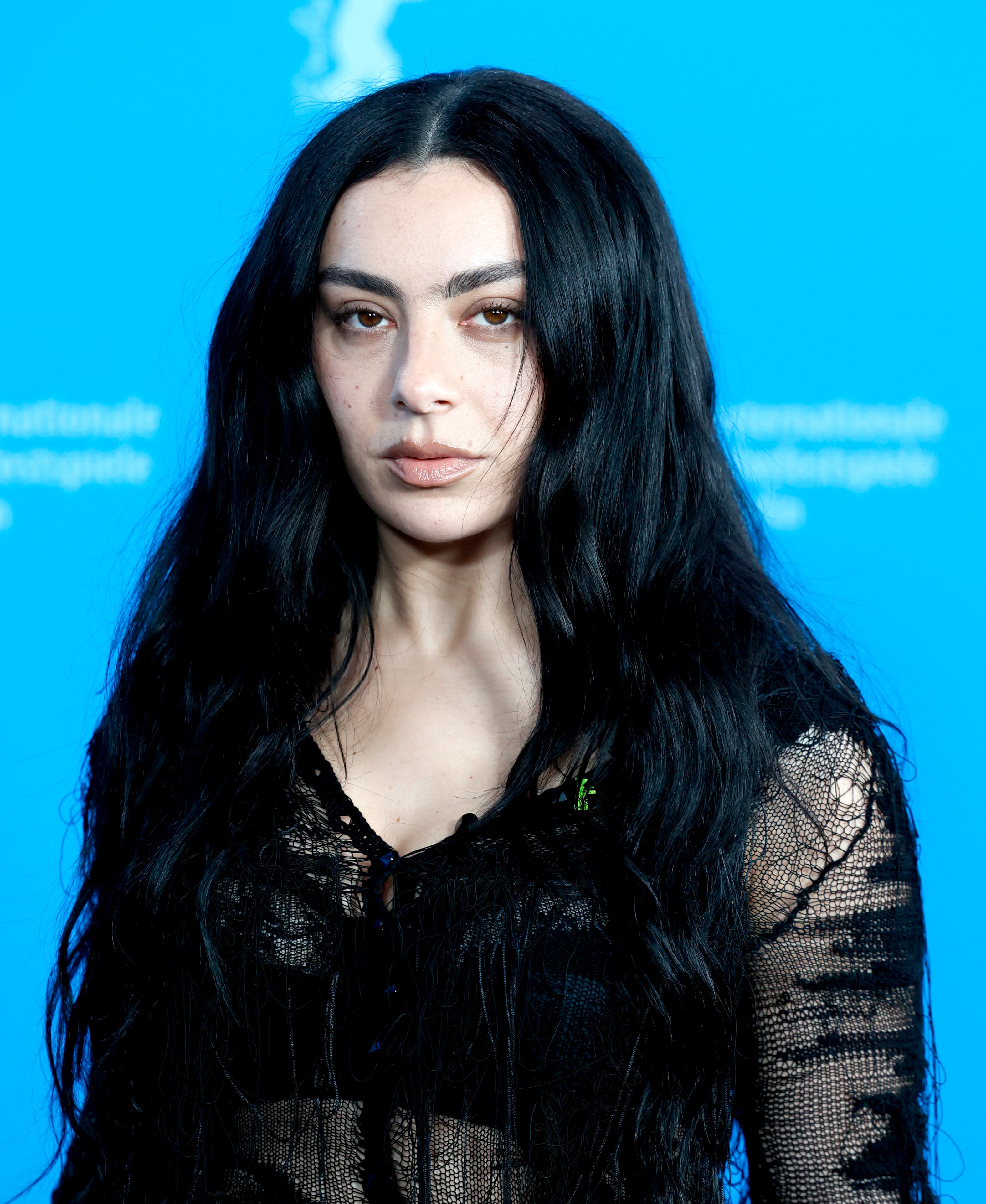
By the second week of June 2024, an acid-green square with the word "brat" in low-resolution Arial Narrow had colonized the internet — campaign posters for Kamala Harris, ironic tweets from venture capitalists, the side of a Lime scooter in Berlin. The album that triggered it had been out less than a week, and Charlotte Aitchison (<a href="https://en.wikipedia.org/wiki/Charli_XCX">Wikipedia</a>) — better known by the stage name she lifted from her MSN Messenger screen handle in 2008 — had finally, after twelve years of the industry asking her to round off her edges, made the version of pop she had been arguing for the entire time.
Her birth chart explains both why it took so long and why it landed so hard.
The Big Three
Leo Sun, Third House — A Voice Built for Repetition
Charli was born on 2 August 1992 in Cambridge, England, with the Sun at 10° Leo — the fixed fire sign that runs on creative oxygen and refuses to shrink itself for a room. But the Sun in her chart sits in the third house: the sector traditionally tied to language, short messages, repetition, and the way a voice carries across the channels of everyday life. A Leo Sun in the third is a hook-writer's Sun. It writes the line you find yourself singing in the shower three weeks later because it was engineered to lodge there.
What it costs is composure. Third-house Leos cannot stop talking — they think out loud, they workshop in public, they say the thing the room was thinking and then immediately wonder whether they should have. The 365 party-girl voicemail interludes on <em>Brat</em>, the tweet-thread aesthetic of "Sympathy is a knife," the willingness to give a press interview that sounds like a group chat — that is a Leo Sun in the third house refusing the polite radio voice the major-label era kept asking her to use.
What complicates it: the Virgo Moon two houses over. The Leo Sun wants the room; the Virgo Moon is in the dressing room afterwards listing every line she would re-record. This profile would not be honest if it left that out.
Virgo Moon, Fourth House — The Editor in the Basement
Her Moon sits at 25° Virgo, in the fourth house — the inner home, the private self, the place a person retreats to when no one is watching. Virgo Moons are not, contrary to a tired stereotype, "neat" — they are evaluative. They process feeling by analyzing it, ranking it, and asking whether it was actually warranted. A fourth-house Virgo Moon means the inner editor lives at home. There is no off-duty.
The cost is exhaustion of the perfectionist kind. Virgo Moons are rarely satisfied with a finished product — and with Jupiter conjunct this Moon (Jupiter at 15° Virgo, also in the fourth house, a conjunction being the fusion angle that makes two planets behave like one), the standard expands faster than the work can meet it. The Jupiter-Moon conjunction is why <a href="/blog/charli-xcx-birth-chart-leo-stellium-cancer-rising-2026">Charli has spoken openly about the deliberately sloppy aesthetic of <em>Brat</em></a> — the hand-drawn font, the lo-fi cover — being a strategy against her own perfectionism rather than a relief from it. The Moon does not actually like that font. The Moon would have made it sharper. Releasing it ugly was, in her chart's own internal vocabulary, an act of force.
What complicates it: the third-house Leo Sun keeps performing while the fourth-house Virgo Moon is still cleaning up. There is no clean integration here so much as alternation — onstage and behind the curtain — and both are full-time jobs.
Cancer Rising — The Soft Wall
The Ascendant — the sign that was rising on the eastern horizon at the moment of birth, which in modern astrology shapes the public-facing self — is at 5° Cancer. The chart is therefore ruled by the Moon, which is in turn the slowest-moving and most demanding placement she has. Cancer rising is the soft wall: it looks approachable and feels protective, but it is not, on close inspection, easy to get through. Cancer is a cardinal water sign — defensive, retentive, and selective about who reaches the inside.
This is the placement that explains why a pop star whose lyrical brand is oversharing has a private life almost no one tracks. Her <a href="https://en.wikipedia.org/wiki/Charli_XCX">marriage to George Daniel of The 1975</a> was conducted at Hackney Town Hall on 19 July 2025 with a small civil ceremony, followed by a second wedding in Sicily on 14 September 2025 — a Cancer rising's idea of a celebration: ringfenced, family-shaped, photographed only on terms she controlled.
What complicates it: Uranus opposing the Ascendant from across the chart in the seventh house (Uranus at 15° Capricorn). The soft wall is opposed, structurally, by a partner-axis demand for unpredictability. More on that under "Where the Chart Pushes Back."
Personal Planets — Mercury, Venus, Mars
Mercury sits at 11° Leo, retrograde, in the third house — and conjunct her Sun within less than two degrees. That conjunction is the engine of her songwriting persona: thinking and identity are not separable for her. Mercury retrograde in Leo says the rehearsed phrase often lands worse than the unguarded one — and her best work tends to confirm it. <em>Brat</em> opens with "360," which sounds like a thought not yet finished — the Mercury-retrograde aesthetic in concentrated form.
Venus at 23° Leo is also in the third house — making her Sun, Mercury, and Venus a <strong>stellium</strong>, the term astrologers use for three or more planets bunched together in the same sign or house, where their influences pile up and behave more like a single weather system than three separate placements. This Leo stellium falls across her house of speech, message, and immediate audience. Venus in Leo treats love as a public performance: extravagant, generous, demanding to be witnessed. Read her social-media presence, her on-stage banter, and the fact that "I think about it all the time," her track about whether to have children with her partner, was released as a single — Venus in Leo does not separate intimate question from broadcast. <a href="/blog/dua-lipa-birth-chart-leo-guide-2026">Dua Lipa's Leo-Cancer-Gemini stack</a> shares the public-Venus instinct, but on a chart with far less internal friction.
Mars at 4° Gemini, in the twelfth house, is the strangest piece. Twelfth-house Mars hides its drive — the engine runs in private, behind the dressing-room door, in the studio at 3 a.m. Gemini Mars is mentally restless, multiplying ideas faster than the body can chase them, and the twelfth-house placement means much of that energy goes into preparation no one ever sees: stitching together features, pushing producers, rewriting verses thirty times. Mars in the twelfth is also classically the placement of the artist who sabotages from inside — and her catalog is studded with album cycles she has walked away from at the marketing stage. The chart calls this honestly.
Where the Chart Pushes Back
A profile that only flatters a chart is biography, not analysis. Three configurations in this chart exact a real cost — and they are also, in different ways, the source of why her work lands.
Sun Opposition Saturn — The Lateness Tax
Her Sun at 10° Leo opposes Saturn at 15° Aquarius — an <strong>opposition</strong>, the 180-degree angle astrologers read as a face-off between two forces that have to negotiate with each other rather than fuse. This is the lateness aspect: the chart pattern where the gift of the Sun arrives only after the resistance of Saturn has been paid in full. Saturn opposes the Sun across the third-ninth axis: voice versus authority, talk versus framework, immediate hook versus long-term doctrine.
The behavioral cost of this opposition is structural delay. She put out "Boom Clap" in mid-2014 and then spent eight years trying to convince labels that the experimental work between <em>Pop 2</em> in 2017 and <em>Crash</em> in 2022 was the actual project. <em>Brat</em> was not a sudden emergence — it was a Saturn-Sun opposition finally settling, which on this aspect always takes the long way around.
The shadow side is more precise: Sun-Saturn oppositions tend to internalize rejection. The artist who is told "this is too weird for radio" often becomes the artist who pre-rejects herself before the room can. She has spoken in interviews around her Saturn return — the moment, around age twenty-nine, when the planet of structure completes its first orbit and forces a reckoning with everything you have built — about the years she believed her own niche-ness was a defect. That is the opposition speaking.
Mars in the Twelfth House — The Aggression Channel
Twelfth-house Mars exacts a particular price: the drive is real, but it cannot be expressed cleanly in public. It comes out sideways — through workaholism, through cryptic shade in lyrics, through abrupt creative pivots that look impulsive from outside but were privately calculated for months. The "Sympathy is a knife" lyrical drama, and the wider history of her songs that turn out to be about specific people only her inner circle can identify, is twelfth-house Mars at work. The chart cannot say the thing directly; it encodes it.
The cost is being misread. Twelfth-house Mars often lands as "moody" or "passive-aggressive" when the actual operating mode is strategic. The Gemini multiplicity makes it worse — Mars is restless enough that the next coded move is already in motion before the last one has been parsed. <a href="/blog/kylie-jenner-birth-chart-leo-astrology-2026">Other Leo Suns with a publicly-warm presentation</a> often hide their actual ambition in the eighth or twelfth, but the Gemini-Mars edition produces specifically a media-literate one — she is several steps ahead of the discourse about her at any given moment.
Venus Square Pluto — Love at Volume Eleven
Venus at 23° Leo squares Pluto at 20° Scorpio — a <strong>square</strong>, the 90-degree angle that produces friction strong enough to force action. Venus-Pluto in any configuration is romantic intensity at high voltage; the placement does not do casual. The cross between Leo Venus (extravagant, performative, loyal-once-chosen) and Scorpio Pluto in the fifth house — the romantic, creative house, but with Pluto's all-or-nothing wiring — means love affairs and creative collaborations both run hot, fuse into identity, and end with everyone restructured.
This shows up unmistakably in her output: her songs often do not separate romantic obsession from creative obsession from public-image obsession. They are the same circuitry. The cost of Venus-Pluto is that the chart will not let her have a relationship that is not also, in some sense, the work.
Notable Aspects
- <strong>Sun conjunct Mercury</strong>: identity and voice are one organism. She does not have a "writer self" separable from the "star self."
- <strong>Sun opposition Saturn</strong>: the lateness tax — gifts arrive only after sustained resistance.
- <strong>Jupiter trine Uranus, near-exact</strong>: a <em>trine</em> is the 120-degree easy-flow angle that lets two planets cooperate without friction. Jupiter-Uranus is the lightning-strike trine — sudden creative leaps that do not look earned but are. <em>Brat</em>'s "I Think About It All The Time" landing as a hit despite breaking every commercial rule has the fingerprint of this aspect.
- <strong>Jupiter trine Neptune</strong>: visionary reach — the placement that lets a song idea exist as an aesthetic universe rather than a single track.
- <strong>Mercury opposition Saturn</strong>: writing under structural pressure; the prose voice is sharpened by the editor it has had to argue with all its life.
Career & Public Life
The career-axis runs through a Pisces <strong>Midheaven</strong> — the highest point in the chart, traditionally tied to public role and reputation, here at 0° Pisces. A Pisces Midheaven means the public role is artistic, dissolving, and not literal — the listener is meant to project meaning onto her, not receive a clear definition. This is consistent with a discography that has refused a single genre — hyperpop, mainstream pop, dance, indie sleaze, electroclash — and has instead, repeatedly, served as the surface other artists use to figure out what they themselves want to sound like.
But the chart's actual ambition pressure does not run through the Pisces Midheaven. It runs through that Saturn in Aquarius in the ninth house — Saturn in the house of doctrine, broadcast, and the long view. The ninth-house Saturn says her real career has been writing a manifesto of pop, not a string of singles. Hence her genuine career-defining transit was not a Grammy run; it was the period 2021–2022 when transiting Saturn moved back over its own natal position — the Saturn return — and forced her to commit to a long-form editorial position. <em>Brat</em> was the proof of concept; the position came first.
<a href="https://en.wikipedia.org/wiki/Charli_XCX">Three Grammy wins at the 2025 ceremony</a> — Best Dance Pop Recording for "Von Dutch," Best Dance/Electronic Album, and Best Recording Package — were the post-Saturn-return validation, not the cause of it. The cause was the twelve years of opposition friction that made the position legible enough to award.
Relationships
The Descendant — the partner-axis point opposite the Ascendant — is at 5° Capricorn, with Uranus and Neptune both in the seventh house. This is a relational chart that does not describe a stable story. Uranus in the seventh wants partners who disrupt the Cancer-rising soft wall; Neptune in the seventh wants partners who blur the boundary between her work and theirs.
Her <a href="https://en.wikipedia.org/wiki/Charli_XCX">marriage to George Daniel</a> — drummer of The 1975, with whom she has co-produced and toured — is an unusually clean fit for this configuration: a partner who is also a creative collaborator (the Neptune-seventh demand satisfied) and who introduced enough chaos into her aesthetic for the <em>Brat</em> universe to exist (the Uranus-seventh demand satisfied). The trade-off the chart sets up is that partnership and work cannot be neatly separated for her, and any attempt to wall them off would, under this configuration, suffocate both.
The Transit That Actually Matters: Pluto Opposing Her Sun
Across 2026 through 2028, transiting Pluto in Aquarius — currently at 5° Aquarius — moves into opposition with her natal Sun (10° Leo) and Mercury (11° Leo). Pluto oppositions to the Sun happen, on average, once in a person's lifetime, and not always at all — Pluto's elongated orbit means many people miss this transit entirely. Charli will not. The exact aspect to her Sun approaches from late 2026 and lands cleanly across 2027.
Pluto opposite the Sun is not a media cycle. It is a psychological reformation. The opposition forces a confrontation between the identity the Sun has built — Leo: the personal brand, the singular voice — and what Pluto in Aquarius wants — collective, depersonalized, structural. For her specifically, this transit suggests pressure on whether <em>Brat</em> and the irony-pop voice that fueled it is something she can keep performing at thirty-five, or whether it must be metabolized into something less self-referential. Pluto does not let an artist stay a personality once it sits across from their Sun. It tends toward transformation by contact, usually of the voice itself.
The simultaneous Uranus conjunction to her natal Mars in Gemini — Uranus has just crossed into Gemini and is approaching her Mars at 4° Gemini — is the secondary story. Uranus-Mars under any conditions can manifest as sudden output and sudden quitting; in the twelfth house, where her Mars sits, it tends to break privately first and then publicly. The chart suggests either an album cycle that arrives without warning or a project that collapses three weeks before launch is plausible across this transit, which finishes around 2027. <a href="/blog/rose-byrne-birth-chart-leo-oscar-transits-2026">Other Leo-stellium charts under outer-planet pressure</a> have shown the same pattern: the public output gets delayed or reshaped while the inner work runs faster.
What This Chart Asks You to Reckon With
The temptation with a chart this tidy — a Leo stellium in the third, Cancer rising, a Jupiter-Uranus trine within a third of a degree — is to call it a "perfect pop star chart" and stop reading. That reading would be flattery, and it would miss what the chart is actually saying.
What this chart is saying is that Charli XCX is built to write the song that sounds like it is not trying — and that the cost of that posture is enormous. Mars in the twelfth makes her drive invisible to herself; the Sun-Saturn opposition convinces her, periodically, that her actual work is wrong; Venus-Pluto fuses every relationship into the project until none of them are quite separable; the Virgo Moon refuses, ever, to be satisfied with what she has shipped. The "brat" persona is not a posture this chart drops into easily. It is a mask the chart constructed to survive its own perfectionism.
The contrarian reading is this: the placements people most envy in her chart — the trines, the stellium, the near-perfect Jupiter aspects — are not what made <em>Brat</em> work. What made <em>Brat</em> work was the friction. The lateness. The Saturn opposition that took twelve years to settle. The Virgo Moon that hated the cover art and let it ship anyway. A frictionless Charli XCX would not have written a frictionless album; she would have written nothing at all. The next chapter — under Pluto opposite Sun — will test whether she can keep working without the friction she has needed.
That is what this chart asks her, and her listeners, to reckon with.