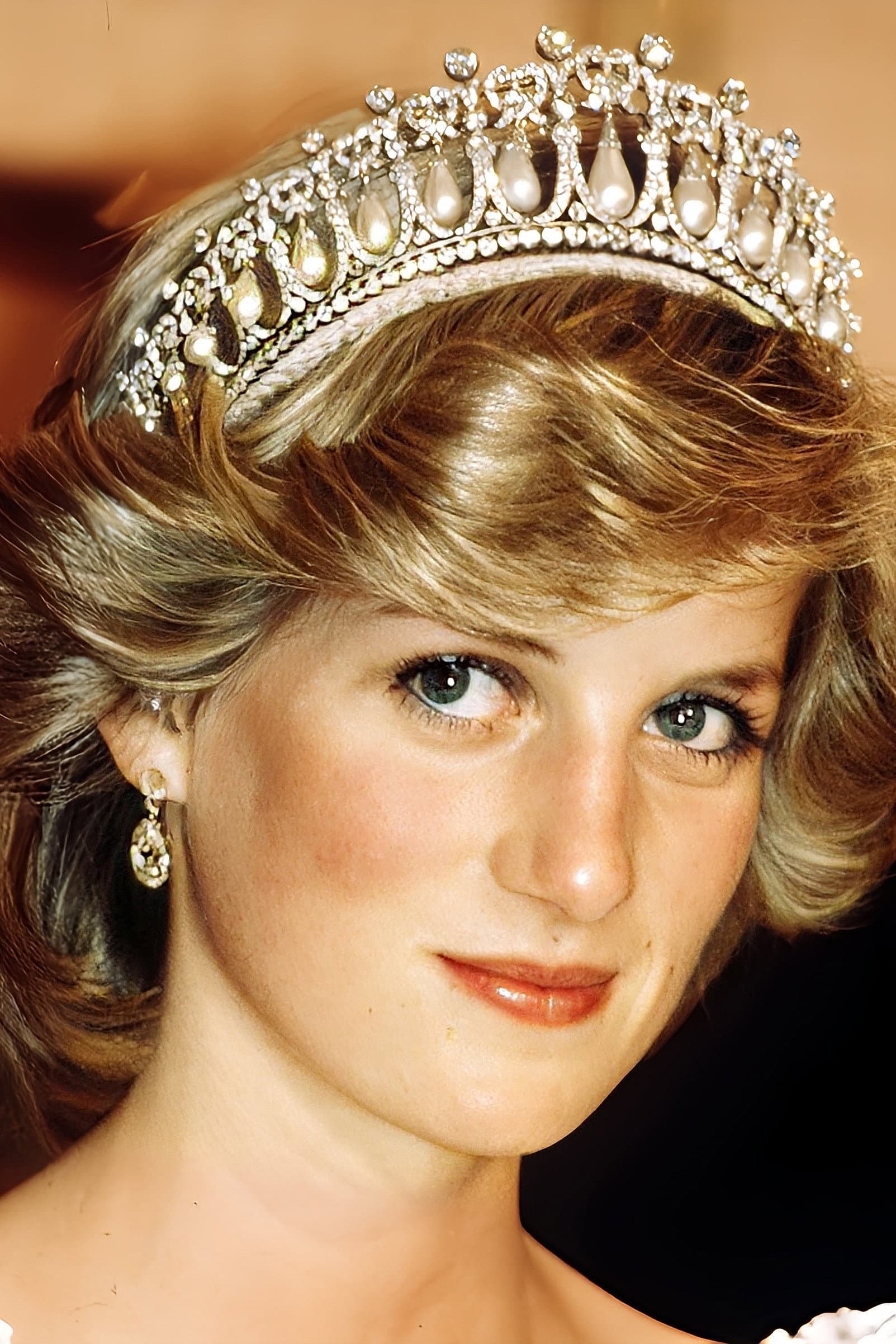
On a humid June evening in 1987, in a hospice ward at London's Middlesex Hospital, a young woman in a tailored dress reached out without gloves and shook the hand of a man dying of AIDS. The photograph travelled the world overnight. At a moment when politicians, doctors, and even some priests were still refusing physical contact with HIV-positive patients, that single ungloved handshake did more to dismantle the stigma than years of public-health pamphlets. The woman was twenty-five years old, three years into the most photographed marriage in modern history, and she had just discovered the lever she would spend the rest of her short life pulling.
Diana Frances Spencer was born at Park House on the Sandringham estate on the evening of 1 July 1961, at 7:45 p.m. local time. The birth time is recorded as Rodden Rating A — sourced from her mother — which means the angles, houses, and time-sensitive transits in this profile rest on unusually firm ground for a public figure. What that hour reveals is not a fairy-tale princess. It is a chart of duty, depth, and democratised compassion, with a 1st house in Sagittarius pulling against a 10th house in Libra, and a Moon in Aquarius pulling against everything the British monarchy was built to be.
The Big Three: Cancer Sun, Aquarius Moon, Sagittarius Rising
Sun in Cancer (7th house, 9 degrees 39')
Diana's Sun sits at 9 degrees Cancer in the 7th house — the house of partnership, marriage, and the public 'other.' Cancer is the cardinal water sign of family and felt attachment; placed in the house of one-to-one relationship, it describes a person who locates her sense of self in being needed by someone she can see in the room. This is the placement behind every iconic image of Diana kneeling to a child's eye level, holding a leper's hand, or sitting at the edge of a hospital bed. Cancer Sun people lead with care, but the 7th-house version of that gift is not private; it is performed in full view of the public, and the public becomes the partner.
The cost of a 7th-house Sun is steep. Identity becomes a mirror function: who am I when no one is looking, when there is no one on the other side of the room to reflect me back? Diana's bulimia, her panic at being left alone in Kensington Palace, her later complaint that there were 'three of us in this marriage' — all of it reads as the shadow of a self that needs a reciprocal you in order to feel real. And the Moon in Aquarius two houses down complicates the Cancer Sun's appetite for warmth: where Cancer wants to hold and be held, Aquarius wants to step back, observe, and belong to humanity rather than to one person. The internal weather of the chart is a Cancer Sun grieving the closeness an Aquarius Moon will not let it keep.
Moon in Aquarius (2nd house, 25 degrees 02')
If the Sun in Cancer is the headline, the Moon in Aquarius is the engine. At 25 degrees Aquarius in the 2nd house, Diana's emotional body is wired for collective identification rather than personal attachment, and it stores its sense of safety in shared values rather than in a guarded inner circle. This is the placement that walked through minefields in Angola and sat on hospital beds without a press handler whispering protocol. Aquarius Moon people feel most themselves when their feelings are pointed outward, toward the underrepresented, the stigmatised, the not-yet-spoken-for. In the 2nd house — the house of personal resources and self-worth — that orientation becomes a near-physical asset: she felt rich when she gave, and impoverished when she was forced to perform.
The Moon's tight opposition to Uranus in Leo at 23 degrees of the 8th house is what made the placement combustible rather than merely humanitarian. Oppositions describe an axis of tension that has to be acted out; with Uranus, the rebel and disruptor, sitting directly across from her emotional core, Diana's feelings were prone to sudden public swerves — the BBC Panorama interview in 1995, the unauthorised charity appearances, the willingness to lift the veil on royal misery. The placement also extracts a brutal price. Aquarius Moons in opposition to Uranus often feel like they belong to no one, not even themselves. The same wiring that allowed her to claim a worldwide constituency made her chronic loneliness inside the palace nearly impossible to soothe.
Sagittarius Rising (Ascendant 18 degrees 25')
The rising sign describes the mask through which we meet the world, and Sagittarius is the mutable fire sign of long horizons, candour, and the seeker. Diana's Sagittarius ascendant is the reason she read as warm and unstudied on camera — the body language was loose where Windsor body language was lacquered, and she laughed at her own jokes before journalists could catch them. The 1st-house Saturn at 27 degrees Capricorn complicates the picture, but the immediate read of her was always Sagittarian: a woman who would rather travel than receive, who preferred a candid question to a curtsey, and who instinctively flew toward the larger story rather than guarding her own.
What Sagittarius rising costs is precision. The fire-sign mask wants to gesture toward the truth quickly, before nuance has been worked out; it can read as undiplomatic in rooms built on diplomacy, and it can mistake a candid statement for a finished thought. Saturn's presence in the 1st house — discussed in detail below — is what kept the Sagittarian openness from spilling into recklessness, but the cross-current between Saturn-in-Capricorn restraint and a Sagittarian outer self is exactly the internal weather that made her press appearances feel both calculated and impulsive in the same breath. The seeker behind the tiara was always slightly at odds with the institution she had married into.
Personal Planets: Mercury, Venus, Mars
Mercury in Cancer Retrograde (7th house, 3 degrees 12')
Mercury retrograde in Cancer, conjunct the Sun and lodged in the 7th house of partnership, describes a mind that processes information emotionally, in private, and most fluently when it is responding to another person rather than producing speeches. Retrograde Mercury tends to think by going back over the same ground — re-reading letters, rehearsing conversations after they have happened, finding the right phrasing in the bath rather than at the podium. The Panorama interview is the chart's most exposed exhibit: a long, halting, deeply personal recall of a marriage, given in soft-focus lighting to a sympathetic interlocutor. That was Mercury-in-Cancer-retrograde working at full power — communication as memory, communication as the carefully chosen private sentence finally said aloud.
Venus in Taurus (5th house, 24 degrees 23')
Venus in Taurus is exalted and earthy, governing taste, texture, and what is felt to be beautiful. In the 5th house — the house of romance, children, and creative self-expression — it describes a woman whose aesthetic was inseparable from her affection. Diana's wardrobe was a public diary written in shoulder pads, cycling shorts, the off-the-shoulder revenge dress; each outfit a sentence in a language the institution did not speak. Venus trines Saturn at 3 degrees of orb, which gave that taste a structural spine: the gowns were never random, the colour blocking was never accidental, and the late-career navy suits read as deliberately stripped-down because they were.
Venus also squares Uranus in Leo at 1 degree of orb, and this is where the love life and the style intersect with disruption. A close Venus-Uranus square describes a woman who falls and unfalls in love suddenly, who cannot tolerate emotional stagnation in partnership, and whose aesthetic choices are designed to break a previous expectation in public. The revenge dress on the night Charles confessed his infidelity on television is the textbook example: Venus-in-Taurus refused to be humiliated quietly, Uranus-in-Leo made sure the refusal happened in front of the cameras, and the square between them meant the rupture had to be wearable.
Mars in Virgo conjunct Pluto (8th house, 1 degree 38' and 6 degrees 02')
This is the iconic placement of the chart, and the one most underread in the popular astrology of Diana. Mars at 1 degree Virgo sits within 4.4 degrees of Pluto at 6 degrees Virgo, both in the 8th house — the house of intimacy, death, taboo, and transformation. Mars is action and assertion; Pluto is power, depth, and what cannot be looked at directly. The two planets together in the sign of service and in the house of the unspeakable describe a person whose drive is wired to dive straight at what other people will not touch. AIDS wards, leprosy hospitals, the landmine fields of Angola and Bosnia — the through-line of her humanitarian career was not generic charity but specifically the rehabilitation of bodies the public found contagious, disfiguring, or shameful. That is Mars-Pluto in the 8th, expressed in the language of Virgo: precise, hands-on, willing to do the small unglamorous work.
The conjunction also describes the cost. Mars-Pluto people tend to draw intensity into their lives whether they want it or not; conflict and crisis are not anomalies for them but recurring conditions, and the 8th house ensures that the intensity often presents as the loss of something safe — money, marriage, privacy, control. Diana's bulimia, which she eventually spoke about publicly, is a near-classical 8th-house Mars-Pluto somatisation: aggression and power turned inward against the body in the absence of an external outlet. Once she found the outlet — the campaign, the cause, the speech in Washington calling for a global landmine ban — the same energy began to reorganise around purpose rather than self-harm.
Where the Chart Pushes Back
Saturn in Capricorn Retrograde (1st house, 27 degrees 48')
Saturn in its own sign, retrograde, in the 1st house of self-presentation: this is duty wearing a body. Saturn here describes a person who arrives in the world with a sense of inherited obligation — an aristocratic surname, a great-grandfather's career, a debutante season — and who experiences that obligation as a structural feature of her own face. Capricorn Saturn does not improvise. It rehearses, it accepts, it endures. The retrograde adds a complication: the duty was internalised before it was chosen, which is why so much of her public adulthood reads as an attempt to relocate that Saturn from the institution that gave it to her to a constituency she had picked herself.
The cost is the cost every 1st-house Saturn pays. The body becomes the place where the burden is carried; the public mask becomes heavier than the inner life can support; and the question of whether one is allowed to be a person — separate from the role — never fully resolves. Diana's eventual decision to step back from royal duties, to drop the HRH title after the divorce, and to choose her causes rather than inherit them was Saturn's slow-motion answer: yes, you may pick the structure you submit to.
Moon opposite Mars and Moon opposite Uranus
Two Moon oppositions amplify each other in this chart. Moon opposite Mars at 6.6 degrees of orb describes an emotional life that is reactive, easily provoked, and prone to discharge through conflict; Moon opposite Uranus at 1.7 degrees describes an emotional life that lurches toward sudden change as a way of asserting selfhood. Together they explain the marriage's pattern — periods of escalation followed by sudden public ruptures, the willingness to leak, the late-night phone calls, the unscheduled appearances. The chart does not flatter the pattern. It names it as the cost of an emotional body wired to break out rather than work through.
Jupiter square Neptune
Jupiter at 5 degrees Aquarius in the 2nd house squares Neptune at 8 degrees Scorpio in the 10th — a 3.5-degree square between the planet of belief and the planet of dissolution, anchored to the career sector. The aspect describes a woman whose public identity could collect symbolic projections like a sponge collects water. The 'People's Princess,' the modern Madonna of the AIDS crisis, the wounded fairy-tale bride — these were not roles she chose so much as roles the culture poured into the Jupiter-Neptune cup. The square is what made the role both intoxicating and impossible to put down.
Notable Aspects and Patterns
Beyond the headline placements, a handful of aspects do quiet, structural work in this chart. The Sun trines Neptune at 1 degree of orb, which is the easy-flow angle behind the camera-ready compassion — Neptune in the 10th house is the planet of image and surrender at the top of the chart, and a trine to the Cancer Sun means her warmth photographed as genuine because it was. The Venus-Saturn trine, mentioned above, gave a structural dignity to the aesthetic. The Sun-Pluto sextile at 3.6 degrees adds a quiet undercurrent of personal power; sextiles are opportunities rather than guarantees, and Diana repeatedly chose to take the opening — turning interviews, photo opportunities, and even her own funeral into instruments of cultural change.
The chart also carries a generational signature worth naming. Uranus in Leo, Neptune in Scorpio, and Pluto in Virgo form the outer-planet backdrop of a specific early-1960s cohort: a generation born into the dissolution of empire (Neptune in the fixed sign of taboo), the disruption of inherited hierarchy (Uranus in the fixed sign of royalty), and the deep, slow restructuring of work and the body (Pluto in Virgo). Diana inherited all three by birthright and then carried the load into the most televised marriage of her generation. The 8th-house emphasis — Mars, Pluto, and Uranus all there — is the chart's most haunting feature: a life lived in close proximity to mortality, intimacy, taboo, and other people's deepest unspeakables, which is exactly the territory she chose to work in publicly.
Career and Public Life: The Libra Midheaven
The Midheaven at 23 degrees Libra describes the public vocation, and Libra is the cardinal air sign of diplomacy, partnership, and the balanced scale. On its face, this is the perfect career signature for a princess: image-conscious, relational, devoted to the appearance of harmony. But the chart's Midheaven is also receiving a sextile from Uranus at 0.28 degrees of orb — a near-exact contact between the planet of disruption and the point of public destiny. That tiny orb is one of the most striking measurements in the chart. It describes a public role that was built for grace and gowns and would inevitably become a vehicle for unscheduled, institution-shaking change.
The tension between what the chart promised and what the career required is that Libra wants balance, and Uranus refuses to balance. The institution Diana married into needed a Libra Midheaven — a woman who could smile through state banquets, smooth diplomatic tensions, and hold the line of decorum. The chart delivered that Libra Midheaven and then wired it directly to Uranus, which meant every photograph that smoothed something was eventually paired with a sentence that broke something. Her career was, in the most literal astrological sense, a Libra-Uranus career: it asked her to be the picture of balance and to detonate the picture, often in the same week.
Relationships: Venus, Mars, and the 7th House
The 7th house in Diana's chart is in Gemini, ruled by a Mercury that is itself in Cancer and retrograde — meaning that her relational life was governed by a mind that gathered information emotionally and revisited it endlessly. With both Sun and Mercury in the 7th, partnership was not a side topic; it was the orienting axis of her life. The chart describes a woman who needed a counterpart to feel real, who would put extraordinary energy into reading the other person, and who would be devastated by a partner who refused to be read.
The trade-off is the trade-off every Sun-in-the-7th carries. The very gift that made her relational — the ability to attune to whoever was in front of her — left her under-equipped for solitude. The Venus-Uranus square, the Moon-Uranus opposition, and the Mars-Pluto conjunction together meant that her closest relationships tended to oscillate between fusion and rupture, and that the rupture often had to be public to feel complete. The chart is honest about this; it does not promise her a quiet domesticity it never wired her to want.
Posthumous Transits: Why This Chart Still Reads
Diana died in 1997, so the standard 'what is happening for her now' transit reading does not apply. What does apply is the cycle her chart still runs through the culture. Pluto's slow movement through Capricorn and now into Aquarius from 2024 onward is sitting on top of the same sign and the same degree range as her natal Saturn — and Pluto is now also crossing into the territory of her Aquarius Moon. In practical terms, that means the culture is currently revisiting the structures of monarchy, marriage, and motherhood that her chart wrestled with in real time.
This is why the Diana documentaries, dramatisations, and retrospectives have not stopped. The collective Pluto transit is doing to the institution she married into roughly what her natal chart was always going to do on a personal scale: dismantle, reorganise, and rebuild around different values. Reading her chart in 2026 is not nostalgia. It is a way of looking at the long arc of a Saturn-in-Capricorn, Moon-in-Aquarius life, and asking which parts of the structure she challenged have actually changed, and which are still waiting their turn.
What This Chart Asks You to Reckon With
The convenient reading of Diana's chart is the fairy-tale one: a beautiful Cancer Sun, a humanitarian Aquarius Moon, a Sagittarian smile, a tragically short life. The harder reading is the one the chart actually supports. This is a chart of a woman whose Cancer Sun in the 7th house gave her almost no native architecture for being alone, whose Aquarius Moon refused to let her belong to one family, whose Mars-Pluto conjunction in the 8th house drove her straight into other people's worst hours, and whose Saturn in Capricorn in the 1st house dressed all of this in the most public uniform imaginable. The contrarian observation worth making is that Diana's humanitarian work was not the soft side of an otherwise glamorous life; it was the only outlet a Mars-Pluto-in-the-8th had for an intensity that would otherwise have eaten her from inside, and the chart had warned of that long before she ever met Charles. What the chart asks of its reader, and asked of her, is the refusal to romanticise the cost — to look honestly at a Saturn that turned a body into a public monument, at an Aquarius Moon that traded private warmth for a global constituency, and at a Mars-Pluto signature that bought its dignity through service to the stigmatised. The chart does not tell you she was destined to die young. It tells you she was wired to live in a way that left no part of her unused, and that the work she chose was a near-perfect translation of the placements she was born with.
> Methodology
>
> Birth data: 1 July 1961, 7:45 p.m., Sandringham, Norfolk, England (Rodden Rating A, sourced from her mother, the late Frances Shand Kydd). Chart calculated with the Swiss Ephemeris via Kerykeion using the Placidus house system and the tropical zodiac. All planetary positions, house cusps, and aspects in this profile are quoted verbatim from that calculation. No degrees, signs, houses, or aspects have been generated by language model inference.
> Editorial Note
>
> This profile reads Diana's chart as a portrait of her life and chosen work. It does not speculate about the circumstances of her death, and it deliberately avoids the conspiracy and tabloid framings that have circulated since 1997. Astrology, in this publication's view, is a language for understanding patterns of behaviour and meaning, not a tool for forensic prediction.
> AI transparency
>
> This profile was drafted with the assistance of a large language model under editorial supervision. The chart calculations are deterministic and sourced from the Swiss Ephemeris; the interpretive prose is human-edited. For entertainment and self-reflection purposes only. This profile is not predictive and is not a substitute for professional advice.
Sources
- Astro-Databank (Rodden Rating A) — birth date, time, and location of Diana Frances Spencer.
- Swiss Ephemeris via Kerykeion 5.x — natal planetary positions, house cusps, and aspect calculations.
- Wikipedia: Diana, Princess of Wales — biographical timeline, public appearances, charitable patronages, and recorded statements.
- BBC Panorama interview transcript, November 1995 — direct quotation and biographical context.
- HALO Trust public statements — Diana's January 1997 walk through a partially cleared Angolan minefield.
What is Princess Diana's zodiac sign?
Princess Diana was a Cancer Sun, born on 1 July 1961. Her Sun sits at 9 degrees Cancer in the 7th house of partnership, which is the astrological signature behind her famously relational warmth, her instinct to lead with care, and the way she located her identity in public service rather than private life.
What was Princess Diana's Moon sign and rising sign?
Diana's Moon was in Aquarius at 25 degrees in the 2nd house, and her rising sign was Sagittarius at 18 degrees. The Aquarius Moon explains her humanitarian instincts and emotional identification with the underrepresented; the Sagittarius ascendant explains the warm, unstudied, slightly undiplomatic public manner that read as so different from royal protocol.
How reliable is Princess Diana's birth time?
Her birth time of 7:45 p.m. carries a Rodden Rating of A, the strongest evidentiary category outside of birth-certificate verification. The time was confirmed by her mother, Frances Shand Kydd, which means the house cusps, ascendant, Midheaven, and time-sensitive transit readings in her chart rest on unusually solid ground for a public figure.
What does the Mars-Pluto conjunction in her chart mean?
Mars conjunct Pluto in Virgo in the 8th house is one of the most defining placements in Diana's chart. It describes a drive wired to engage with what other people will not touch: stigmatised bodies, taboo subjects, and crisis situations. Her work with AIDS patients and against landmines was a near-textbook expression of this conjunction in the language of service.
Why is the 8th house so important in her chart?
Three planets — Mars, Pluto, and Uranus — sit in Diana's 8th house, the house of intimacy, transformation, and the unspeakable. That density is unusual and gives the chart a thematic centre of gravity around mortality, taboo, and shared resources. It explains both her pull toward crisis work and the heaviness around her private life.
How does Princess Diana's chart compare to Prince Charles's?
Diana's Sun and Mercury in Cancer in her 7th house describe a relational, emotionally fluent partner; Charles's chart is structurally more reserved and earthbound. The chemistry was complicated by Diana's Moon-Uranus opposition, which made her emotional life prone to sudden rebellions against the institutional frame that his chart and role required her to inhabit.